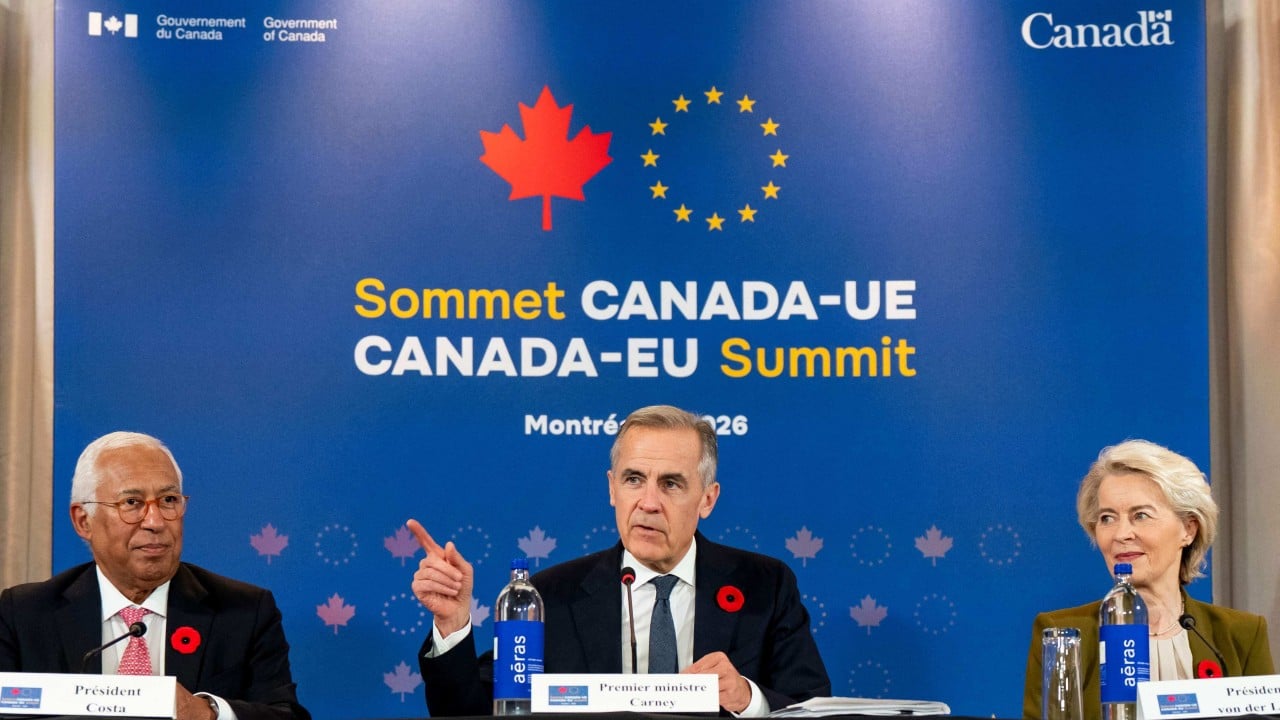
Diplomats love a photo op. Handshakes in warm conference rooms make great headlines, especially when the ink is barely dry on a fresh northern defense pact.
Don't buy the hype.
A new security deal doesn't stop the Arctic contest. It barely slows it down. Anyone who has spent time tracking military logistics above the Arctic Circle knows that ink on paper doesn't melt sea ice or build deep-water ports. The reality on the ground—and under the water—is much messier than a press release suggests.
When governments sign bilateral agreements or update regional defense frameworks, they're usually trying to manage friction rather than eliminate it. You see this constantly in northern geopolitics. Nations agree on search-and-rescue protocols, oil spill responses, or basic communication channels to prevent accidental skirmishes. Those agreements matter. They keep patrol boats from bumping into each other in the fog.
Yet they don't touch the core drivers of the Arctic contest.
What Most People Get Wrong About Arctic Security Deals
The biggest mistake observers make is treating the far north like a single, unified chessboard. It isn't. The region is split into distinct operational zones with completely different rules, weather patterns, and infrastructure bottlenecks.
A security deal signed in Brussels, Washington, or Ottawa often looks impressive on a map. Take the expansion of NATO following the accession of Finland and Sweden. Suddenly, seven of the eight Arctic states belong to the same military alliance. On paper, that looks like checkmate against Russian influence in the high north.
Look closer at the geography.
Russia still controls roughly half of the Arctic coastline and nearly half of the region's population. Its Northern Fleet, based out of the Kola Peninsula, remains the sharpest edge of its strategic nuclear deterrent. A treaty signed by Western neighbors doesn't move the Kola Peninsula an inch. It doesn't change the fact that Murmansk sits right next to the Norwegian border, housing ballistic missile submarines that Moscow considers vital to its national survival.
Security agreements rarely address these deep-seated structural realities. Instead, they focus on crisis management. Here's what these deals typically cover versus what they leave completely untouched:
- Search and rescue zones get clearly defined, which is great for stranded fishermen and commercial vessels.
- Military transparency measures sometimes get lip service, though formal data-sharing collapsed after 2022.
- Resource extraction rights stay fiercely contested through the United Nations Convention on the Law of the Sea (UNCLOS), where overlapping continental shelf claims drag on for decades.
- Subsea cable protection remains a massive vulnerability that no single piece of diplomacy can physically guard across thousands of miles of freezing ocean.
When a security deal leaves out seabed warfare and resource rights, you aren't looking at peace. You're looking at a temporary truce on minor logistics while the real race accelerates underneath.
The Melting Ice Is Opening New Fronts Faster Than Treaties Can Keep Up
Climate change isn't a future threat in the Arctic. It's an active operational reality happening right now. Temperatures in the region are warming roughly four times faster than the global average, according to research published by the Finnish Meteorological Institute.
Less ice means longer shipping seasons. Longer shipping seasons mean money, cargo, and warships.
The Northern Sea Route along Russia's coast is turning into a viable transit corridor between Asia and Europe. By using this route, commercial ships can shave up to two weeks off the traditional journey through the Suez Canal. Beijing has noticed. Even though China doesn't have an inch of Arctic coastline, it declared itself a "near-Arctic state" back in 2018 and has been pouring money into polar research vessels, liquefied natural gas projects, and dual-use infrastructure ever since.
Think about that for a second.
If you sign a security deal exclusively among traditional Arctic nations, you completely miss the influence of non-Arctic powers. China operates icebreakers like the Xue Long 2 across the central Arctic Ocean. Its joint coast guard patrols with Russia in the Bering Sea have already forced the U.S. Coast Guard to rethink its northern posture.
A regional security agreement that ignores Beijing's economic leverage in Greenland or its scientific outposts in Svalbard is like building a fence with only three sides. You haven't secured the yard. You've just funneled the traffic somewhere else.
Hardware Beats Handshakes Every Single Time
Talk is cheap in sub-zero temperatures. When the mercury drops to minus forty, your military readiness comes down to steel, fuel, and cold-weather training.
This is where the gap between diplomatic announcements and hard capability becomes obvious. You can sign ten treaties promising to defend the high north, but if you don't have the icebreakers to reach the area, your signature means very little.
Consider the icebreaker gap. Russia operates a fleet of roughly forty icebreakers, including several nuclear-powered behemoths capable of smashing through three meters of solid ice year-round. Meanwhile, the United States has struggled for years just to keep two aging polar icebreakers—the Polar Star and the Healy—running while waiting on the delayed Polar Security Cutter program.
Canada, Norway, and Finland are moving faster to close the capability gap. The ICE Pact—a trilateral agreement between the United States, Canada, and Finland to build polar icebreakers together—is a step in the right direction. Unlike vague diplomatic pledges, an industrial shipbuilding pact actually produces physical hulls.
Still, shipyards take years to deliver results.
While Western nations work through supply chain bottlenecks and budget approvals, the Arctic contest plays out daily in subtle, gray-zone operations:
- GPS jamming and spoofing regularly disrupt civilian flights and fishing boats across northern Norway and Finland, originating from transmitters on the Kola Peninsula.
- Dark fleet tankers carrying sanctioned oil navigate icy waters without proper ice-class hulls or Western insurance, creating a massive environmental ticking time bomb.
- Research vessels equipped with advanced sonar map the ocean floor near critical transatlantic fiber-optic cables and underwater sensor arrays like the GIUK gap (Greenland, Iceland, United Kingdom).
A standard security deal doesn't stop GPS spoofing. It doesn't inspect shadow tankers. It doesn't patrol the seabed.
Why Greenland and Svalbard Remain the Real Flashpoints
If you want to understand where the Arctic contest actually heats up, ignore the diplomatic summits and look at islands with tiny populations and massive strategic value.
Take Greenland. Sitting squarely between North America and Europe, it hosts Pituffik Space Base (formerly Thule Air Base), a critical node for U.S. ballistic missile warning and space surveillance. Beneath Greenland's ice sheet lie massive deposits of rare earth elements—neodymium, dysprosium, and terbium—essential for everything from electric vehicle motors to F-35 fighter jets.
Greenland also wants independence from Denmark. That local political dynamic creates an opening that external powers are eager to exploit through mining investments, airport construction bids, and diplomatic courting. No regional security pact between Washington and Copenhagen can override the democratic choices of Greenland's 56,000 residents.
Then there's Svalbard. Under the 1920 Svalbard Treaty, Norway holds sovereignty over the archipelago, yet citizens and companies from all signatory nations—including Russia and China—have equal rights to live there and engage in commercial or scientific activities. The treaty strictly prohibits using the archipelago for warlike purposes.
On paper, Svalbard is demilitarized. In practice, it's a friction magnet. Russia maintains a coal-mining settlement at Barentsburg that operates more like a geopolitical foothold than a profitable business. Undersea fiber-optic cables connecting Svalbard to mainland Norway—vital for downloading data from polar-orbiting satellites—have already suffered mysterious damage in recent years.
Treaties rely on good faith. When trust evaporates, the legal ambiguities baked into century-old agreements become weapons.
The Trap of the Arctic Council Freeze
For decades, the Arctic Council stood as the gold standard for regional cooperation. Established in 1996 through the Ottawa Declaration, it brought together the eight Arctic states and six Indigenous Permanent Participant organizations to handle environmental protection and sustainable development. Crucially, the council explicitly excluded military security from its mandate.
That separation worked surprisingly well until 2022. When Russia invaded Ukraine, the seven Western Arctic states paused all official meetings with Moscow.
Since then, working groups have slowly resumed some technical tasks at the administrative level, mostly around climate data and search-and-rescue coordination. But the political heart of the council remains fractured. You can't effectively manage migrating fish stocks, black carbon emissions, or pan-Arctic shipping safety when half the coastline isn't sitting at the main table.
Trying to patch over this divide with smaller, piecemeal security deals creates a fragmented patchwork of rules. One set of standards applies to NATO members in the European Arctic. Another set governs the Bering Strait between Alaska and Chukotka. Meanwhile, the central Arctic Ocean—an area roughly the size of the Mediterranean Sea that is rapidly opening up—remains governed by a fragile commercial fishing moratorium signed in 2018.
How to Actually Read the Next Arctic Headline
When the next big announcement drops about an Arctic security deal, a bilateral defense agreement, or a new northern strategy, don't take the press release at face value. Run it through a practical filter to see if it actually changes the balance of power on the ice:
- Check the budget lines, not the speeches. A security agreement without dedicated funding for cold-weather gear, ice-hardened hulls, and Arctic-capable satellites is just paper. Look for multi-year procurement commitments.
- Look at domain awareness capabilities. Can the signatories actually see what's happening under the ice and in the sky? Investments in over-the-horizon radar, autonomous underwater vehicles, and low-Earth-orbit polar satellites matter far more than troop rotation pledges.
- Watch Indigenous consultation. Any infrastructure project, port expansion, or radar installation in the far north will stall in court or face fierce local resistance if governments bypass Inuit, Sámi, and other Indigenous communities who actually live there.
- Track dual-use infrastructure. Deep-water ports, upgraded runways, and fiber-optic networks get pitched as economic development for remote towns. They are almost always built to handle military logistics when things go sideways.
Diplomacy has its place in the high north. Clear communication channels keep bad days from turning into catastrophic ones. Yet the fundamental drivers of the Arctic contest—shrinking sea ice, untapped minerals, shorter shipping lanes, and nuclear deterrence—aren't going away because a few ministers signed a memorandum of understanding. Until nations back up their signatures with steel, sensors, and sustained presence, the real race for the top of the world is only getting started.