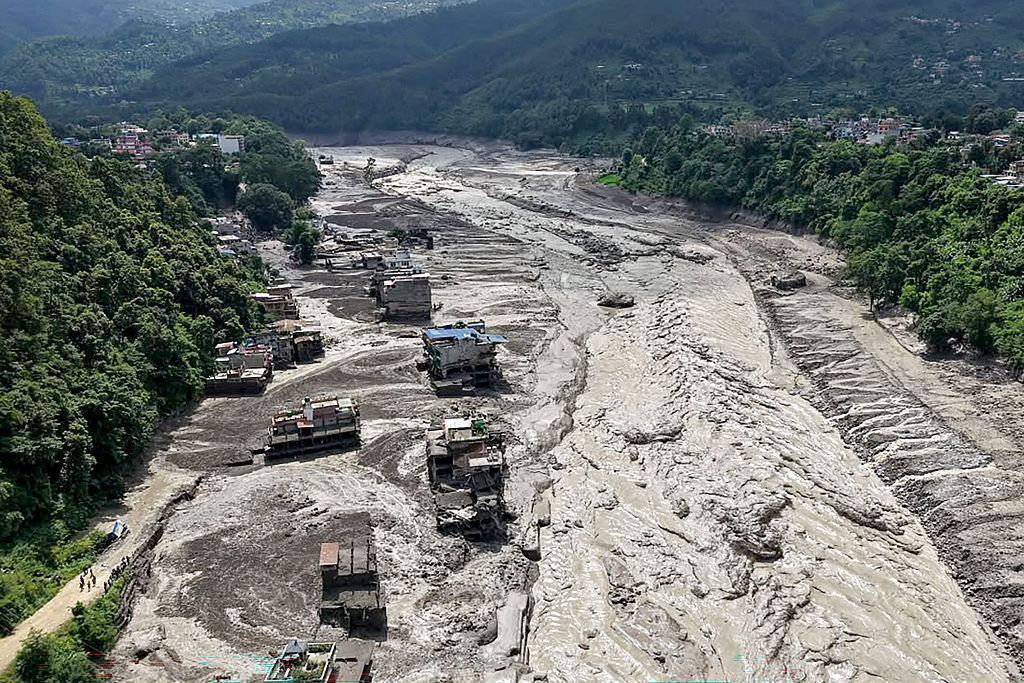
When a high-altitude glacial collapse triggered massive flash floods across Nepal's mountainous northern valleys, it didn't just wash away roads and bridges. It shattered the country's fragile emergency infrastructure, leaving local authorities completely overwhelmed by a rising death toll that has now surpassed 1,000.
If you've been following the headlines, you probably saw the stark images of mass graves being dug in areas like Chitwan's Devghat forest. What the quick photo captions miss, however, is the grinding logistical nightmare happening behind the scenes. Morgues built to hold a few dozen bodies are currently dealing with hundreds of decomposing remains swept miles downstream.
Here is what you need to know about the reality on the ground, why authorities had to resort to mass burials, and the heavy emotional toll it’s taking on families searching for answers.
Why Mass Burials Became the Only Option
Let's address the most jarring aspect of this tragedy right away. Police in Kathmandu and districts like Chitwan and Nuwakot began burying unidentified bodies in long, shallow trenches.
In a predominantly Hindu nation where traditional cremation on a riverbank by family members is the sacred standard for death rites, burying bodies underground feels wrong to many survivors. Criticism has poured in from citizens and public figures alike, asking why the government rushed to put victims in the ground.
The answer comes down to biological decay and basic public health.
- Severe Morgue Deficits: Facilities like the one in Chitwan were designed to handle roughly 50 bodies. They quickly received upwards of 125 or more, with more arriving daily.
- Rapid Decomposition: Many victims spent days submerged in mud and water before recovery. Intense heat and high humidity accelerated the decay.
- Unrecognizable Remains: Officials report that more than half of the recovered bodies are badly mutilated, missing limbs, or lack identifiable facial features entirely.
Without enough functional cold storage or portable morgue units, health experts warned that leaving bodies exposed risked triggering secondary disease outbreaks. The temporary burials weren't chosen out of convenience; they were a desperate containment measure.
The Science of Tracking the Dead
To prevent these mass graves from becoming permanent unknowns, emergency management teams implemented a strict forensic protocol. You can't just drop bodies into a trench and walk away—at least, not if you want families to ever find closure.
Before any body goes into the ground at sites like Devghat, forensic workers execute a detailed documentation process. Every single set of remains receives a unique identification number. Teams photograph distinctive physical traits, log clothing, jewelry, school ties, or tattoos, and meticulously preserve DNA samples and fingerprints.
Furthermore, burial locations are geo-tagged and marked both above and below ground. The entire framework is designed so that if a family member steps forward weeks or months from now with a positive match, the exact plot can be exhumed.
Even with these precautions, identification remains painfully slow. Out of hundreds of recovered victims, only a tiny fraction have been officially named. Relatives crowd community halls and expo centers, scrolling through digital photo logs of recovered clothing and personal effects, hoping against hope to spot a familiar necklace or watch.
The Scale of the Humanitarian Disaster
The flooding, sparked by a glacial collapse near the China border, caught communities entirely off guard. Thousands of people remain listed as missing, including hundreds of workers trapped inside damaged hydropower tunnels and tourists caught on pilgrimage routes.
Neighboring countries and international bodies have stepped in. India deployed specialized forensic teams to assist local authorities with DNA analysis, while China and various UN agencies airlifted water purification units, rescue gear, and heavy excavation equipment. Yet, physical access remains a massive hurdle. Secondary landslides continue to block critical roadways like the main highway linking Kathmandu to the southern plains, choking off the steady flow of relief supplies.
If you are looking to support relief efforts on the ground, focus your contributions on established humanitarian organizations operating direct emergency medical and search-and-response operations within Nepal. Keep a close eye on updates from international disaster monitoring networks for verified appeals, as local infrastructure will require months of sustained rebuilding before these communities can begin to recover.


