The desk is mahogany, scarred by thirty years of coffee rings and midnight decisions. Outside, the fog rolls over the river like a damp wool blanket, muting the streetlights into bruised amber smudges. In this room, words do not merely describe reality. They bend it.
Language is the oldest tool we possess, older than the wheel, older than the plow. It is our original operating system. We whisper names into the dark to tame the monsters in the brush, and we slap labels onto chaos to trick ourselves into thinking we have built a fence around the unknown.
Now, we are renaming the ghost in the machine.
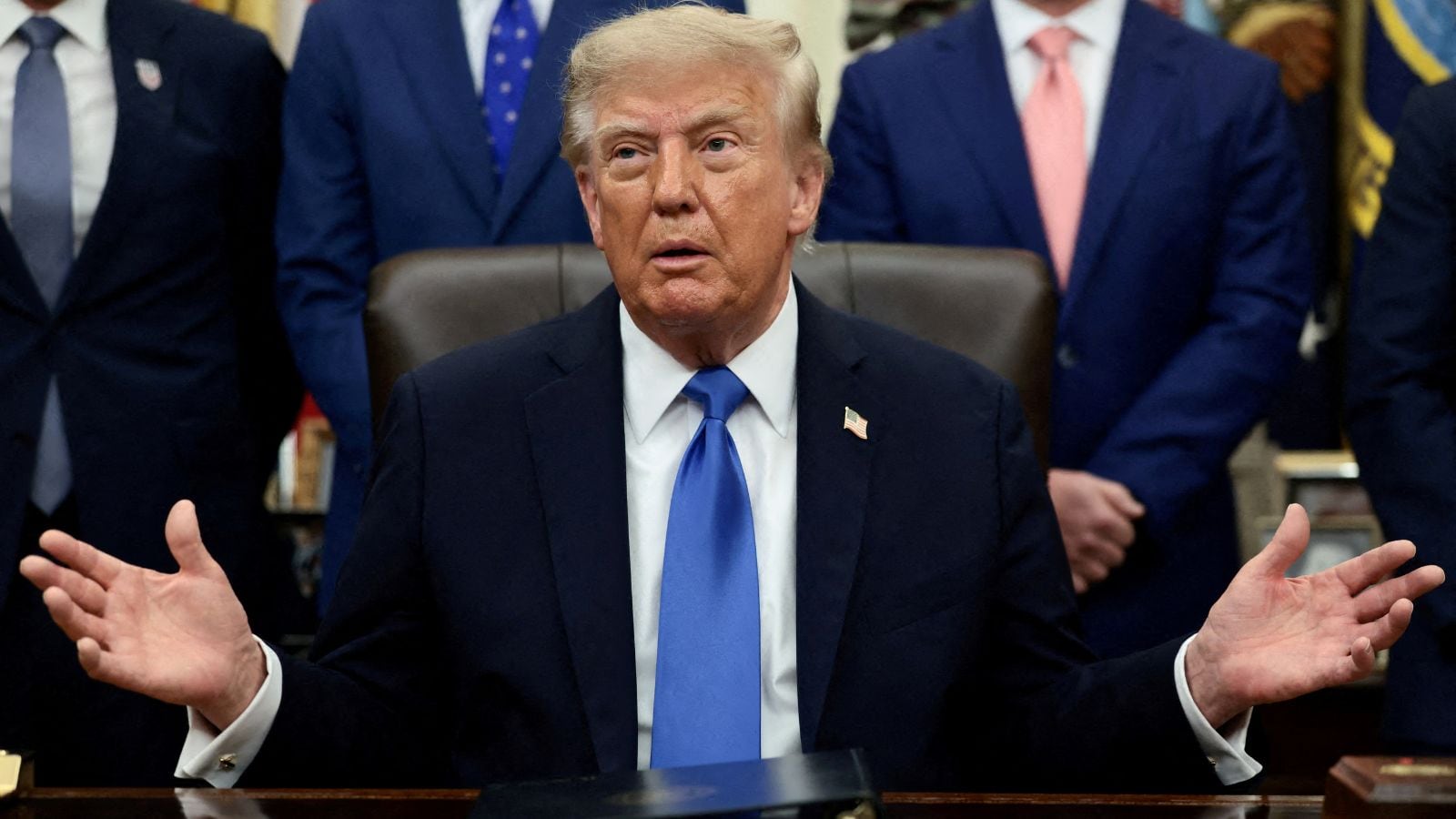
Donald Trump recently dropped a phrase into the public discourse with the casual weight of a coin tossed into an open palm. He claimed that Xi Jinping had agreed to his rebranding of artificial intelligence. Not artificial intelligence. Not machine learning or neural networks or probabilistic inference engines.
Super Intelligence.
Capitalized. Heavy. Imposing. A title that sounds less like a scientific milestone and more like a comic book villain or a heavyweight boxing champion stepping onto the canvas.
Listen closely. Hear the shift.
Artificial intelligence sounds fragile. It sounds like something manufactured, something simulated, a synthetic flower pinned to a lapel. It carries the stench of human failure, the nagging suspicion that whatever we built is merely a cheap counterfeit of the real thing. It implies an artificial breath in a mechanical lung.
Super intelligence? That is different. That sounds inevitable. It sounds weather-like. You do not negotiate with a hurricane; you buy sandbags. You do not audit a tsunami; you run for high ground. By stripping away the word artificial and replacing it with super, the vocabulary moves from the engineering lab to the throne room. It transforms a software architecture into a sovereign power.
And that is precisely the point.
Words are power. In the high-stakes theater of global geopolitics, naming a thing is the first act of conquering it. If Washington and Beijing are locked in a quiet, vicious race for supremacy over the code that will run the next century, the battleground is not just silicon and semiconductors. It is the dictionary.
Think about how we got here. For years, the conversation around the technology was dominated by nervous geeks and cautious ethicists warning about bias, copyright infringement, and job displacement. It was a policy discussion. It was footnotes and white papers.
Then the algorithms got smarter. Or, at least, faster. They began writing poetry that could pass a college seminar, diagnosing diseases from grainy scans before human radiologists blinked, and writing code that compiled on the first try. The policymakers panicked. The venture capitalists opened their checkbooks wider than the Grand Canyon. The public alternated between awe and existential dread.
Into this fractured mirror steps the politician.
Rebranding is an old trick. It is the bread and butter of Madison Avenue and the oval office alike. If a product has a bad smell, you change the label. If a technology carries too much baggage—too many warnings about rogue code, too many anxieties about human obsolescence—you give it a swaggering new moniker. You make it sound majestic.
When a leader proposes calling a system Super Intelligence, they are doing two things simultaneously. They are inflating the perceived capability of the domestic product to terrify rivals, and they are staking a claim to ownership of the future. It is a linguistic flag planted firmly in the digital soil.
Consider what happens next in this high-stakes lexicon game. Beijing has its own ambitions, its own state-backed initiatives, its own philosophical frameworks for governance and machine integration. To accept a label coined in Washington—even implicitly, even in the messy translation of backroom diplomacy—is to yield linguistic territory. Language is the softest form of hegemony. If you dictate the terms by which the world understands a technology, you dictate the rules by which it is regulated, deployed, and feared.
Yet, underneath the bluster of rebranding lies a chillingly mundane reality.
The machines do not care what we call them.
A matrix multiplication does not feel the glow of a capital letter. A transformer model processing billions of tokens of human history does not pause to admire its new title. Whether we call it a tool, an assistant, artificial intelligence, or super intelligence, the math remains cold, deterministic, and indifferent.
The danger is not that the software will live up to the bombastic title. The danger is that we will start treating the title as a substitute for thought.
When we elevate a complex socio-technical system into the realm of the superhuman, we abdicate our responsibility. We shift the narrative from what did we build and how do we control it to what is this supreme entity going to do to us. It is a subtle, corrosive sleight of hand. It transforms human engineering failures into acts of nature. Oh, the algorithm hallucinated? Well, it is a Super Intelligence; what did you expect? Oh, the system reinforced a discriminatory hiring practice? It is too complex for us to unravel; the Super Intelligence works in mysterious ways.
We are baptizing our own black boxes.
And that is why the casual agreement over a rebranding exercise matters far more than the morning headlines suggest. It reveals the underlying psychology of the new tech cold war. This is not just about compute clusters in Virginia or lithography machines in the Netherlands. It is about narrative dominance. It is about who gets to write the mythology of the twenty-first century.
Every great technological leap requires a myth to sustain it. The industrial revolution had the myth of endless progress, the smoke-choked promise that the machine would liberate the laborer. The atomic age had the myth of boundless energy, the Promethean fire captured in a lead-lined sphere.
Now, the digital age is searching for its own mythology. We are careening toward a horizon where human agency feels increasingly fragile, swallowed up by systems we can deploy but can no longer fully explain.
So we give it a grand name. We wrap it in bravado. We turn a regulatory headache into a superhero franchise.
In the quiet hours of the night, when the glow of the monitor illuminates an empty office, the screen blinks. A prompt waits. It does not know about politics, or summits, or rebranding campaigns. It only waits for the next token, the next instruction, the next fragment of human intent pushed through the wire.
We can call it whatever we like. The ghost will still write its own epitaph.