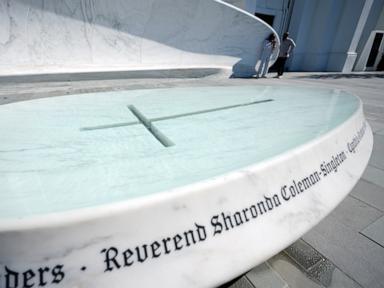
Nine lives were taken in a basement Bible study on June 17, 2015, and it took nearly a decade for a permanent physical tribute to rise on the church grounds. Now that the memorial honoring the victims of the Charleston church massacre has opened, visitors finally have a dedicated space to grieve, reflect, and reckon with what happened inside Mother Emanuel AME Church.
You might assume a project like this happens quickly after a national tragedy. It doesn't. Between fundraising hurdles, architectural revisions, and the sheer emotional weight of getting every single detail right for the surviving families, building a meaningful monument takes years of quiet, painstaking work. If you're planning to visit Charleston or just trying to understand what this new space represents, you need to look past the headlines and see how the design actually functions.
Why the Mother Emanuel Memorial Took Years to Build
Grief doesn't follow a construction schedule. When a white supremacist walked into Emanuel African Methodist Episcopal Church in downtown Charleston, South Carolina, and murdered nine Black parishioners, the community's immediate focus wasn't on bricks and mortar. People were burying their loved ones, supporting the survivors, and navigating a grueling federal and state legal process.
Once conversations about a permanent memorial began, the church and city leaders faced a massive challenge. Mother Emanuel isn't a museum. It's an active, historic congregation founded in 1816—the oldest AME church in the South. Any monument built on that property had to respect the daily spiritual life of the church while accommodating thousands of visitors from around the world.
Architect Michael Arad, best known for designing the National September 11 Memorial in New York, was brought in to lead the vision. Working alongside local partners and the victims' families, Arad didn't just sketch a statue and call it a day. The team spent years listening to the families of the Emanuel Nine to make sure the space felt like a sanctuary rather than a tourist trap. Money had to be raised privately, city approvals had to be secured, and construction had to happen carefully around a building that holds centuries of Black American history.
Inside the Design of the Charleston Church Memorial
Walk onto the grounds today and you won't find a towering bronze soldier or an aggressive wall of text. That was intentional. The design centers on fellowship, forgiveness, and resilience—the exact themes that defined the church's response in the days immediately following the shooting.
Two sweeping, curved benches form the heart of the memorial courtyard. They face each other, creating an intimate space meant for quiet conversation and reflection. If you sit on one side, you're looking directly across at whoever sits on the other. It's a subtle architectural nudge reminding you that community requires presence.
Honoring the Emanuel Nine by Name
The names of the nine victims are carved into the stone, ensuring their individual identities never get swallowed up by the broader political debates surrounding the shooting. When you stand there, you're reading the names of real people who showed up on a Wednesday night to study scripture:
- Rev. Clementa C. Pinckney, 41, the church's senior pastor and a South Carolina state senator
- Cynthia Marie Graham Hurd, 54, a dedicated librarian and community fixture
- Susie Jackson, 87, the oldest victim and a longtime choir member
- Ethel Lee Lance, 70, who worked at the church for decades
- Depayne Middleton-Doctor, 49, a minister and retired county official
- Tywanza Sanders, 26, a recent college graduate who tried to shield others
- Daniel L. Simmons, 74, a retired pastor who loved teaching
- Sharonda Coleman-Singleton, 45, a speech therapist and high school track coach
- Myra Thompson, 59, who was leading the Bible study that night
A fountain sits at the center of the courtyard, with water flowing gently over stone. Water carries deep significance in Christian tradition, symbolizing baptism, renewal, and life. Practically speaking, the sound of moving water also buffers the street noise from Calhoun Street just steps away, carving out a pocket of stillness in the middle of a busy city.
The Survivors' Garden
Right next to the main courtyard sits a space dedicated to the five people who survived the attack, along with the families who lost loved ones. People often forget that survival carries its own lifelong weight. By including a dedicated garden with trees and benches specifically honoring the survivors, the memorial acknowledges that the story didn't end when the gunfire stopped. Six stone benches represent the families and survivors, arranged in a way that feels protective and grounded.
What Most Visitors Miss About Mother Emanuel's History
If you only associate Mother Emanuel with the 2015 tragedy, you're missing almost two hundred years of context. And honestly, understanding that deeper history changes how the new memorial hits you.
Denmark Vesey, a formerly enslaved carpenter who bought his freedom, co-founded the congregation in 1816. A few years later, after Vesey was accused of planning a massive slave uprising in 1822, white authorities burned the church to the ground and banned Black residents from holding independent worship services. The congregation didn't quit. They met in secret for decades until after the Civil War, when they rebuilt the Gothic Revival sanctuary that still stands on Calhoun Street today.
During the Civil Rights Movement of the 1960s, figures like Dr. Martin Luther King Jr. spoke from its pulpit. The church has always been a target precisely because it has always been a center of Black organizing, education, and spiritual strength. The 2015 massacre wasn't an isolated glitch in history; it was part of a long, brutal pattern of racial violence aimed at dismantling Black institutions. Knowing that makes the survival of the congregation—and the opening of this memorial—feel less like a passive tribute and more like an act of defiance.
How the Memorial Changes the Conversation Around Racial Violence
Cities across the American South have spent the last decade arguing over Confederate monuments—what to take down, where to put them, and how to contextualize them. Charleston itself removed the John C. Calhoun statue from Marion Square in 2020 after years of protests.
The Mother Emanuel memorial represents the other side of that equation. Instead of just debating what gets removed from public squares, Charleston now has a permanent architectural anchor dedicated to telling the truth about white supremacist violence and Black resilience.
You don't have to agree on every policy debate about gun control or hate crime legislation to feel the gravity of the courtyard. The space avoids partisan slogans entirely. Instead, it forces visitors to confront the human cost of hatred through the simple reality of nine empty seats at a Bible study table. That restraint is what makes it work. Loud monuments tell you what to think; quiet ones make you sit with what actually happened.
Practical Advice for Visiting the Memorial in Charleston
Because Mother Emanuel remains a functioning house of worship, visiting the memorial requires a different mindset than touring a standard historical site like Fort Sumter or the Battery. People pray here. Funerals and weddings happen here.
If you plan to go, keep a few ground rules in mind so you don't disrupt the congregation:
- Check the church's schedule first. Sundays are for worship services, and private church events occasionally limit access to parts of the property. Weekday mornings or early afternoons usually offer the quietest window to visit the outdoor courtyard.
- Put the phone away. Taking a quick photo of the architecture is one thing, but treating a site of mass murder like an Instagram backdrop is deeply disrespectful. Keep your phone on silent and spend a few minutes actually reading the names.
- Skip the tour buses if you can. Large commercial tour groups sometimes linger on the sidewalk outside, offering commentary from the street. Walk onto the grounds yourself, sit on the curved benches, and experience the space without a tour guide talking over the water.
- Support the surrounding neighborhood. Charleston's historic district has changed rapidly due to tourism and gentrification. After visiting, walk a few blocks to support local Black-owned restaurants, bookstores, and shops in the area.
The memorial courtyard is open to the public free of charge, reflecting the same radical hospitality that led those nine parishioners to welcome a stranger into their Bible study in the first place. When you step through the gates on Calhoun Street, take a seat on the stone bench, listen to the water, and read every single name carved into the wall.