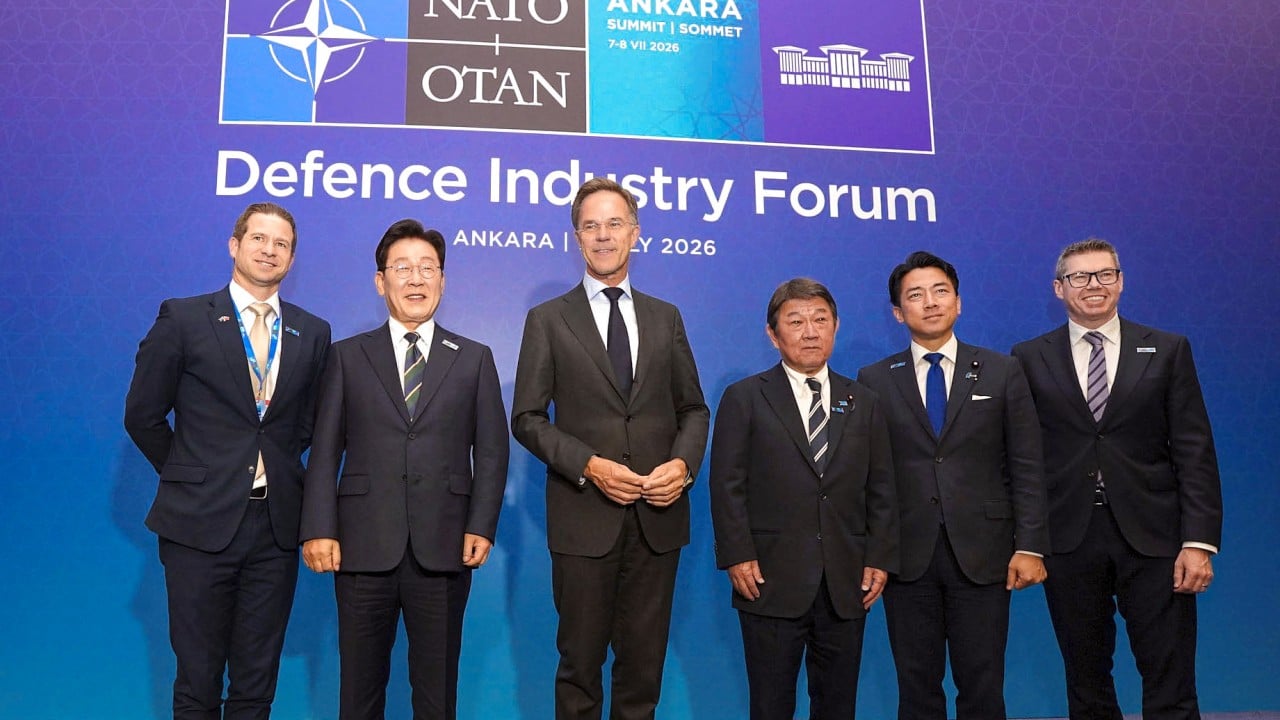
The idea that what happens in Europe stays in Europe is officially dead.
When representatives from NATO met with the Indo-Pacific Four (IP4)—Japan, South Korea, Australia, and New Zealand—on the sidelines of the Ankara Summit, they didn't just exchange pleasantries. They hammered out a defense and tech pact designed to counter the growing axis between China and Russia.
If you think this is just another toothless diplomatic talking shop, you're missing the bigger picture. The reality is that the security of the West and the Pacific are now permanently linked. When North Korea sends millions of artillery shells to Russia, and China supplies dual-use technology to rebuild Moscow's military machine, it directly threatens Europe. In return, Russian technical secrets are making their way to Pyongyang and Beijing, altering the military balance in Asia.
This is a massive shift in how global power is structured. Here is what is actually going on, why it affects you, and what happens next.
The Axis of Convenience Forcing NATO's Hand
For decades, NATO stayed in its geographic lane. That lane has blown wide open. The catalyst isn't just Russian aggression in Ukraine, but the blatant reality that Beijing and Pyongyang are keeping Vladimir Putin's war machine alive.
Look at the numbers. North Korea has shipped massive stockpiles of munitions and ballistic missiles to Russia. China has avoided sending completed weapons systems but has provided a critical lifeline by exporting semiconductors, drone components, and manufacturing machinery. Without this economic and tech backend, Russia would struggle to maintain its operations.
In exchange, Moscow is highly likely sharing sensitive military data. Think nuclear telemetry, advanced submarine technology, and ballistic missile improvements. Japanese Foreign Minister Toshimitsu Motegi and South Korea's leadership have explicitly warned that this cross-theater military trade makes it impossible to separate Euro-Atlantic security from the Pacific.
The Western alliance finally realizes it cannot deter Russia without addressing its Asian enablers.
Moving From Political Talk to Hard Power Tech
We've moved way past symbolic statements. The agreement reached in Ankara shifts the relationship from strategic curiosity to actual operational cooperation. The focus has narrowed onto three distinct pillars.
1. Intelligence and Cyber Warfare Defense
The lines between military conflict and cyber sabotage have blurred completely. NATO and the IP4 are integrating their cyber defense exercises. When a state-sponsored hacker group from China tests a new piece of malware on an Australian utility grid, that data is now analyzed and shared with European allies in real time. It's about collective digital defense.
2. Supply Chain Hardening
The war in Ukraine exposed how fragile Western supply chains are. The Ankara talks prioritized the diversification of critical tech and raw materials. You can't build precision missiles without rare earth elements, and you can't run advanced radar without high-end chips. Moving these supply networks away from Chinese dominance is no longer a long-term goal—it's a current military necessity.
3. Joint Defense Production
Western defense industries are maxed out. Combining European manufacturing capacity with the high-tech industrial bases of Japan and South Korea is the secret weapon here. South Korea is already a major arms exporter to European nations like Poland. Expanding this defense-industrial cooperation helps NATO replenish its depleted stockpiles while giving Pacific nations better economies of scale.
The Friction the Diplomats Won't Admit
Don't let the unified press releases fool you. This cross-regional marriage faces serious internal resistance.
The United States is pushing hard for greater burden-sharing. Washington wants its European allies to step up so American forces can focus heavily on deterring a potential conflict over Taiwan or the Korean Peninsula. If a major crisis breaks out in Asia, the U.S. will have to redeploy assets from Europe. European nations know this, yet many are still hesitant to label China as a direct military adversary.
Countries like France and Germany are constantly hedging. They rely heavily on trade with Beijing and worry that over-expanding NATO's footprint into Asia will create a self-fulfilling prophecy of conflict. There is a deep-seated fear that backing Beijing into a corner will destroy economic relations and accelerate an invasion of Taiwan—a scenario estimated to wipe $10 trillion off global GDP.
Beijing knows exactly how to play these divisions. The Chinese Foreign Ministry routinely warns that NATO's Pacific outreach is an attempt to create an "Asian NATO" and destabilize the region.
What This Means for Global Security
This isn't about NATO sending battleships to patrol the South China Sea. That won't happen. NATO lacks the hard power projection for it, and its European members don't have the stomach for it.
Instead, expect a decentralized network of smaller, issue-specific alliances. This minilateral approach bypasses the bureaucratic paralysis of large global institutions. It lets middle powers like Japan, Australia, and South Korea leverage their specific strengths—like naval diplomacy, advanced tech manufacturing, and maritime domain awareness—to reinforce the global rules-based order.
For the average citizen, this structural shift directly impacts everything from the price of consumer electronics to national energy security. A secure supply chain means less volatility. A coordinated cyber defense means fewer disruptions to critical infrastructure.
The strategy is clear. To keep tabs on this evolving security environment, watch the concrete integration of military systems. Track the flow of joint defense procurement contracts between European capitals and Seoul. Keep an eye on the upcoming joint naval and cyber exercises in the Pacific. The true measure of this alliance won't be found in political declarations, but in the quiet, technical synchronization of global defense networks.