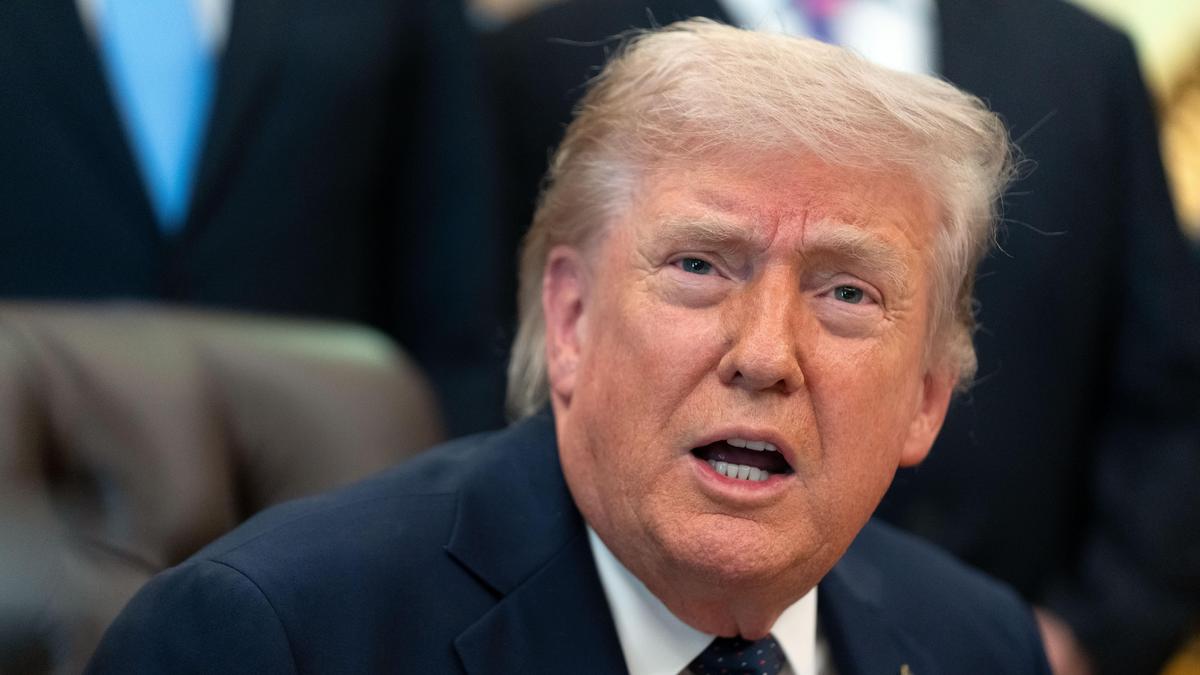
The headlines are screaming about a "war on science." Pundits are clutching their pearls over the dismissal of the National Science Board (NSB), painting a picture of an intellectual wasteland where data goes to die. They want you to believe that a group of twenty-four part-time advisors is the only thing standing between us and the Stone Age.
They are wrong.
The outrage machine is functioning exactly as designed, focusing on the optics of "firing" scientists while completely ignoring the institutional rot that made the NSB a bloated, bureaucratic anchor on American progress. If you think removing a layer of career academics from a federal advisory role is a catastrophe, you haven't been paying attention to how actual innovation happens in the 21st century.
The Myth of the Independent Arbiter
The central argument from the "lazy consensus" is that the NSB provides an independent, objective check on policy. This is a fantasy. In reality, the Board has long functioned as a self-perpetuating guild. Members are often the very people who benefit most from the existing grant structures.
When you have a board composed of university presidents and lifetime researchers overseeing the National Science Foundation’s $10 billion budget, you don't get "objective science." You get a protected class ensuring that the status quo remains funded. I’ve watched this play out in the private sector for years—boards that become echo chambers eventually drive their organizations into the ground. Why should the federal science apparatus be any different?
The NSB wasn't protecting "Science" with a capital S. It was protecting a specific, antiquated model of academic funding that prioritizes incrementalism over high-risk, high-reward breakthroughs. By clearing the deck, the administration isn't attacking knowledge; it’s attacking the gatekeepers who have spent decades making sure only "safe" ideas get through the door.
Why Bureaucracy is the Enemy of Discovery
Let’s talk about the speed of light—not the physics version, but the speed at which a government-funded idea actually reaches the market. Under the previous oversight regime, the friction was immense.
The NSB’s role in "long-range planning" often translated to years of committees, sub-committees, and white papers that were obsolete by the time they hit a printer. While the private sector was cracking the code on LLMs and reusable rockets, our top science advisors were busy debating "inclusive excellence" frameworks and administrative overhead rates.
We are currently in a global arms race for AI, quantum computing, and synthetic biology. We do not have the luxury of a three-year feedback loop. The dismissal of the board is a blunt force trauma approach to a system that refused to move. It is a forced reboot. Is it messy? Yes. Is it necessary? Absolutely.
The "Expert" Fallacy
One of the most frequent questions popping up in search results is: How can the government function without expert scientific advice?
The question itself is flawed. It assumes that "expertise" only resides within a specific, federally-appointed board. This is the ultimate "insider" delusion. The world’s leading experts in applied physics, materials science, and machine learning aren't sitting on government boards for $200 a day. They are in the trenches at startups, Skunk Works labs, and private research institutes.
The idea that the President or the Director of the NSF is now "flying blind" is laughable. They have access to the same pool of talent they’ve always had—they just aren't obligated to listen to a specific group of people who have been wrong about the pace of technological change for a decade.
True expertise is proven by results, not by an appointment letter. By dismantling this specific board, we open the door for a more fluid, ad-hoc advisory system where the government can pull in specialists for specific problems rather than relying on a generalist body of academic luminaries.
High-Risk Research Requires High-Stakes Leadership
The NSB’s biggest failure has been its risk-aversion. Federal grant funding has become a game of "prove it works before we give you the money." This is the death of radical innovation.
Imagine a scenario where a young researcher in 1940 had to pitch the Manhattan Project to a modern NSB. They would have been laughed out of the room for lack of "preliminary data" and "insufficient peer-review history."
The current system rewards those who are best at writing grants, not those who are best at solving impossible problems. By disrupting the oversight structure, there is a legitimate—albeit risky—opportunity to pivot the NSF toward a "DARPA-style" model.
- The DARPA Model: Small teams, high autonomy, zero tolerance for bureaucratic "consensus."
- The NSB Model: Massive committees, endless oversight, and a desperate need for everyone to agree before a single dollar moves.
Which one do you think wins the next century?
The Inevitable Downside
I won't pretend this move is without cost. The immediate result is chaos. You lose institutional memory. You create a vacuum that can be filled by political hacks if the administration isn't careful.
But institutional memory is often just a fancy word for "the way we’ve always done it." And "the way we’ve always done it" is why it takes fifteen years to bring a new drug to market and why our power grid still looks like something from the 1950s.
The risk of political interference is real, but it’s a lateral move from the academic interference we already had. At least political interference is transparently biased. Academic bias hides behind the veneer of "the scientific method" while actually protecting departmental budgets.
Stop Asking if it’s "Fair" and Start Asking if it Works
People are obsessed with whether these scientists "deserved" to be fired. That is the wrong question. In the world of high-stakes competition, nobody "deserves" a seat at the table forever.
The National Science Foundation is a tool of national power. It is not a social club for distinguished professors. If the tool is dull, you sharpen it. If the handle is broken, you replace it.
The "scientific community" is not a monolith, despite what the op-eds say. There is a massive contingent of younger, hungrier researchers who are quietly cheering this move. They are the ones who have been denied funding because they didn't have the right "pedigree" or because their ideas challenged the established theories of the board members.
The New Reality of Innovation
We are moving into an era where the distinction between "basic science" and "applied technology" is disappearing. The NSB was a relic of the post-WWII era, designed for a time when the government was the only player with enough capital to do big things.
That world is gone.
Today, venture capital outspends the government in key R&D sectors. Private entities are landing on the moon. The NSB was trying to manage a 2026 economy with a 1950 playbook.
Removing the board isn't an "anti-science" move. It’s a "pro-reality" move. It forces the NSF to justify its existence without the shield of an untouchable board of elders. It demands that we look at our scientific output and ask: "Are we actually winning, or are we just filling out paperwork?"
The disruption is the point. You don't fix a stagnant system by asking the people who built it to change their minds. You fix it by clearing the room and starting over.
The era of the untouchable academic bureaucrat is over. Good riddance.
Now, let's see if anyone has the guts to actually build something.