Pouring salt water through your skull seems barbaric until your sinuses clog completely. The humble neti pot has shifted from an obscure Ayurvedic practice to a standard medical recommendation for chronic sinus suffering. Using one correctly requires precise water temperature, correct body positioning, and sterile fluid to avoid introducing dangerous pathogens into your nasal cavity. When executed properly, nasal irrigation flushes out accumulated mucus, pollen, and inflammatory debris while supporting your body’s natural clearance mechanisms. However, improper technique transforms a benign home remedy into a vector for severe bacterial and amoebic infections.
The Microscopic Mechanics of Sinus Flushing
Your nasal passages are not simple empty pipes. They are complex, cavernous channels lined with tiny hair-like structures called cilia. These cilia beat continuously, sweeping a thin layer of protective mucus toward the back of your throat where it is swallowed and neutralized by stomach acid.
When inflammation strikes from allergies, viral infections, or environmental pollutants, this delicate transport system breaks down. Mucus thickens. Cilia stall. Pressure builds behind the delicate bones of your face.
A saline rinse acts as a physical reset. The fluid enters one nostril, flows around the back of the nasal septum, and drains out the opposite side. This mechanical wash physically lifts trapped irritants out of the sinus cavity.
Beyond mechanical cleansing, fluid concentration plays a crucial biochemical role. An isotonic saline solution matches the salt concentration of human tissue, soothing raw membranes. A hypertonic solution contains a higher salt concentration, drawing fluid out of swollen nasal tissue through osmosis to reduce congestion without synthetic drugs.
Tap Water Risks and Saline Preparation
The primary danger of nasal irrigation stems from fluid choice. Many people mistakenly fill their devices directly from the kitchen sink.
Tap water is treated for drinking, not for sinus application. Stomach acid easily neutralizes tiny organisms like Naegleria fowleri—a microscopic, brain-eating amoeba sometimes present in municipal and well water supplies. When introduced into the delicate, highly vascularized tissues of the upper nasal cavity, these organisms can travel along the olfactory nerve directly to the brain, causing primary amoebic meningoencephalitis, a condition that is almost always fatal.
Essential Water Standards
- Distilled or Demineralized Water: Purchased commercially, this remains the safest option for every rinse.
- Boiled Tap Water: Water brought to a rolling boil for at least one full minute, then cooled completely to room temperature.
- Sterile Water: Commercially prepared water labeled specifically as sterile.
Mixing the solution requires absolute precision. Plain water stings intensely because it causes nasal tissues to absorb moisture rapidly and swell. Always use pre-measured saline packets containing pure sodium chloride and sodium bicarbonate, or mix your own using non-iodized salt and baking soda. Iodine and additives found in standard table salt irritate sensitive membranes.
Mastering the Flow Technique
Positioning dictates whether your rinse succeeds or ends in uncomfortable choking. Gravity should move the fluid, not aggressive pressure.
Stand over a sink and bend forward at a 45-degree angle. Tilt your head sideways so one nostril points toward the basin floor. Breathe exclusively through your open mouth. Tilting your chin down slightly prevents water from running down the back of your throat.
Place the spout gently against the upper nostril, creating a snug seal. Raise the vessel high enough for fluid to flow into the nose. The water will travel up, cross the septum, and stream smoothly out of the lower nostril into the drain.
If water drains into your mouth or throat, adjust your posture. Lower your chin closer to your chest.
Once the reservoir empties, blow your nose gently into a tissue while leaning over the sink. Avoid pinching your nostrils tight while blowing hard. High pressure forces trapped water sideways into your Eustachian tubes, risking middle ear discomfort or infection. Repeat the process on the opposite side.
Device Breakdown and Material Selection
Choosing the right appliance depends on personal comfort, physical dexterity, and maintenance capacity.
Ceramic Neti Pots
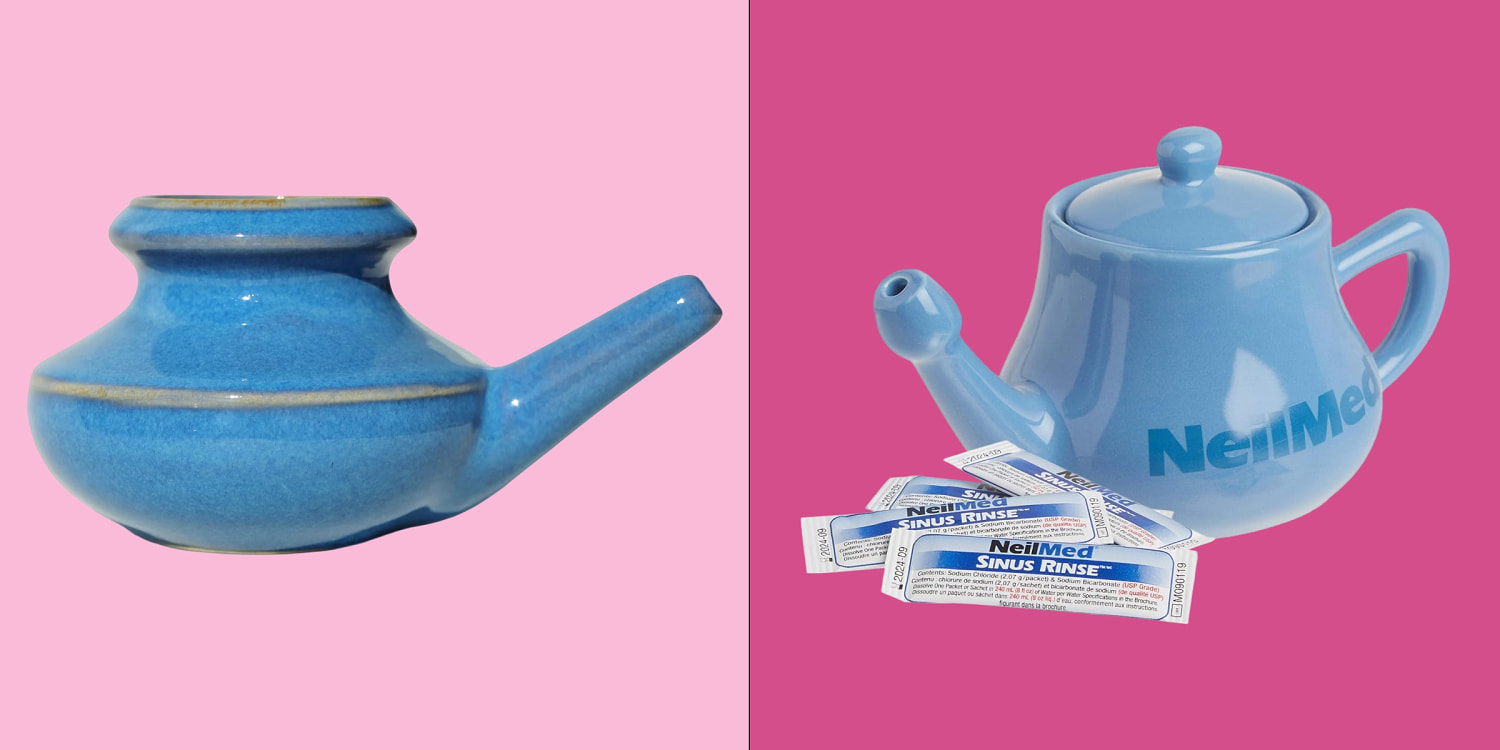
Traditional ceramic models offer exceptional durability and effortless cleaning. Ceramics tolerate high temperatures, allowing you to sterilize them in dishwashers or boiling water. The heavy weight provides stability during use, though they can crack if dropped into a porcelain sink.
Plastic Squeeze Bottles
Squeeze bottles generate positive pressure, forcing fluid higher into cramped sinus passages than gravity-fed pots can reach. This makes them ideal for severe congestion. However, plastic degrades over time, micro-scratches trap bacteria, and heat sterilization options remain limited. Replace plastic squeeze devices every three months.
Powered Electric Irrigators
Motorized systems use pulsatile action to push fluid through the sinuses at controlled rates. These devices often include built-in reservoirs and suction capture mechanisms. While effective for chronic post-surgical sinus patients, they require complex disassembly for cleaning and carry a significantly higher price point.
Sterilization Practices
Cleaning your equipment after every single use is non-negotiable. Rinsing a device with tap water and leaving it damp on a bathroom counter creates a breeding ground for mold, Pseudomonas, and Staph bacteria.
Wash the container immediately after use with warm, sterile or boiled water and dish soap. Air-dry all component parts completely on a clean paper towel in an area away from bathroom humidity.
Periodically disinfect ceramic and heat-safe devices by boiling them or using an alcohol wipe on all interior surfaces. Never share a nasal irrigation device with family members. Cross-contamination occurs instantly through shared spouts.
Recognizing Side Effects and Counterindications
Nasal irrigation provides substantial relief, but it is not universally appropriate.
If your nasal passages are completely blocked, do not attempt to force liquid through the obstruction. High pressure against total blockages causes fluid back-up into the ears, leading to fluid retention behind the eardrum.
Discontinue use immediately if you experience sharp ear pain, persistent nosebleeds, or worsening facial pressure. Individuals with recent facial trauma, ear surgery, or compromised immune systems must consult an otolaryngologist before attempting sinus rinses.
Using saline rinses too frequently can also backfire. Over-rinsing strips away the natural protective immune proteins contained within delicate nasal mucus, leaving tissues vulnerable to secondary infections. Limit irrigation to once or twice daily during active symptom flare-ups, and reduce usage once congestion resolves.
Select distilled water, mix proper isotonic saline, tilt your head correctly, and wash the equipment thoroughly after every session.