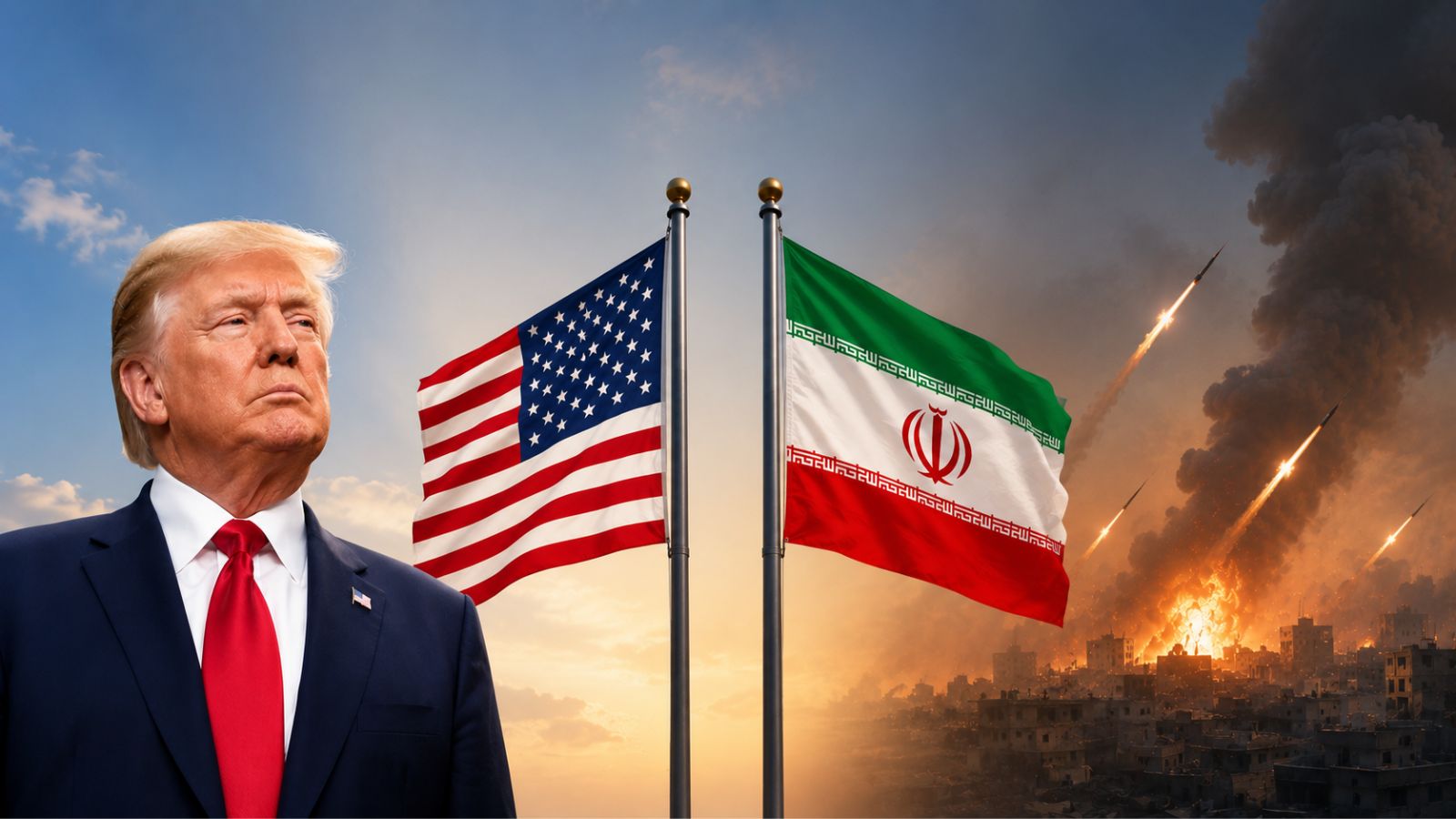
Washington is celebrating a fictional victory. The executive declarations rolling out of the White House describe a "steel wall" in the Persian Gulf, a naval blockade so absolute that traffic has ground to a halt and the United States enjoys complete domain dominance. The narrative is comforting: the US military dictates terms in the Strait of Hormuz, and Iran’s 900-pound stockpile of highly enriched uranium is practically waiting to be loaded onto American transport planes to be destroyed.
It is a masterful exercise in geopolitical theater. It is also dangerously detached from the operational realities of asymmetric warfare, energy economics, and maritime law.
Believing that any navy can establish permanent, absolute control over a twenty-one-mile-wide chokepoint flanked by an adversarial coastline is a fundamental misunderstanding of modern conflict. The United States does not have total control over the Strait of Hormuz. No one does. The assumption that Washington can simply dictate the terms of shipping lanes, deny regional sovereignty, and extract weapons-grade material by executive decree ignores the brutal arithmetic of geography and hardware.
The Geography Dictates the Terms
To understand why the "steel wall" narrative fails, you have to look at the water, not the press briefings. The Strait of Hormuz is not the open ocean. It is a highly congested, narrow corridor where the actual inbound and outbound shipping lanes are each only two miles wide, separated by a two-mile buffer zone.
These lanes pass directly through Omani and Iranian territorial waters under the transit passage regime of the United Nations Convention on the Law of the Sea. While the US maintains a formidable naval presence, the physical proximity of the Iranian coast turns traditional naval supremacy into a liability.
I have watched defense analysts map out naval blockades on digital boards for years, treating carrier strike groups like invincible chess pieces. In the real world, a carrier operating inside or even near the Persian Gulf is an oversized target. The Iranian Revolutionary Guard Corps Navy does not intend to match the US Navy hull-for-hull in a blue-water engagement. Their entire doctrine is built around anti-access/area-denial.
- Swarm Tactics: Hundreds of fast attack craft armed with anti-ship missiles can overwhelm the radar and targeting systems of even the most sophisticated Aegis destroyers.
- Smart Mining: Bottom-tethered, acoustic-signature mines can be deployed by civilian dhows, turning the shallow shipping channels into a lethal lottery.
- Mobile Coastal Batteries: Anti-ship cruise missiles hidden along the rugged, mountainous terrain of the Iranian coastline can be fired and relocated before an airstrike can counter them.
When the Iranian Revolutionary Guard claims that dozens of commercial vessels transited the strait despite the declared blockade, they are highlighting the gap between political rhetoric and maritime reality. The US can deter large, conventional surface vessels, but it cannot police every hull, dhow, and tanker hugging the coastline without triggering the exact catastrophic escalation it claims to prevent.
The Enriched Uranium Extraction Fantasy
The second half of the current consensus is that the United States will simply "retrieve" or seize the 900 pounds of highly enriched uranium currently sitting in Iran. The rhetoric suggests this material is an object to be recovered, like a confiscated cargo container.
This is an operational illusion. Highly enriched uranium refined to near-weapons-grade is not stored in a centralized warehouse with a bullseye painted on the roof. It is dispersed, heavily shielded, and buried deep within hardened subterranean facilities like Fordow and Natanz, bored directly into the hearts of mountains.
[Surface Level Terrain]
       |
       v (Hardened Shafts / Air Filtration)
[Deep Subterranean Granite Formations]
       |
       v (Centrifuge Cascades & HEU Storage)
You do not "retrieve" material from a bunker built beneath hundreds of feet of solid granite and reinforced concrete via a diplomatic deal or a special operations raid.
Imagine a scenario where a military unit attempts a kinetic recovery operation. To physically access those stockpiles, you would need a full-scale ground invasion, a total neutralization of the country's integrated air defense systems, and weeks of specialized engineering extraction under active fire. If the facility is bombed with conventional bunker-busters, you do not retrieve the uranium; you bury it deeper, contaminate the local geology, or scatter it, rendering it unrecoverable while ensuring the immediate collapse of any diplomatic framework.
To pretend that this material can be extracted as a standard condition of a ceasefire or a negotiated surrender is a tactical miscalculation. The Supreme Leader’s counter-directive that the stockpile will not leave the country isn’t just political defiance—it is a recognition that possession of the physical material is Tehran's only remaining leverage.
The Toll System is a Trap
The administration’s fierce opposition to the proposed Iranian-Omani maritime tolling system reveals a deeper anxiety. Washington has declared that any move to formalize transit fees in the Strait of Hormuz is completely illegal and a threat to global trade.
The legal reality is murky. While the Strait is an international waterway under transit passage rules, Iran has never ratified the 1982 Law of the Sea Convention. They adhere to the older 1958 Convention on the Territorial Sea, which allows for the suspension of innocent passage if national security is threatened. By engaging with Oman to structure a formal tolling mechanism, Tehran is executing a sophisticated diplomatic maneuver: transforming a military standoff into a bureaucratic and economic dispute.
If Iran and Oman formalize a transit fee, they force global shipping conglomerates into a corner. Commercial maritime operators do not care about geopolitical optics; they care about insurance premiums and predictable supply chains.
- If a major shipping line pays the toll to guarantee safe passage, they validate Iran’s regulatory authority over the chokepoint.
- If they refuse to pay on Washington’s orders, their insurance underwriters (like Lloyd's of London) will skyrocket their premiums or revoke coverage entirely for Hull and Machinery risks in the Gulf.
The US Navy cannot escort every single commercial tanker, container ship, and bulk carrier moving through the region. The moment maritime insurers decide the risk of unescorted transit is too high, global trade halts on its own—not because of an Iranian blockade, but because of corporate risk aversion. The toll plan is a trap precisely because it leverages international finance against American military power.
The Cost of the Illusion
The risk of maintaining the "total control" posture is that it forces the United States into a rigid escalatory spiral. When you tell the public and the markets that you have built a "steel wall," any successful Iranian defiance—a captured tanker, a deployed mine, or a continued enrichment cycle—dismantles American credibility.
The regional energy landscape is already adapting to this instability. The United Arab Emirates is aggressively pushing to complete its second major pipeline bypassing the Strait of Hormuz, aiming to route nearly half of its export capacity directly to the Gulf of Oman. Saudi Arabia has its own East-West pipeline to the Red Sea. The region is actively building a future where the Strait of Hormuz matters less, because they know that absolute security there is an impossibility.
By centering a foreign policy strategy on the absolute denial of Iranian maritime sovereignty and the physical seizure of its nuclear assets, Washington is playing a hand it cannot mathematically win. The administration is treating a fluid, asymmetrical maritime theater like a static frontline from the twentieth century.
The United States can project massive power, disrupt Iranian commerce, and exact severe economic penalties. But control? Control requires the ability to dictate every variable in the environment. In the narrow, volatile waters of the Strait of Hormuz, that level of control is an illusion that a single asymmetric incident will shatter.