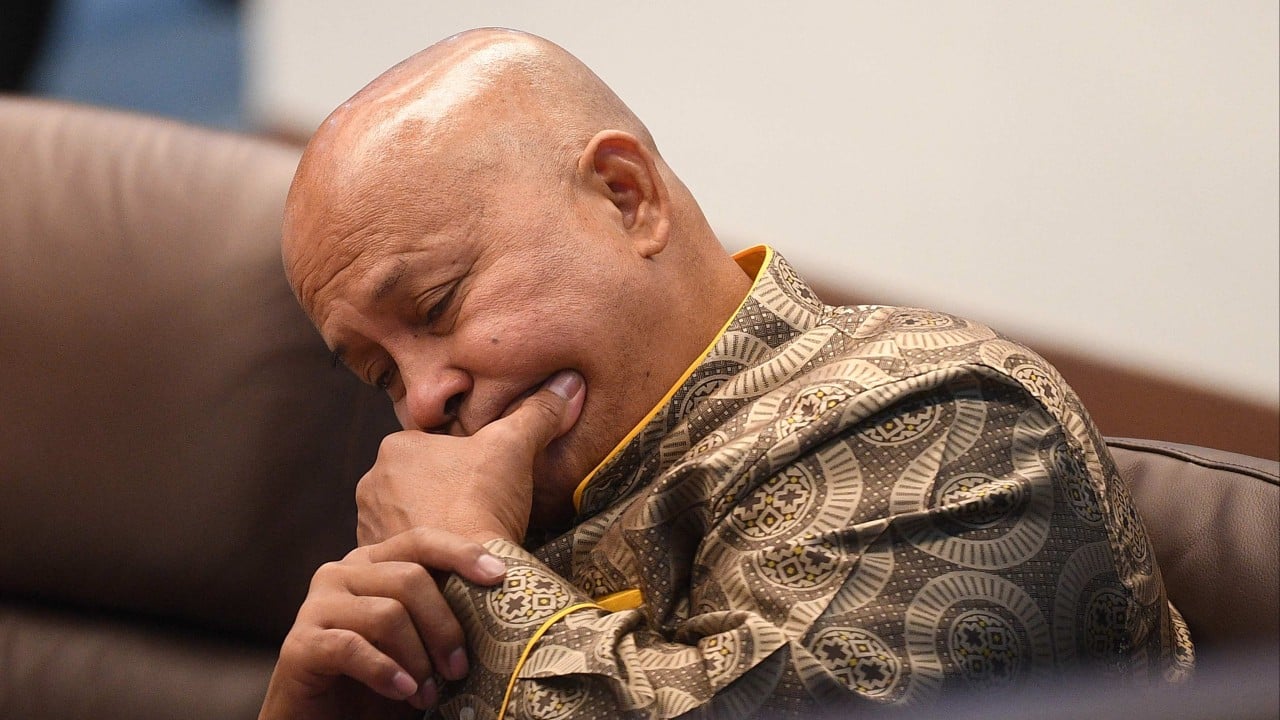
Mainstream legal pundits are celebrating the Philippine Department of Justice ordering the arrest of Senator Ronald "Bato" Dela Rosa. They view it as a triumph of international law. The narrative is neatly packaged: the International Criminal Court unseals a warrant, the Philippine Supreme Court denies a temporary restraining order by a 9-5-1 vote, and Justice Secretary Fredderick Vida commands law enforcement to hunt down the former police chief. Western commentators clap, human rights NGOs issue press releases, and the media elite declares that impunity is finally losing its police escort.
It is a beautiful, naive fantasy.
The lazy consensus treats this geopolitical thriller as a straightforward exercise in criminal justice. They see a rogue senator running up Senate stairs, a dramatic shootout in the legislative halls, and a government finally growing a backbone. What they completely miss is the structural reality of how power works in Manila. This is not the rule of law in action. It is a highly calculated, domestic political purge masquerading as international justice, and the Western institutions cheering it on are being played like a cheap fiddle.
I have watched administrations across Southeast Asia weaponize anti-corruption and international tribunals to liquidate domestic rivals for decades. The sudden eagerness of President Ferdinand Marcos Jr.’s administration to enforce an ICC warrant—after years of the state insisting the Hague has no jurisdiction because the country withdrew from the Rome Statute in 2019—is not a moral awakening. It is a cold-blooded attempt to dismantle the Duterte political dynasty before the 2028 presidential elections.
By allowing a foreign court to dictate terms inside the country, the current administration is setting a dangerous precedent that will fundamentally destabilize the state long after Dela Rosa is either caught or bargains his way out.
The Sovereignty Illusion: Outsourcing the Monopoly on Force
The most flawed premise dominating the airwaves is that executing the ICC warrant strengthens the Philippine judicial system. The opposite is true. When a sovereign nation admits its own courts, police, and senate are incapable of handling a domestic actor without a mandate from a treaty organization in Europe, it openly declares bankruptcy on its own sovereignty.
Let us look at the facts. Dela Rosa’s defense team, led by Israelito Torreon, argued a fundamentally sound constitutional point: the Philippines officially withdrew from the ICC in 2019 under Rodrigo Duterte. Under traditional Westphalian sovereignty, a domestic arrest based solely on a foreign warrant without an accompanying domestic charge is an explicit violation of due process.
By bypassing the need for a local court’s independent warrant and relying on the ICC’s unsealed November 2025 mandate, the Department of Justice has effectively outsourced the state’s monopoly on legitimate force.
Imagine a scenario where Washington or Beijing allowed a European court to unilaterally order the arrest of a sitting member of their legislature while local police simply acted as the delivery boys. It would be laughed out of the room. Yet, because the target is a deeply polarizing figure associated with a brutal drug war that claimed thousands of lives, the legal elite is willing to burn down the constitutional house just to catch the monster inside.
Weaponized Compliance: The 2028 Electoral Strategy
To understand why this arrest order is happening right now, you have to look past the human rights rhetoric and look at the calendar.
- The Senate Coup: Dela Rosa did not emerge from months of hiding to face the music; he returned to the Senate floor to cast a decisive vote to replace Senate President Tito Sotto with Alan Peter Cayetano—a fierce Duterte ally.
- The Impeachment Battle: This leadership shift occurred precisely as the House of Representatives initiated a second impeachment trial against Vice President Sara Duterte over the alleged misuse of state funds.
- The Geopolitical Split: Rodrigo Duterte is already in detention in The Hague. Securing Dela Rosa breaks the back of the remaining Duterte loyalists in the legislature.
This is a textbook consolidation of power. The Marcos administration is utilizing the ICC as an external enforcement arm to neutralize the Duterte faction's legislative shield. If Sara Duterte is stripped of her allies in the Senate, her impeachment becomes a mathematical certainty.
The international community thinks it is supporting the victims of extrajudicial killings. In reality, it is providing air cover for an elite political clan war. The downside of this contrarian reality is stark: if the public perceives that international justice is merely a tool used by one faction to jail another, faith in global institutions will drop to absolute zero among ordinary citizens.
The Staged Chaos: Who Benefits from the Farce?
The media covered the mid-May shootout inside the Senate as a symptom of a collapsing state. National Bureau of Investigation agents chased a senator through corridors while barbed wire went up and riot police assembled outside. Investigators are currently looking into whether the entire chaos and Dela Rosa's subsequent "escape" were completely staged.
Of course it was staged. But the question is: by whom, and for what purpose?
+------------------+-----------------------------+-----------------------------+
| Actor            | Ostensible Goal             | Real Strategic Benefit      |
+------------------+-----------------------------+-----------------------------+
| Duterte Faction  | Evade immediate capture     | Cast Bato as a martyr for   |
|                  |                             | Philippine sovereignty      |
+------------------+-----------------------------+-----------------------------+
| Marcos Gov      | Enforce global law          | Demonstrate total control   |
|                  |                             | and isolate Sara Duterte    |
+------------------+-----------------------------+-----------------------------+
For the Duterte loyalists, turning a standard arrest into a cinematic escape narrative transforms Dela Rosa from an accused human rights violator into a folk hero defending the nation against foreign overreach. For the administration, the chaos justifies an even heavier hand, allowing NBI Chief Melvin Matibag to declare that the fugitive will be arrested "whether he likes it or not."
This theater does not serve justice; it serves polarization. The poorest Filipinos—the ones who bore the actual brunt of the drug war's violence—are left watching a billionaire elite class use the state's highest institutions as a stage for a high-stakes game of hide-and-seek.
The Economic Aftershocks of Legal Instability
For global investors looking at Southeast Asia, this saga is a massive red flag. Capital demands predictability. When the highest court in a country flips its stance on international jurisdiction based on who sits in the presidential palace, it signals that contractual and legal stability is non-existent.
If a treaty signed decades ago and exited years ago can suddenly be re-animated to arrest a sitting senator, what stops the state from re-interpreting international trade agreements, corporate tax structures, or property rights on a whim to target corporate rivals?
The short-term political victory of jailing Dela Rosa will come at the expense of long-term economic credibility. The administration thinks it is demonstrating strength to the international community. What global markets actually see is a weak judicial framework unable to resolve domestic criminal allegations through its own local prosecutors.
Stop looking at the unsealed ICC warrants as a solution to systemic impunity. The Hague cannot reform the Philippine police force. It cannot cure the deep-seated institutional corruption that allowed the drug war to happen in the first place. Relying on an international savior to clean up a domestic mess is a lazy strategy that guarantees the underlying rot remains untouched.
The Department of Justice may eventually find Dela Rosa hiding in some safe house in Mindanao or abroad. They may put him on a plane to the Netherlands to join his former commander-in-chief. But do not call it justice. Call it what it actually is: a highly effective, deeply cynical liquidation of political opposition, wrapped in the flag of international law.