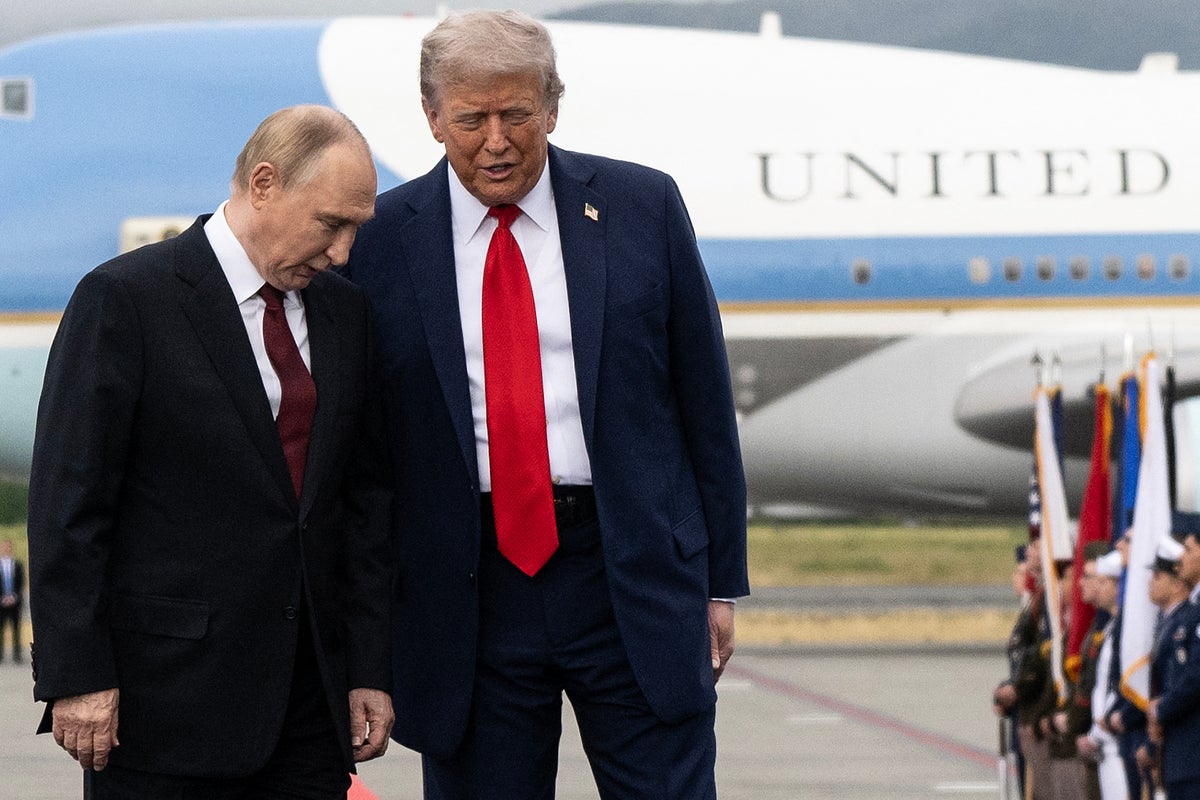
The global press is predictably salivating over the latest high-stakes phone call. The headlines write themselves: a swift, hour-long conversation, a stern warning about escalation, and a flashy offer to "broker peace" between Russia and Ukraine. The media frames this as a masterclass in strongman diplomacy, a sudden shift in the geopolitical chessboard that could freeze a brutal war of attrition overnight.
It is a comforting narrative. It is also entirely wrong.
The lazy consensus dominating international relations reporting assumes that regional conflicts are simply awaiting the right American dealmaker to walk into the room and dictate terms. This perspective treats sovereign nations like distressed real estate assets. But decades of watching Washington attempt to force artificial settlements on deeply rooted historical conflicts—from the Dayton Accords to the Camp David summits—reveals a starkly different reality. Peace cannot be brokered by an outside party when neither combatant believes they have reached their terminal operational limit.
The premise that a single phone call or a threat of withheld aid can instantly halt a systemic peer-to-peer conflict misunderstands the mechanics of modern attritional warfare. Here is the brutal truth that mainstream analysts refuse to admit: Washington is not the driver's seat. It is an ATM with a microphone.
The Illusion of Leverage
Mainstream foreign policy pundits love to talk about "leverage." They argue that the United States holds the ultimate leverage over Ukraine because it controls the flow of advanced munitions, intelligence sharing, and financial stabilization. Conversely, they believe Washington holds leverage over Moscow through the threat of secondary sanctions, frozen assets, and diplomatic isolation.
This looks neat on a PowerPoint slide at a think-tank gala. On the ground, it falls apart.
Leverage only works if the target entity values the concession more than its existential survival. For Ukraine, agreeing to a forced partition under the guise of an American-brokered deal is not diplomacy; it is a delayed death sentence. For Russia, the conflict has ceased to be a mere territorial dispute. It has transformed into a structural reconfiguration of their state economy and domestic political architecture.
When an empire commits over 6% of its GDP to wartime production and restructures its entire supply chain around a wartime footing, it does not pivot because of an uncomfortable phone call from Washington.
Consider the historical precedent of the Korean War armistice in 1953. The conventional wisdom is that the threat of nuclear escalation or the death of Joseph Stalin forced the peace. The deeper, structural reality documented by historians like Bruce Cumings shows that the fighting stopped only when both sides realized the frontline had entirely calcified along the 38th parallel, making further territorial gains mathematically impossible relative to the human cost. The diplomacy merely formalized a reality that the military machines had already dictated. Today, the frontlines in Ukraine remain dynamic, and neither side has exhausted its strategic depth.
Dismantling the "People Also Ask" Delusions
If you look at what the public searches regarding these high-profile diplomatic interventions, the fundamental premises are completely flawed. Let’s dismantle them one by one.
Can the US force Ukraine to cede territory for peace?
The short answer is no. The longer answer is that attempting to do so exposes a profound ignorance of domestic political realities within Kyiv. No Ukrainian leader can sign away internationally recognized territory without triggering an immediate domestic political crisis, potentially leading to civil unrest or a hardline nationalist backlash. Even if Washington cuts off every single artillery shell tomorrow, the war does not end; it merely mutates. Ukraine would be forced to transition from a conventional defense to an asymmetric, insurgent campaign. The bloodshed does not stop; it just changes format.
Why doesn't Russia just negotiate with Washington directly?
Because Moscow understands that a deal with a shifting political administration is worth less than the paper it is printed on. The Kremlin looks at the collapse of the Iran nuclear deal (JCPOA) or the abandonment of the Intermediate-Range Nuclear Forces (INF) Treaty and concludes that American foreign policy operates on a four-year expiration date. Russia wants a comprehensive restructuring of the European security architecture, not a temporary band-aid slapped together by an administration looking for a quick public relations win before the midterms.
Is an immediate ceasefire always the best outcome?
This is the most dangerous misconception of all. A premature ceasefire that does not address the underlying structural drivers of the conflict is simply a rearmament window. I have watched international bodies push for temporary truces in conflicts across Sub-Saharan Africa and the Balkans for years. What happens? Both sides use the operational pause to reconstitute shattered brigades, stockpiles ammunition, and refine their targeting data. A bad peace guarantees a more violent war down the road.
The Hard Math of Attrition
Let us look at the actual numbers, stripped of political rhetoric. Wars of attrition are governed by raw industrial capacity, demographic realities, and economic resilience.
| Strategic Metric | The Mainstream Narrative | The Structural Reality |
|---|---|---|
| Sanctions Impact | Russia's economy is on the verge of collapse due to Western isolation. | Russia has successfully rerouted its energy exports to India and China, creating a parallel financial ecosystem immune to SWIFT bans. |
| Western Supply | US and NATO industrial bases can infinitely sustain high-intensity artillery warfare. | Western defense production lines are bottlenecked by supply chain vulnerabilities, critical mineral shortages, and a lack of manufacturing surge capacity. |
| Manpower | Technological superiority can fully compensate for a deficit in troop numbers. | Advanced hardware requires extensive training, maintenance infrastructure, and a constant influx of personnel that technology cannot replace. |
When you analyze the conflict through this lens, the idea of an American president stepping in as a neutral, all-powerful broker becomes absurd. You cannot broker a peace deal when you are simultaneously the primary arms supplier for one side and the chief economic adversary of the other. The conflict is too structural, too deep, and too heavily integrated into global supply chains to be resolved by superficial dealmaking.
The Dangerous Downside of the Cowboy Diplomacy Approach
To be fair, challenging the broker narrative has its own risks. The danger of admitting that Washington cannot easily fix this is that it leaves us with an incredibly grim outlook. It forces policymakers to accept that this conflict will likely end only through mutual exhaustion or a decisive, bloody breakthrough on the battlefield. It means acknowledging that the West has limited control over the timeline of European security.
That is an uncomfortable pill for Washington insiders to swallow. The political establishment thrives on the illusion of omnipotence. They need the electorate to believe that American power is a dial that can be turned up or down to achieve precise outcomes anywhere on earth. Admitting that some historical forces are beyond the leverage of a phone call is viewed as political suicide.
But continuing to push the narrative of an easy, brokered peace creates a false sense of security. It allows Western nations to delay the hard, necessary decisions regarding their own industrial defense bases. It encourages a reliance on diplomatic theater over long-term strategic resilience.
Stop looking at the White House for a magical diplomatic breakthrough. Stop parsing the readouts of hour-long phone calls for signs of an imminent resolution. The architecture of this conflict was decades in the making, and its resolution will be forged by the brutal realities of industrial output and battlefield endurance—not by the performative posturing of outside brokers.
Pack up the podiums. Fire the speechwriters. The hard reality on the ground does not care about your deal.