Forty municipal executives globally have committed to a uniform development pact governing data center construction. While initial press coverage frames this as a triumph of climate diplomacy or standardized urban planning, economic reality dictates otherwise. This pact is a structural response to an acute infrastructure mismatch: the exponential growth of compute demand colliding with the hard physical limits of municipal power grids and water basins.
Data center developers have long exploited regulatory arbitrage, moving capital to jurisdictions with the cheapest land, lowest taxes, and most permissive zoning. This decentralized expansion has reached its breaking point. Municipalities are discovering that hosting a hyperscale facility can consume up to 20 percent of local grid capacity, leaving little room for residential growth or manufacturing. The new municipal pact aims to commoditize city access, forcing operators to trade compute efficiency for infrastructure preservation.
Understanding the implications of this shift requires analyzing the three structural constraints now dictating the location, design, and profitability of digital infrastructure.
The Tri-Zonal Constraint Framework
The deployment of hyperscale data centers—facilities typically exceeding 10,000 square feet and 10 megawatts of critical IT load—is no longer governed by proximity to end-users or fiber paths alone. Instead, capital allocation is restricted by a tri-zonal constraint model consisting of thermodynamic, electrical, and regulatory boundaries.
1. The Electrical Envelope (Grid Saturation)
A standard hyperscale data center requires between 20 to 100 megawatts (MW) of power. For context, 100 MW can sustain roughly 80,000 residential homes. When forty cities form a development pact, they are acknowledging that the traditional model of passive utility provisioning is dead.
The constraint manifests in the transmission network. Substation transformers and high-voltage transmission lines operate under thermal limits. When a data center attaches a massive, flat-line load—meaning it draws power continuously at a near-constant rate 24 hours a day—it accelerates grid degradation and reduces the system’s peak-load flexibility. Municipalities are forced into capital expenditure cycles to upgrade substations, the costs of which are often socialized across local taxpayers, triggering political backlash.
2. The Thermodynamic Sink (Water Allocation)
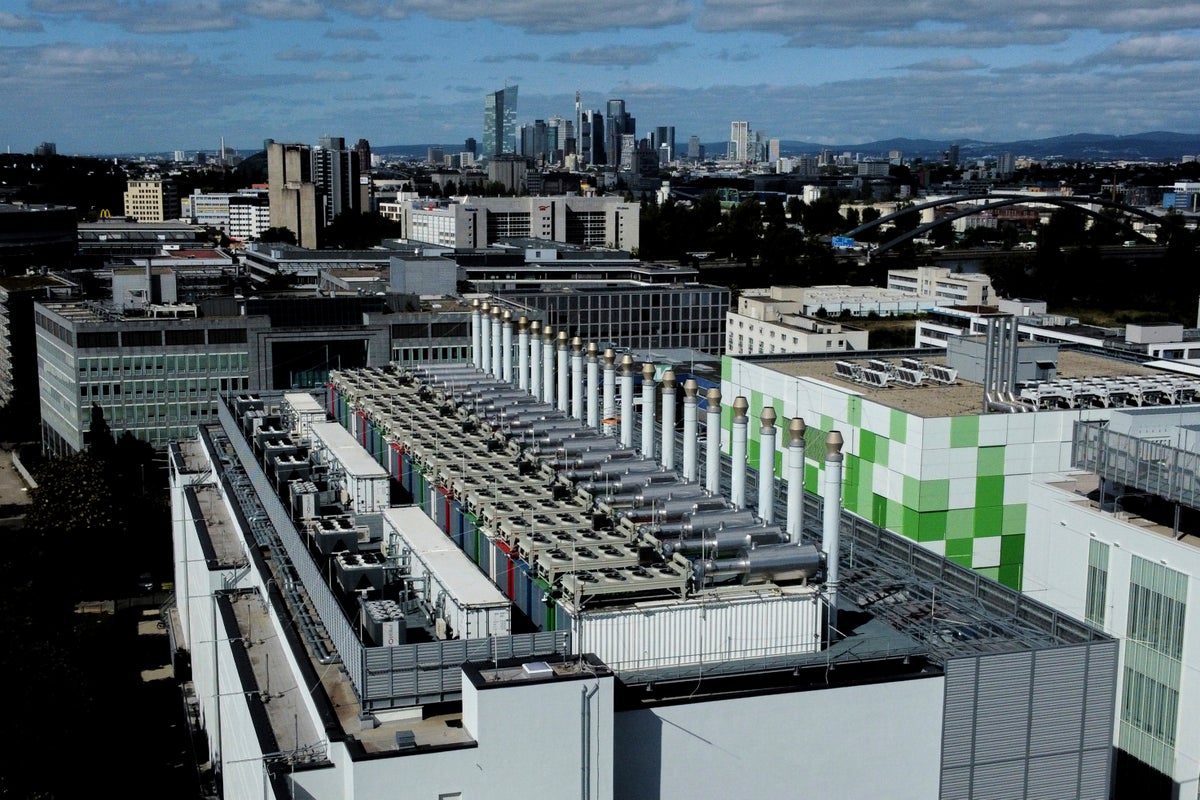
Cooling infrastructure represents the second operational constraint. Evaporative cooling systems, favored for their low energy use, consume vast quantities of water to maintain server temperatures within acceptable ranges. A typical 15 MW data center can consume up to 360,000 gallons of water per day—equivalent to the consumption of a town of 4,000 people.
Under the new municipal pact, cities are restricting access to potable water supplies. This forces operators into a capital-intensive trade-off:
- Closed-loop chilled water systems: These reduce water consumption to near zero but increase the facility’s Power Usage Effectiveness (PUE) metric, requiring more electricity to run pumps and fans.
- Direct-to-chip liquid cooling: This technology handles high thermal design power (TDP) from advanced AI chips but requires retrofitting facility architectures at a significant capital premium.
3. The Regulatory Boundary (Zoning and Noise)
Historically, data centers were classified as light industrial or commercial office space. The sheer physical footprint and acoustic profile of modern facilities have broken these zoning taxonomies. High-frequency whine from chillers and cooling towers, combined with the presence of megawatt-scale diesel backup generators storing hundreds of thousands of gallons of fuel, has shifted these facilities into the heavy industrial category. The pact establishes standardized setback distances, acoustic decibel ceilings at property lines, and mandatory air-dispersion modeling for backup generator testing.
The Cost Function of Standardized Complying Facilities
To evaluate how this pact alters the economics of compute infrastructure, one must analyze the changes to both Capital Expenditure (CapEx) and Operational Expenditure (OpEx). The pact removes the ability for developers to pit adjacent jurisdictions against one another for tax breaks or relaxed environmental oversight.
The economic model shifts from an unconstrained land grab to an optimization problem governed by the following variables.
Capital Expenditure Additions
Compliance with standardized municipal codes introduces fixed premiums on construction. Developers must now account for:
- Acoustic Attenuation: Installing silencers on exhaust systems, building acoustic walls around chiller yards, and sourcing low-noise cooling towers adds 7 to 12 percent to the mechanical system budget.
- Grid Interconnection Fees: Under the new framework, cities are shifting the financial burden of substation upgrades directly to the developer via non-refundable contribution-in-aid-of-construction (CIAC) agreements.
- On-site Generation and Storage: To secure a permit in grid-constrained pact cities, developers must increasingly integrate utility-scale battery energy storage systems (BESS) or co-located renewable generation to offset their peak demand on the public grid.
Operational Expenditure Elevators
The operational impact is driven by resource scarcity. By fixing environmental metrics across forty major cities, the pact effectively creates a floor for utility pricing.
| Cost Driver | Previous Operational Model | Pact-Compliant Operational Model |
|---|---|---|
| Water Sourcing | Cheap municipal potable water access via standard commercial rates. | Mandatory utilization of industrial reclaimed water or high effluent-treatment surcharges. |
| Power Procurement | Long-term Virtual Power Purchase Agreements (VPPAs) with distant green grids. | Demands for localized, physically deliverable 24/7 carbon-free energy (CFE). |
| Tax Depreciation | Long-term property and equipment tax exemptions via municipal agreements. | Standardized minimum corporate citizenship fees and property assessments tied to grid usage. |
Transmission Bottlenecks and the Real Cause of Spatial Shift
The immediate consequence of this forty-city coalition is not a reduction in overall data center construction, but rather a geographic displacement of capital. As primary markets restrict access, development spills into secondary and tertiary markets that lack the institutional capacity or grid resilience to handle the load.
This dynamic creates a structural bottleneck in network topology. Data centers require low-latency connectivity, measured in single-digit milliseconds. When municipal regulations push new construction 150 miles outside a primary metropolitan area to find unconstrained power, the round-trip time (RTT) for data packets increases. This latency penalty is unacceptable for real-time financial transactions, automated industrial systems, and edge-compute applications.
Consequently, a bifurcation of data center architecture is occurring:
[Core Edge Nodes] ---------> High Latency Fiber ---------> [Massive Compute Hubs]
(Low Power, Low Latency)                                   (High Power, Tier-3 Markets)
Urban Centers                                              Unregulated Rural Districts
The core urban markets governed by the pact will be reserved exclusively for localized, high-value, low-latency edge nodes. These facilities will remain small, high-density, and heavily optimized. Conversely, bulk training compute—such as large language model training runs that are insensitive to network latency—will migrate entirely to unregulated, resource-rich rural districts or jurisdictions with sovereign energy resources.
Limitations of the Collective Municipal Strategy
While the pact appears formidable on paper, its structural execution contains inherent vulnerabilities. The primary point of failure is the divergence of local economic priorities among the signatory cities.
A city with a declining industrial base and a budget deficit faces a different incentive structure than a hyper-growth technology hub. When a hyperscale developer offers 500 million dollars in direct infrastructure investment and commitments to upgrade local wastewater treatment plants, the temptation for a municipality to break ranks and offer a regulatory variance is high.
Furthermore, the pact assumes that demand for compute is elastic and can be managed through zoning restrictions. In reality, digital infrastructure is now an essential element of national security and sovereign economic competitiveness. If municipal coalitions collectively constrict the supply of available data center real estate, they will not stop expansion; instead, they will inadvertently drive development toward sovereign-backed entities operating outside municipal jurisdictions, often on federal lands or adjacent to primary energy generation sources like nuclear power stations.
Strategic Playbook for Infrastructure Capital Allocation
Sovereign wealth funds, private equity firms, and infrastructure developers must abandon the assumption that local regulatory compliance can be managed on an ad-hoc, project-by-project basis. The unification of municipal standards requires a fundamental repositioning of development strategy.
Shift from Procurement to Co-Generation
Do not buy power from the grid; bring the grid to the asset. Deploying capital into primary markets now requires vertical integration with energy generation. Developers must source behind-the-meter power through direct partnerships with nuclear operators or by constructing dedicated, co-located natural gas generation facilities equipped with carbon-capture systems. This removes the project from the municipal utility’s allocation queue and insulates the asset from local political risks.
Monetize Waste Heat as a Local Asset
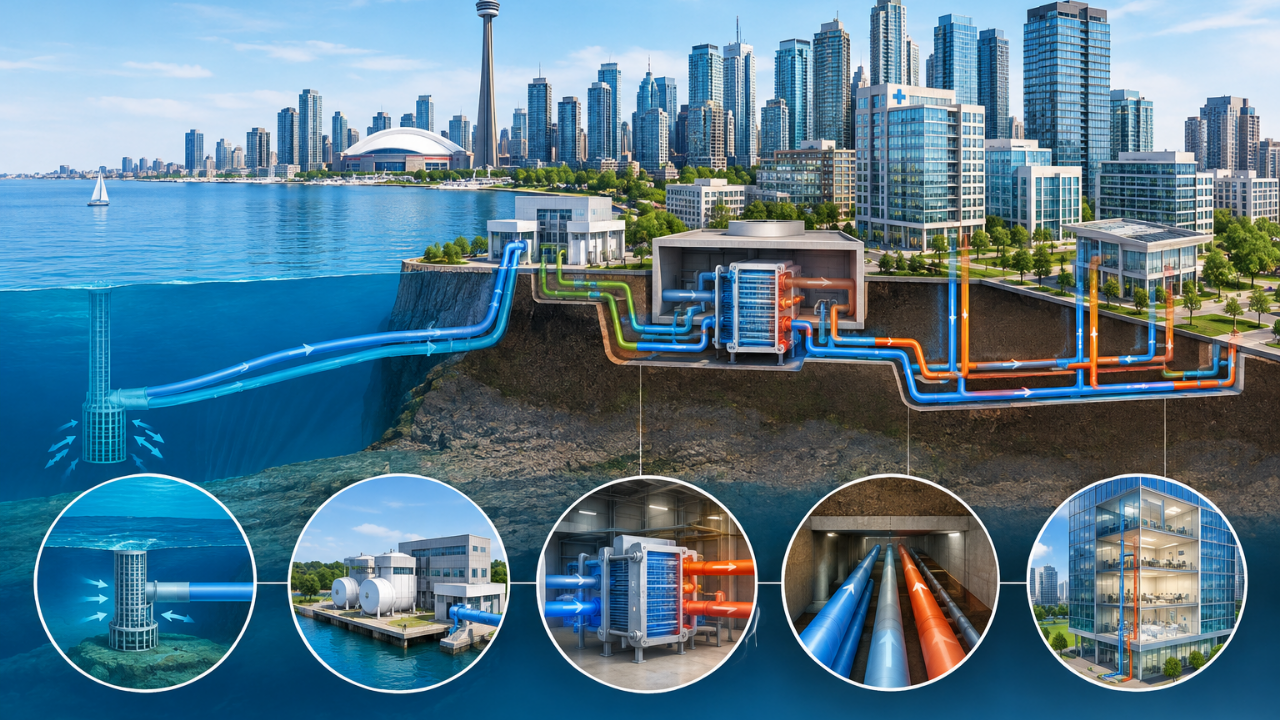
Turn a thermodynamic liability into a political and economic asset. Instead of expending energy to reject heat into the atmosphere via cooling towers—which draws municipal scrutiny—design facilities with heat-recovery systems. This thermal energy can be piped directly to municipal district heating networks, industrial drying processes, or agricultural projects. By integrating into the city's thermal fabric, the data center transitions from an infrastructure drain to an energy provider, securing preferential zoning treatment under the pact frameworks.
Transition to Water-Independent Cooling Architectures
Design all future builds assuming zero access to municipal potable water. Specify closed-loop, direct-to-chip liquid cooling systems paired with dry coolers utilizing ambient air. While this design increases upfront mechanical CapEx by an estimated 15 percent and slightly elevates PUE during extreme summer ambient peaks, it eliminates the water-permitting bottleneck entirely. This engineering choice shortens the entitlement phase by an average of 18 to 24 months, delivering a faster time-to-market that offsets the initial capital premium.