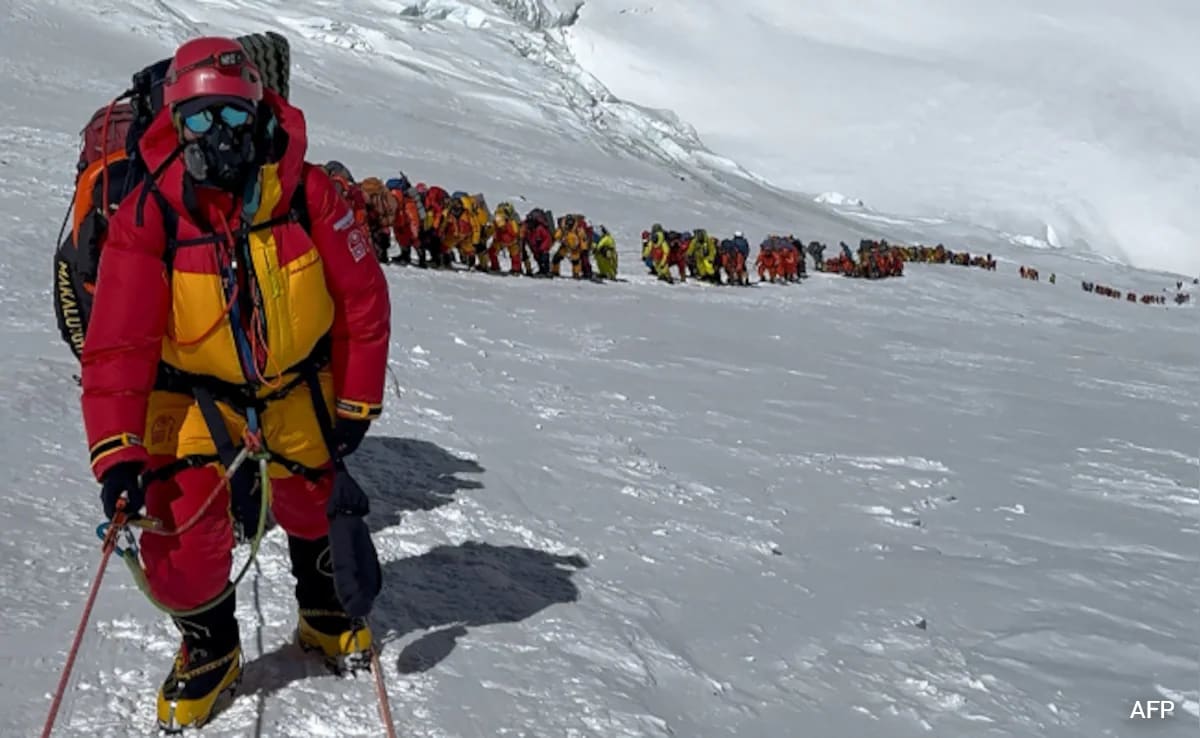
Climbing Mount Everest requires a modern financial commitment that has transformed high-altitude mountaineering into an exclusive playground for the ultra-wealthy. In 2026, the baseline cost to climb Mount Everest from the traditional southern route in Nepal sits at a median of $54,995, while fully guided international expeditions easily command $76,000 to $130,000 per person. Flash expeditions and hyper-luxury packages routinely cross the $300,000 threshold. This steep financial barrier is driven by a recent, aggressive 36% hike in government permit fees, rising mandatory insurance costs, and skyrocketing logistical expenses in the Death Zone.
The transaction is no longer just about purchasing gear and hiring a local guide. It is a complex, multi-layered financial machine.
The Sovereignty Tax
The government of Nepal implemented its long-debated regulatory overhaul, permanently changing the economics of the Khumbu Valley. The mandatory individual permit fee for the peak spring climbing season jumped from $11,000 to $15,000 per foreign climber.
This $4,000 increase is only the first line item on a ledger of state-mandated costs.
The bureaucracy of the mountain is expensive. Nepal mandates that an expedition must fund a government-appointed liaison officer for their team, a requirement that adds roughly $3,000 to the collective bill. There is a $2,500 permit organization fee levied by local agencies, alongside a $4,000 garbage deposit meant to guarantee that gear does not end up permanently littered across the South Col. Even the validity of the permit itself has been compressed from 75 days down to 55 days, forcing operators to execute tighter, more resource-heavy schedules.
On the northern side of the mountain in Tibet, the financial picture is even more restrictive. The Chinese authorities set permit fees between $15,800 and $18,000, while strictly limiting total annual access to less than 50 foreign climbers. This state-enforced scarcity has driven the median cost of a north-side climb using international operators to over $90,000.
The Shared Logistics Burden
Behind the headline cost of the permit lies the harsh reality of high-altitude infrastructure. Nobody walks to the base of the world's tallest peak and simply starts climbing.
The physical path up the mountain is built, maintained, and insured by a highly specialized workforce.
+---------------------------------------------------------+
|      ESTIMATED BASELINE EXPENDITURE BREAKDOWN (2026)     |
+-----------------------------------+---------------------+
| Expense Category                  | Average Cost (USD)  |
+-----------------------------------+---------------------+
| Nepal Government Spring Permit    | $15,000             |
| Supplemental Oxygen & Regulator   | $4,500              |
| High-Altitude Sherpa Support      | $8,500              |
| Base Camp Logistics & Food        | $10,500             |
| Technical Personal Gear           | $9,000              |
| Regional Travel & Lukla Flights   | $4,500              |
+-----------------------------------+---------------------+
A significant portion of an operator's fee goes toward the collective pool that finances the Icefall Doctors. This dedicated team of Sherpas risks their lives every morning to anchor ladders, fix safety lines, and chart a navigable path through the shifting labyrinth of the Khumbu Icefall. Every climber on the mountain relies on this single thread of nylon and aluminum.
Life Support at Eight Thousand Meters
The premium pricing of modern expeditions is explicitly tied to safety margins, specifically regarding supplemental oxygen.
Breathing ambient air at 8,848 meters is biologically unsustainable for the vast majority of human beings. A standard summit push requires between five and seven bottles of oxygen per client, with each cylinder costing roughly $650.
The real expense is the weight. Getting those heavy bottles from Kathmandu up to Camp III and Camp IV requires immense physical labor. A personal Sherpa guide must carry their own oxygen supply alongside the client's backup bottles, multiplying the raw material cost.
A functional high-altitude mask and regulator set adds another $1,100. If a regulator freezes or a valve fails at Camp IV, a climber's survival depends entirely on whether their guiding agency paid for redundant inventory to be cached at the high camps. The budget operators cutting corners at the $35,000 level frequently economize on these exact hidden lifelines.
The Labor Market in the Death Zone
The old model of the low-cost Western mountaineer hiring a handful of local porters on a whim is dead. Today, local Nepali operators like Seven Summit Treks, 8K Expeditions, and Pioneer Adventure have consolidated the market, managing the vast majority of permits issued on the mountain.
The median price for a local, Sherpa-led expedition hovers around $45,250. This represents a highly competitive option, but it comes with an evolving labor framework.
New safety mandates require a compulsory guide ratio of at least one high-altitude worker for every two climbers on any peak above 8,000 meters. Concurrently, mandated minimum insurance coverage for high-altitude guides has risen to $14,400, while base camp staff must be covered up to $10,800. These regulatory changes are necessary corrections for an industry that historically underinsured its most essential workers.
Western-guided teams command a steep premium, often costing between $75,000 and $85,000. For this price, clients are backed by international IFMGA-certified guides who manage cross-team communications, weather data interpretation, and medical triage.
The Rise of VVIP Alpinism
At the absolute peak of the market are the ultra-luxury flash expeditions. These programs are designed for corporate executives, billionaires, and high-net-worth individuals who cannot afford to spend two months away from their businesses to acclimatize naturally.
For $112,000 to $300,000, these clients use hypoxic tents at home for months before arriving in Asia, skipping the traditional, grueling acclimatization rotations through the Icefall. They fly directly into Base Camp via private helicopter, sleep in heated geodesic domes, eat meals prepared by imported chefs, and climb with a 2:1 or 3:1 ratio of dedicated personal Sherpas. They use a continuous, high-flow stream of oxygen from the moment they leave Camp II, effectively lowering the perceived altitude of the mountain by thousands of feet.
The True Cost of Failure
The financial risk of an Everest expedition is absolute. If a climber gets sick at Base Camp, if an avalanche wipes out the fixed lines, or if the notorious jet stream shifts and closes the summit window, the money does not come back.
Guiding contracts are explicitly non-refundable.
A medical evacuation via B3 helicopter from Camp II down to Kathmandu costs between $5,000 and $10,000 per flight, a fee that must be paid upfront or backed by specialized high-altitude rescue insurance. Personal gear, including a specialized one-piece down suit ($1,500), high-altitude double boots ($1,200), and specialized sleeping systems, easily adds another $9,000 to the personal ledger before ever stepping onto an international flight.
When a climber finally stands on the summit, they face one final, customary expense. The summit bonus for a personal Sherpa guide is traditionally expected to be between $1,500 and $2,000, paid out upon a successful return to Base Camp. It is a vital gratuity for a person who quite literally held the client's life in their hands for two months.
Climbing the world's highest peak has ceased to be an open athletic endeavor. It is an industrial operation where safety, comfort, and the probability of reaching the top are directly proportional to the size of the climber's bank account.