The yellowing paper of a declassified government file carries a distinct smell. It is the scent of stale tea, dust, and quiet calculations made in rooms with high ceilings where the central heating never quite works. For decades, these documents sit in the deep recesses of the National Archives, bound by treasury tags, holding the mundane mechanics of a kingdom.
Then, a clerk snips the string.
Suddenly, the grand, sweeping narrative of modern British history evaporates. In its place sits something far more fragile, far more human, and infinitely more complicated than the public image ever allowed.
We often view the British monarchy as a chess board where every move is calculated three turns in advance by brilliant, invisible bureaucrats. We want to believe the Crown operates with a icy, detached logic. It makes us feel safe. It implies that someone, somewhere, is driving the bus with a steady hand on the wheel.
The reality is much messy.
Behind the heavy oak doors of Buckingham Palace, the institution is not merely a constitutional machine. It is a family. And when the desires of a mother collide with the strict, unyielding protocols of a government, the gears of state do not just turn. They bend.
The Quiet Diplomacy of Whitehall
Step back to the turn of the millennium. The year is 2001. The dot-com bubble is bursting, the world is shifting on its axis, and British civil servants are desperately trying to rebrand the nation as a global powerhouse of modern commerce. They needed a figurehead.
The official line has always been that Prince Andrew, the Duke of York, naturally stepped into the role of the UK’s Special Representative for International Trade and Investment because of his passion for British industry. For ten years, he flew across the globe, shook hands with oligarchs, dined with dictators, and championed British engineering. It was a role that eventually ended in spectacular public ruin, culminating in his forced withdrawal from public life.
For years, the public narrative was simple: the government asked, and the Prince served.
But newly unearthing cabinet files paint a radically different picture. The government did not originate the idea. They were managed into it.
Imagine sitting at a mahogany desk in Downing Street, receiving a letter that carries the royal cypher. It is polite. It is formal. Yet, it carries the weight of a thousand years of divine right.
The documents reveal that Queen Elizabeth II did not merely approve of her second son’s new career. She was the architect of it. She pushed for it. When civil servants hesitated, fearing the potential fallout of placing a controversial royal into the volatile world of international business, the Palace doubled down.
A Mother’s Long Game
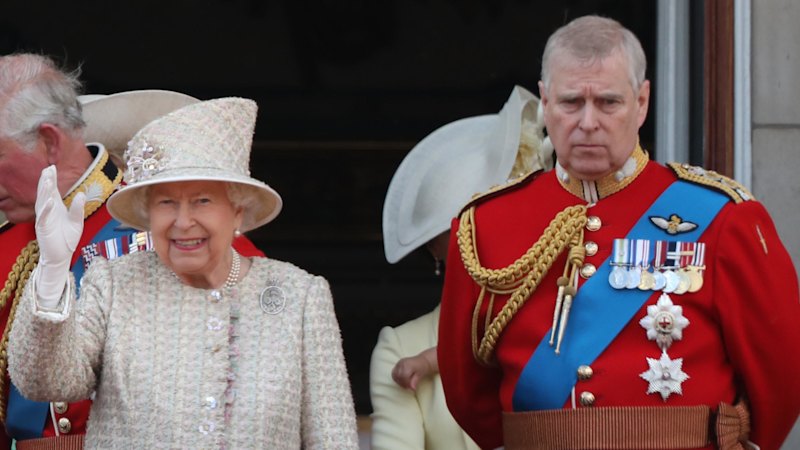
Every family has a favorite child. It is a taboo truth, whispered in the kitchens of ordinary suburban terraces and, as it turns out, in the corridors of palaces. Prince Andrew was widely reported to be the Queen’s favorite. He was her hero of the Falklands War, the dashing helicopter pilot who returned home with a rose between his teeth.
But by 2001, the glitter was fading. His marriage to Sarah Ferguson had disintegrated in the full glare of the tabloid press. His military career was winding down. He was a prince without a portfolio, drifting through middle age in a royal family that was increasingly looking to slim down its operations.
A restless prince is a dangerous thing for a monarchy. They get into trouble. They choose the wrong friends. They wander into situations they cannot control.
The Queen, operating with the fierce protectiveness of a mother, saw a solution in the shifting priorities of Tony Blair’s New Labour government. The administration was obsessed with "Cool Britannia" and expanding the UK's economic footprint.
The Palace saw an opening.
Consider the leverage involved. The monarch cannot command a Prime Minister to create a job. That is not how the modern British constitution functions. Instead, it is a dance of soft power. A suggestion made over gin and tonics at Balmoral. A casual remark during a Tuesday evening audience. A formal letter from a private secretary noting that the Duke has a "keen interest" in helping the nation prosper.
The civil servants at the Department of Trade and Industry were caught in a vice. To refuse the Palace was to create a constitutional friction that no bureaucrat had the stomach for. To accept was to inherit a wild card.
They chose the path of least resistance. They always do.
The Cost of the Favor
The problem with mixing bloodlines and spreadsheets is that the metrics of success are entirely incompatible.
A government judges a trade envoy by the value of the contracts signed, the GDP growth stimulated, and the diplomatic bridges built. A mother judges the success of a job by the purpose it gives her son.
The documents show that behind the scenes, civil servants were frantic. They were trying to build a cage around a royal who refused to be contained by standard diplomatic briefing notes. Andrew wanted to fly high, to deal with the big players, to operate in the gray zones of international commerce where the rules are rewritten over private dinners.
For a while, it worked. The money rolled in. The handshakes happened.
But the stakes were invisible to those inside the bubble. Every time a royal prince stood next to a regime with a questionable human rights record in the name of British trade, a small piece of the monarchy’s moral authority was traded away. The Palace thought they were buying stability for a prince; they were actually short-selling the reputation of the Crown.
The public sees the grand tours. They see the private jets. They do not see the frantic memos flying between Whitehall and the Palace as officials tried to manage the Duke's mounting expenses and his increasingly erratic choice of associates.
It was a slow-motion car crash that took a decade to impact the wall.
The Anatomy of an Unraveling
When the crash finally arrived in 2011, forced by the public exposure of his relationship with convicted sex offender Jeffrey Epstein, the government washed its hands of the Prince with terrifying speed.
The trade envoy role vanished. The offices were closed. The official statements were brief, cold, and final.
But the documents left behind reveal the hypocrisy of the ending. The state had used the Prince's royal status to open doors in Riyadh, Baku, and Astana that regular diplomats could never breach. They tolerated the whispers, the arrogance, and the questionable judgment as long as the trade figures looked good.
Then, when the liabilities outweighed the assets, they cut him loose.
Yet, the Queen’s loyalty never wavered. In the years that followed his removal from public duties, when the rest of the world turned its back, the private images spoke volumes. A mother riding horses with her son through the grounds of Windsor. A mother funding his legal defenses from her private estate.
The declassified files do not expose a grand constitutional conspiracy. They expose something far more vulnerable. They show a powerful woman who, despite wearing a crown that weighed five pounds, could not escape the ancient, agonizing human instinct to protect her child from his own limitations.
The ink on the documents has faded from black to a soft, charcoal gray. The signatures of long-retired politicians and deceased courtiers blur together.
We look at the grand facade of Buckingham Palace and see an unyielding monument to British tradition. But if you look closely at the paperwork that holds it together, you find the fingerprints of a mother who tried to build a kingdom safe enough for her son, only to find that even the power of the state cannot protect a prince from himself.


