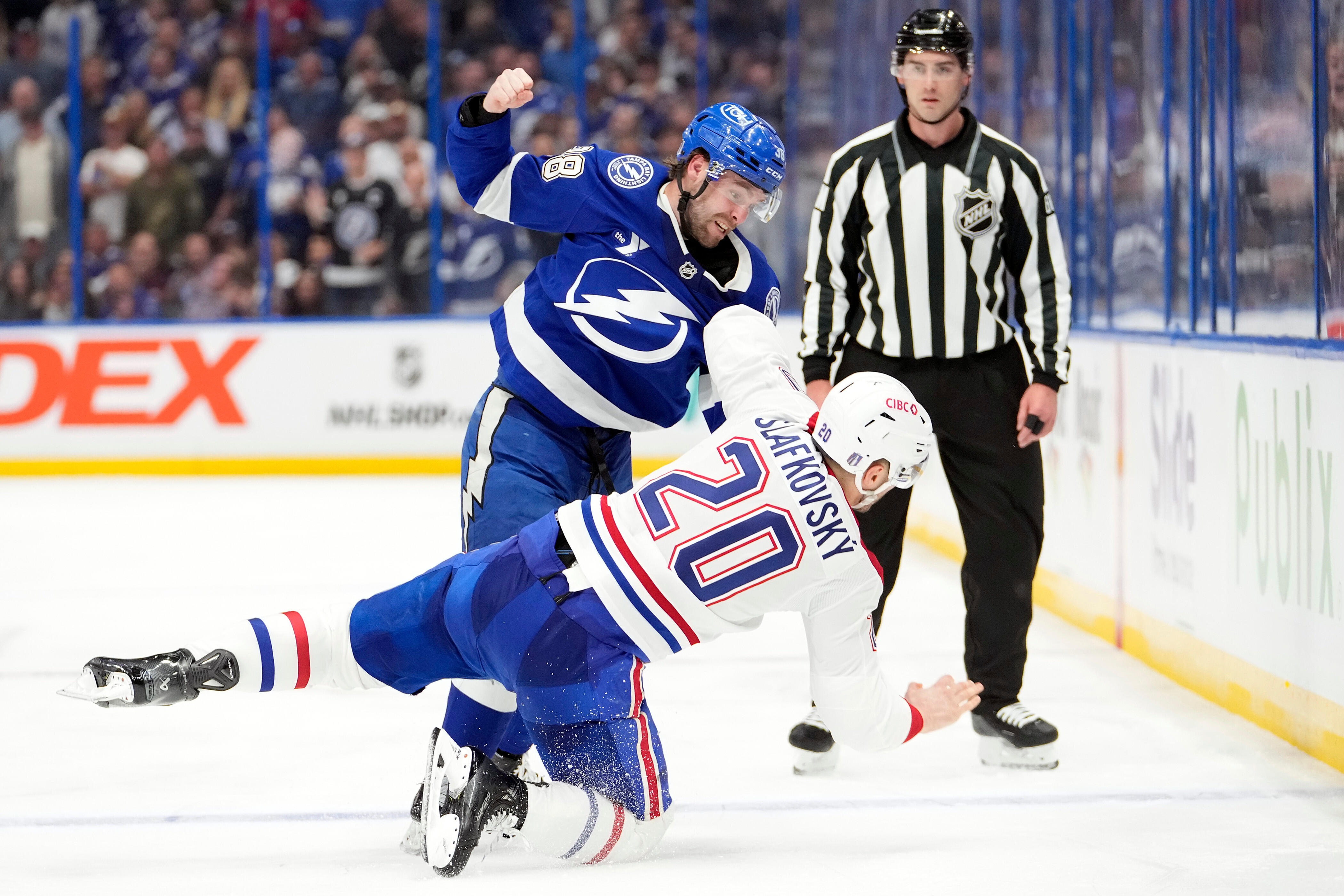
The Montreal Canadiens walked into Amalie Arena for Game 2 knowing they were playing with house money. After stealing home-ice advantage in the series opener, the script for Game 2 was supposed to be a simple continuation of that momentum. Instead, the Montreal Canadiens found themselves on the wrong end of a 3-2 overtime decision that did more than just even the series. It exposed the structural cracks that Montreal had successfully papered over with grit and a hot goaltender during their early playoff run.
While the scoreboard shows a close game, the reality on the ice suggested a different narrative. The Tampa Bay Lightning didn't just win; they reclaimed the tactical high ground. Montreal’s ability to hang around in games they have no business winning is a hallmark of their identity, but against an elite roster like Tampa Bay, "hanging around" is a dangerous strategy that eventually yields to the law of averages. The overtime loss wasn't a fluke. It was a correction.
The Illusion of Parity in the Overtime Loss
Montreal fans often point to the shot clock or the narrow margin of defeat as evidence that the Canadiens are on equal footing with the defending champions. That is a mistake. In Game 2, the Lightning controlled the pace and the quality of scoring chances for nearly forty minutes of regulation. Montreal’s goals were products of opportunism—capitalizing on rare defensive lapses rather than sustained offensive pressure.
The Lightning’s depth eventually broke the Canadiens' defensive rotation. When you play a team with the offensive firepower of Tampa Bay, your margin for error is non-existent. A single missed assignment in the neutral zone or a failure to clear the puck on the first attempt creates a compounding pressure that Montreal’s blue line simply isn't built to handle for sixty-plus minutes.
Fatigue and the Defensive Bottleneck
The heavy minutes played by Montreal’s top four defensemen are starting to show. In a playoff series, fatigue doesn't just manifest as slow skating; it shows up in slow decision-making. During the overtime period, the gap between Montreal’s defenders and the Lightning attackers grew noticeably wider.
Tampa Bay’s game-winning goal was the result of a tired defensive unit failing to close a passing lane that they had successfully shut down in the first period. It wasn't a lack of effort. It was a lack of oxygen. Montreal is leaning too heavily on a small group of players, and against a team that rolls four lines with equal efficiency, that math never adds up in the long run.
The Special Teams Deficit
If Montreal wants to win this series, their power play needs to be more than a rest period for their top stars. In Game 2, the man advantage was stagnant. They moved the puck around the perimeter without ever threatening the heart of the Lightning’s box.
Conversely, Tampa Bay’s power play looked like a surgical instrument. Even when they didn't score, they forced the Canadiens to expend massive amounts of energy on the penalty kill. This is the hidden tax of playing the Lightning. Even your successful defensive stands cost you the energy required to generate offense later in the period.
Goaltending Can Only Mask So Much
Carey Price remains the great equalizer, but expecting him to be perfect is not a viable coaching strategy. Price kept Montreal in Game 2 when the shots were 15-4 in favor of Tampa Bay during a brutal second-period stretch. However, the "bend but don't break" philosophy has a shelf life.
When the winning goal slipped past him in overtime, it wasn't a "soft" goal. It was the result of a team allowing too many high-danger chances and finally paying the price. You cannot ask a goaltender to stop thirty-five shots, many of them from the slot, and then blame the result on a single bounce. The blame lies in the volume of opportunities surrendered.
Tactical Adjustments Required for the Return to Montreal
The series now shifts back to the Bell Centre, but the change in scenery won't fix the underlying issues. The Canadiens need to find a way to generate a forecheck that actually disrupts Tampa Bay’s transition game. Right now, the Lightning are exiting their zone with far too much ease, allowing their speed to dictate the terms of engagement in the neutral zone.
Finding Secondary Scoring
The burden of offense is falling on too few shoulders. Montreal’s young core has shown flashes of brilliance, but the veteran presence has been largely quiet in high-leverage moments. To beat Tampa, you need production from the bottom six forwards. You need the kind of "greasy" goals that come from winning puck battles in the corners and driving the net with reckless abandon.
In Game 2, Montreal played too much of the game on the outside. They were content to take low-percentage shots and hope for a rebound that never came. Tampa Bay’s defense is too disciplined to give up those second-chance opportunities unless they are forced into chaos. Montreal failed to create that chaos.
The Psychological Shift
Losing in overtime is a specific kind of trauma in the playoffs. It’s the exhaustion of a full game’s effort with nothing to show for it but a tied series and sore muscles. The Lightning now have the momentum and the knowledge that their system can break Montreal’s resolve.
The Canadiens must move past the "happy to be here" phase of their postseason. Stealing a game on the road was a great start, but the inability to put a stranglehold on the series in Game 2 might be the moment we look back on as the turning point. In professional hockey, you don't get many chances to put a champion on the ropes. Montreal had the chance and let it slip through their fingers.
The Brutal Reality of the Matchup
The Lightning are a deeper, faster, and more experienced team. Montreal’s path to victory requires a near-perfect alignment of goaltending, luck, and opponent mistakes. In Game 2, the luck ran out, and the mistakes were made by the men in the red sweaters.
Montreal’s coaching staff faces a grueling set of decisions. Do they shorten the bench even further and risk complete burnout, or do they trust their depth and risk being overwhelmed by Tampa’s superior talent? There are no good options, only less-bad ones. The Canadiens are currently a team trying to win a drag race in a reliable family sedan while the Lightning are driving a tuned Italian sports car. You might win one heat if the car stalls, but over seven rounds, the speed eventually wins out.
Montreal needs to stop playing for the overtime coin flip and start dictating the pace of the game in the first twenty minutes. If they enter the third period trailing or tied while being outshot 2-to-1, they have already lost, regardless of what the final score says. They are surviving, not competing. Survival is a temporary state; competition is the only way to a championship.
Stop looking at the 3-2 scoreline as a sign of a close series. Start looking at the ice time and the zone entries. The Lightning found their rhythm in the second half of Game 2, and if Montreal doesn't disrupt that rhythm immediately upon returning home, this series will end much faster than the Montreal faithful want to admit.