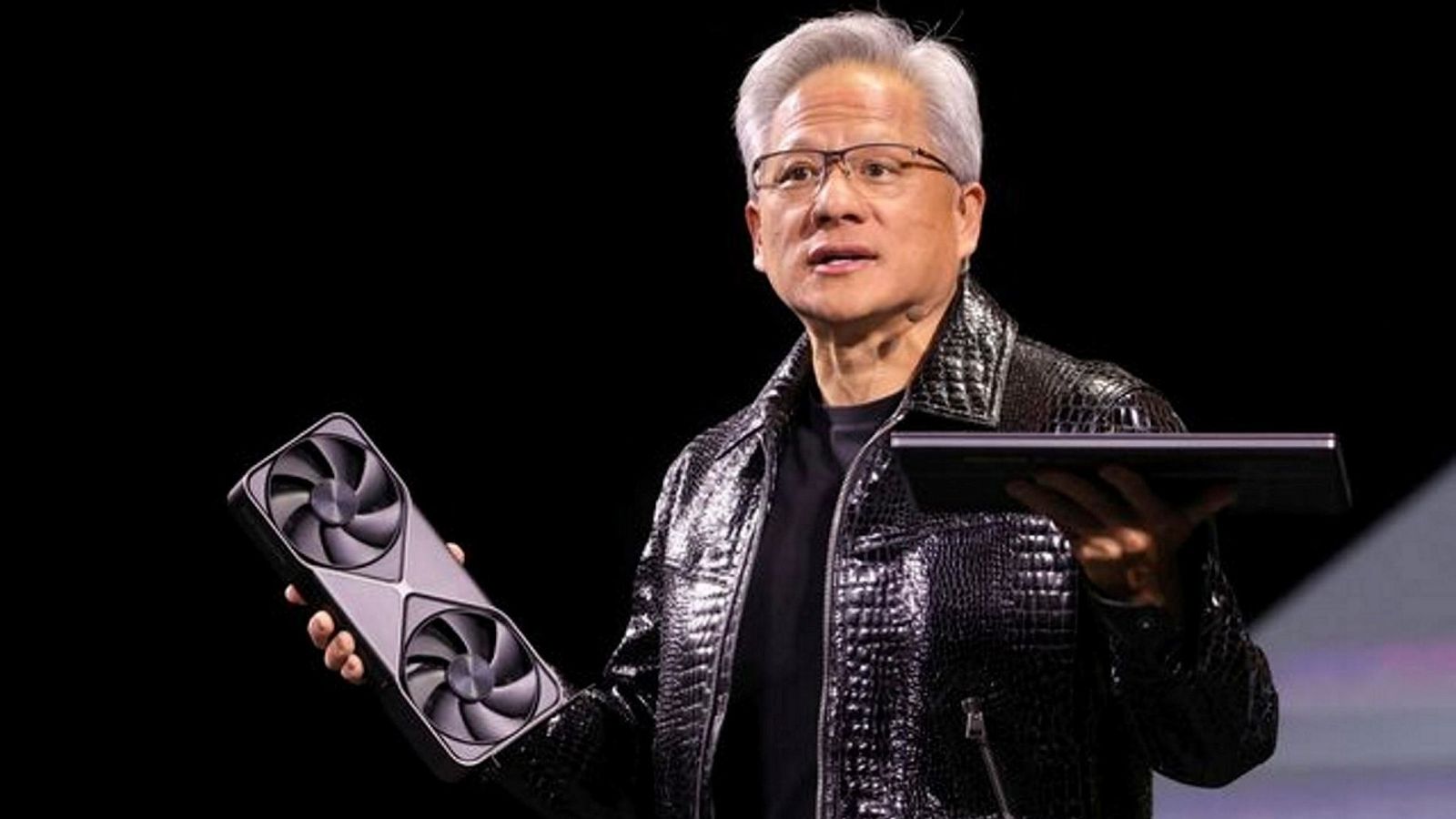
Every time Nvidia stumbles, the internet throws a party. Memes flood your feed. Deepfakes of Jensen Huang in a leather jacket apologizing for melting power cables, fake earnings calls, absurd parodies of GPU pricing—all generated at warp speed. Tech journalists love this narrative. They frame it as poetic justice. The AI giant getting roasted by the very tools it helped create.
That read is lazy. Worse, it is completely backwards.
If you are an executive, an investor, or a builder in the tech sector celebrating these viral takedowns as a sign of Nvidia’s vulnerability, you are missing the fundamental economics of modern compute. A flood of AI-generated memes attacking Nvidia is not a PR crisis. It is the ultimate proof of market capture. Every single frame of video, every distorted voice clone, and every satirical image mocking the company is a paid transaction running on their silicon.
The Compute Tax on Outrage
Let us look at the actual mechanics of an AI meme. When a viral parody video of a tech CEO hits a million views, it did not materialize out of thin air. Someone prompted a diffusion model or a transformer-based video generator. Behind that friendly web interface sits a massive cluster of data center GPUs—almost certainly H100s, H200s, or Blackwell racks—burning megawatts of power to calculate matrix multiplications.
You cannot opt out of the infrastructure layer just because you dislike the landlord.
I have watched enterprise software companies burn millions of dollars trying to migrate their inference workloads off Nvidia hardware just to prove a point about vendor lock-in. They spend six months rewriting kernels, fighting driver instability, and watching their engineering velocity crater, only to quietly crawl back to CUDA when their latency spikes. If billion-dollar engineering organizations cannot escape the green team's gravity, a guy in his bedroom making memes on Midjourney or Sora certainly isn't denting their moat.
Here is the uncomfortable math of internet outrage:
- Creation: Generating a 10-second synthetic video clip requires massive parallel processing. That compute is rented from hyperscalers who bought the chips from Nvidia at 75% gross margins.
- Distribution: Social algorithms boost high-engagement content using recommendation engines powered by deep learning. Those engines run on Nvidia Tensor Cores.
- Monetization: The ad tech stacks serving banners next to the memes rely on real-time bidding models trained on the exact same architecture.
The critics are literally paying rent to the villain while spray-painting insults on his building.
Why Tech Media Loves the "Poetic Justice" Fallacy
Mainstream tech coverage thrives on simple morality plays. Goliath builds a giant machine; David uses the machine to hit Goliath in the eye. It makes for clean headlines and easy clicks. When a hardware flaw, a supply chain hiccup, or an antitrust inquiry hits the news cycle, writers immediately pivot to the cultural backlash. They treat Twitter trends as leading financial indicators.
They are asking the wrong question. They ask, "How much brand damage do these viral scandals do to Nvidia?"
The real question is, "Does Nvidia even have a consumer brand left to damage?"
Ten years ago, Nvidia lived and died by the sentiment of PC gamers. If a graphics card launched with bad drivers or predatory pricing, the backlash on forums translated directly into lost retail sales at Micro Center and Newegg. Gamers held the leverage.
That company no longer exists. Today, consumer graphics make up a fraction of Nvidia's revenue. Their real customers are a dozen hyperscale cloud providers, sovereign wealth funds, and frontier AI labs. Satya Nadella and Mark Zuckerberg do not cancel $10 billion hardware orders because a subreddit made a funny deepfake about melting 12VHPWR connectors. They care about performance per watt, interconnect bandwidth, and software stability.
Dismantling the "Open Source Will Save Us" Myth
Whenever an Nvidia scandal sparks a wave of synthetic satire, a predictable chorus chimes in claiming that open-weight models and alternative chips will soon break the monopoly. Let us dismantle that premise right now.
First, open-weight models do not hurt Nvidia; they accelerate demand for Nvidia. When Meta releases a massive Llama model for free, thousands of companies suddenly realize they need their own dedicated inference clusters to run it privately. They do not buy custom ASICs for those deployments. They buy off-the-shelf Nvidia servers because the software ecosystem works out of the box.
Second, hardware is only half the moat. Critics obsess over transistor counts and memory bandwidth, completely ignoring CUDA (Compute Unified Device Architecture). CUDA is the proprietary software layer that allows developers to talk directly to Nvidia's hardware. Over nearly two decades, Nvidia embedded CUDA into every university curriculum, research paper, and enterprise codebase on earth.
| Feature | Nvidia Ecosystem | Challenger Ecosystems |
|---|---|---|
| Software Maturity | 18+ years of hardened libraries (cuDNN, TensorRT) | Fragmented, rapid breaking changes |
| Developer Talent | Millions of engineers trained natively | Small pool requiring expensive retraining |
| Time to Market | Days from rack delivery to production | Months of kernel debugging and optimization |
| Resale Liquidity | High secondary market value | Steep depreciation, niche buyers |
You do not unseat an entrenched developer platform with a slightly faster chip or a viral PR disaster. Intel learned this the hard way with x86. Apple proved it with iOS. Once the tooling becomes the industry standard, switching costs become existential.
The Real Threat to Nvidia Isn't Public Backlash
To be clear, treating Nvidia as invincible is just as foolish as declaring them doomed over a meme cycle. The contrarian view has a glaring blind spot if you ignore physical and economic ceilings. Nvidia does face genuine, structural threats—none of which have anything to do with internet culture.
- The Power Wall: Data centers are running out of electricity. You cannot plug a gigawatt cluster into a suburban grid. If alternative architectures can deliver acceptable inference speeds at a fraction of the thermal output, hyperscalers will force them into the stack out of sheer physical necessity.
- The ROI Reckoning: Right now, tech giants are spending hundreds of billions on AI capital expenditures with a fraction of that returning in actual software revenue. If enterprise adoption stalls and CFOs freeze infrastructure budgets, Nvidia's order book will evaporate overnight, regardless of how good their chips are.
- Custom Silicon Maturity: Google's TPUs, Amazon's Trainium, and Microsoft's Maia chips are improving. For massive, predictable internal workloads, hyperscalers will eventually transition off third-party silicon to protect their own margins.
Notice what is missing from that list? Bad press. Memes. Public outrage.
How to Actually Operate in an Asymmetric Market
If you are building a company, managing a portfolio, or running engineering teams in this environment, stop letting retail sentiment dictate your strategy. Internet noise is a lagging indicator designed to farm your attention.
For Founders and CTOs: Stop wasting engineering cycles chasing hardware arbitrage unless your annual compute spend exceeds $50 million. The money you think you are saving on cheaper, non-Nvidia cloud instances will be burned twice over in DevOps salaries and delayed product launches. Build on the standard, ship your product, and optimize for cost only after you have actual revenue.
For Investors: Ignore the daily sentiment swings around product recalls, antitrust headlines, and social media blowups. Watch hyperscaler CapEx guidance and energy grid interconnections. Until Microsoft, Alphabet, and Meta announce they are cutting data center construction budgets, every dip driven by a PR scandal is just noise.
For Everyone Else: Enjoy the memes. Laugh at the deepfakes. Just understand the transaction taking place behind the screen.
When the gold rush is in full swing, the guy selling the shovels does not care if the miners paint insulting caricatures of him on the side of the mine shaft. He already cashed the check for the paint, the brushes, and the wood.