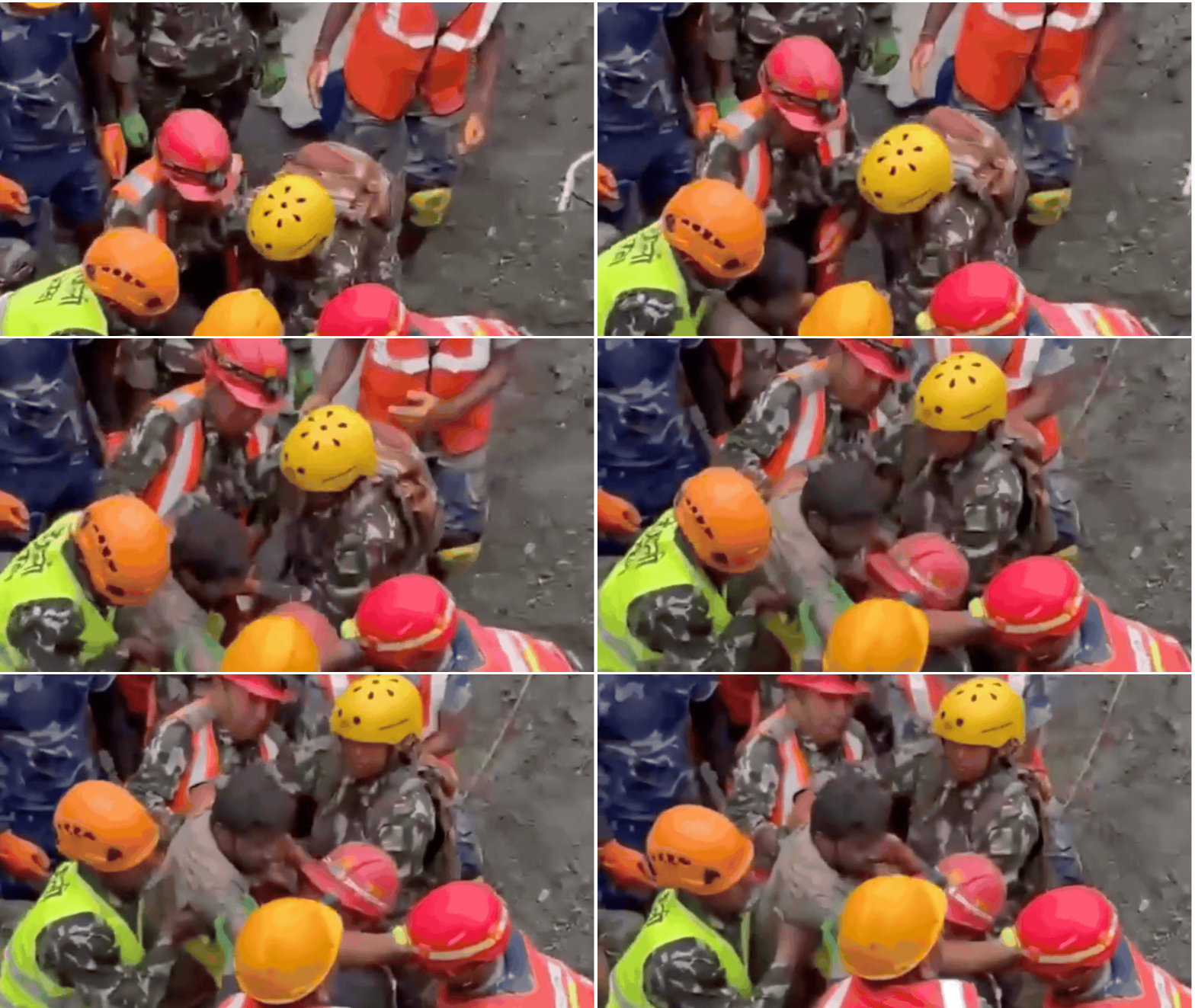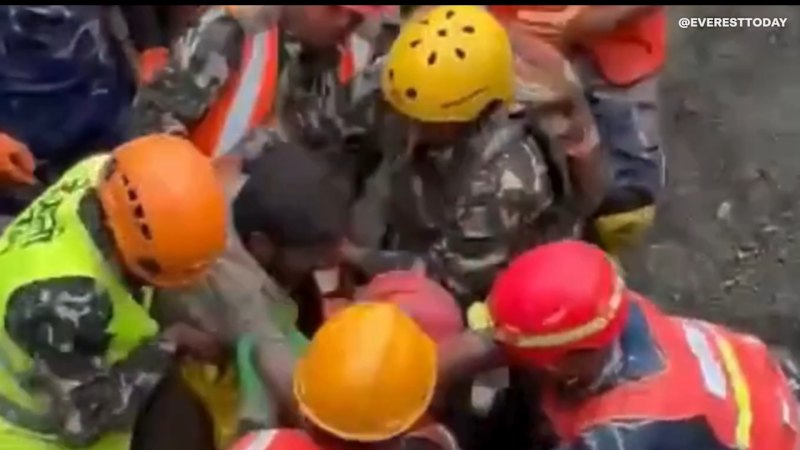
The headlines always read the same way. Miracles in the dark. Triumphant cheers as dust-covered workers emerge into the blinding light days after a collapse. Media outlets feed you a steady diet of romanticized survival stories, painting subterranean disasters as grand tests of human endurance where hope alone defies physics.
Stop buying the fairy tale. Read more on a similar issue: this related article.
Every time the press frames a multi-day tunnel extraction as a heartwarming triumph of human spirit, they mask systemic engineering failures and fatal operational complacency. Survival underground past the seventy-two-hour mark is not a testament to hope. It is a statistical anomaly bought by freak geographical luck, structural quirks, and air pockets that defy standard probability. When we treat these rare anomalies as expected outcomes, we institutionalize a deadly lottery.
The Dangerous Fallacy of the Golden Hour Myth
The standard disaster response playbook focuses heavily on the immediate aftermath. Emergency management agencies love to talk about response times, heavy machinery logistics, and mobilization metrics. But they completely miss the structural decay leading up to the moment the earth gives way. More analysis by NPR explores similar views on the subject.
I have watched companies burn millions on reactive rescue PR campaigns while cutting corners on baseline geotechnical monitoring. They spend fortunes on dramatic drill rigs for the cameras, yet refuse to invest in proactive real-time acoustic sensors and redundant ventilation shafts that would prevent the collapse entirely.
Let us look at the mechanical reality of deep-earth confinement. When a tunnel fails—whether a hydropower conduit in the Himalayas or a transit bore—the clock starts ticking on a brutal countdown dictated entirely by ambient humidity, trapped oxygen volume, and crush injuries. Rushing in blindly with heavy excavators often triggers secondary collapses. The romantic notion of a heroic rescuer digging through the rubble with bare hands belongs in a Hollywood script, not an operational safety manual. Real subterranean extraction is a tedious, terrifying exercise in millimeter-precision shoring, where one wrong vibration collapses the roof on both the trapped and the savior.
Why People Also Ask Questions Miss the Point
A quick look at search trends around these events reveals a predictable set of queries. How long can a human survive without water? What causes underground air pockets to form? How do rescue teams locate trapped miners?
These questions look for technical trivia while ignoring the structural governance failure driving the crisis. Asking how someone survived nine days underground is like asking how someone survived a game of Russian roulette. The correct question is why the chamber lacked a pressurized secondary escape pod. The correct question is why project developers routinely bypass hydrostatic pressure tests to hit aggressive quarterly excavation targets.
When infrastructure fails, blame is routinely shifted to freak weather events or unpreventable seismic anomalies. Nature takes the rap so corporate boards and regulatory bodies can dodge accountability. Flash floods and ground shifts do not happen in a vacuum. They exploit known vulnerabilities in poorly surveyed terrain where profit margins matter more than wall stability.
The Brutal Physics of Subterranean Survival
Let us strip away the emotional veneer and examine the raw mechanics of survival under millions of tons of rock.
Imagine a scenario where a crew is trapped thirty meters underground following a sudden inundation of mud and debris. The conventional narrative suggests that mental fortitude keeps them alive. In reality, human psychology is secondary to partial pressure oxygen dynamics.
- The Air Equation: Within hours, hypercapnia sets in as carbon dioxide builds up in confined spaces. Without forced positive-pressure ventilation, cognitive function degrades long before thirst becomes the acute killer.
- The Thermal Trap: Underground environments are rarely room temperature. Deep tunnels trap body heat and humidity, leading to rapid dehydration and electrolyte collapse.
- The Secondary Threat: Dust inhalation destroys lung tissue, turning minor entrapments into slow-motion suffocation events even if the structural roof remains intact.
Relying on survivors to beat these odds is an indictment of modern engineering oversight. We have advanced tunneling technology capable of boring through solid granite at blistering speeds, yet our evacuation infrastructure remains stuck in the nineteenth century.
The Price of Complacency
Every sensationalized rescue story serves as an anaesthetic for the public conscience. We cheer for the two men pulled out alive after nine days, and in doing so, we forget the dozens left behind in unpublicized tragedies. We accept a baseline casualty rate in heavy civil engineering as the cost of progress.
That mindset is bankrupt.
True safety culture does not celebrate miraculous extractions. It treats every single tunnel collapse as an unacceptable failure of imagination, engineering, and law. Until regulatory bodies start treating systemic negligence with the same gravity they afford financial fraud, the bodies will keep piling up in the dark, and the media will keep calling it a miracle when a fraction of them walk back out into the sun. Stop romanticizing the rescue. Fix the tunnel.