Late on a Tuesday night in Sand Hill Road, the lights remained on in a corner glass office. A senior partner at a venture capital firm with billions under management sat staring at a terminal screen. On his desk sat a lukewarm cup of espresso and an open laptop displaying benchmark scores for an artificial intelligence system trained thousands of miles away in Beijing.
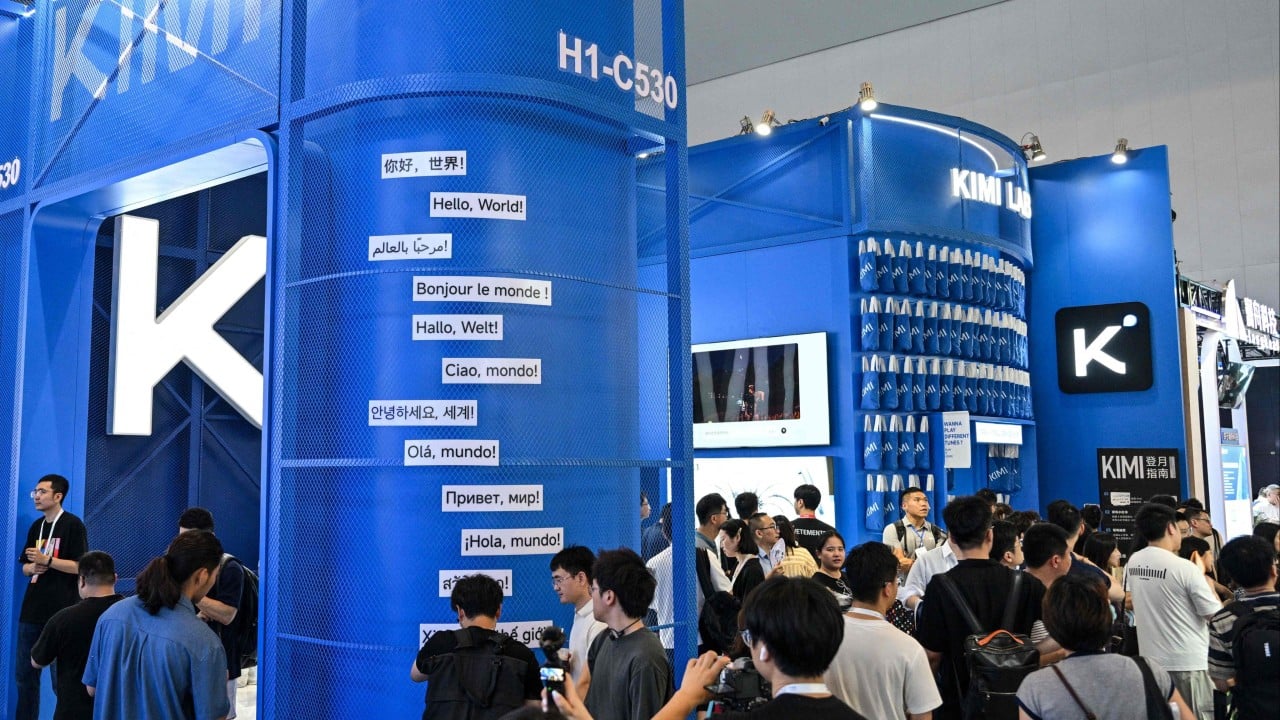
The model was called Kimi K3. It wasn't built by a trillion-dollar tech giant in Seattle or Mountain View. It was crafted by Moonshot AI, a Chinese startup whose engineers worked out of a modest office building in Haidian District.
The partner refreshed the page, hoping for a glitch in the numbers. There wasn't one.
Kimi K3 had matched—and in several critical reasoning benchmarks, surpassed—the proprietary flags flown by Silicon Valley's most guarded empires. But the benchmark score wasn't what caused the sudden chill in the room. The true shock was tucked inside the model's release notes: the weights were public. Anyone could download them. Anyone could run them. The cost per million tokens was a fraction of a penny.
For three years, the dominant economic playbook of American tech rested on a simple assumption. Building frontier intelligence required fifty billion dollars, tens of thousands of liquid-cooled graphics processors, and a moat of proprietary code so deep that no outsider could ever cross it. That assumption was the foundation upon which astronomical startup valuations were built.
In a single evening, Kimi K3 reduced that moat to a puddle.
The Engineer at three in the morning
Consider a hypothetical developer named Marcus. He works at a mid-sized financial technology startup in Austin, Texas. For eighteen months, Marcus had been begging his Chief Financial Officer for permission to scale their customer intelligence pipeline. Every time Marcus ran the math on API calls to top-tier proprietary models, the monthly invoice looked like the mortgage on a coastal mansion.
"We can't afford it," the CFO told him repeatedly. "Not unless we raise prices on our customers, and if we raise prices, they walk."
Then Marcus downloaded Kimi K3.
He didn't need to ask permission. He didn't need to enter a corporate credit card number into a cloud portal. He pulled the open-weight files onto a cluster of rented hardware, fired up a test suite, and watched the output stream across his monitor.
The system parsed hundreds of pages of complex, unstructured SEC filings in seconds, tracking hidden variables across decades of corporate debt structures without dropping context. When Marcus ran his benchmark tests, the accuracy rivaled systems that charged twenty times as much per query.
Panic in Silicon Valley is rarely loud at first. It begins as a quiet realization in places like Austin, where engineers realize they no longer need to pay the toll collectors of Palo Alto to build world-class tools.
The Illusion of the Hardware Wall
For years, policy experts and industry titans argued that export restrictions on high-end hardware would freeze foreign competitors in place. The theory was linear and comfortable: if you control the advanced semiconductor supply chain, you control the future of computation.
What this theory missed was human ingenuity under pressure.
When resources are infinite, software design becomes lazy. You throw more compute at the problem. You build larger datacenters. You pass the cost down to the consumer. But when compute is scarce, engineering becomes an art form.
Engineers at Moonshot AI couldn't rely on brute-force hardware scaling. Instead, they re-architected how the system processes information. They optimized attention mechanisms, streamlined weight distribution, and squeezed every drop of performance out of every watt of electricity.
The result was an architectural efficiency that shocked western researchers. Kimi K3 proved that pure architectural elegance could bridge a multi-billion-dollar hardware gap.
To use an explicit metaphor: if Silicon Valley was building heavier, faster muscle cars by dropping eight-liter engines into steel frames, Beijing was building a carbon-fiber sprinter that used half the fuel to cover the same distance in less time.
Why Open Weights Change Everything
To understand the anxiety spreading through executive suites, one must look at the difference between open-source software of the past and open-weight models today.
When an AI developer releases a model's weights, they are effectively giving away the trained mind of the machine. The recipient doesn't just get to use the service; they own the underlying mathematical matrix. They can inspect it, fine-tune it for specialized tasks, run it locally behind strict security firewalls, and modify it without asking for permission.
This shifts the balance of power overnight.
For enterprise buyers, security and sovereignty have always been the primary bottlenecks. Big banks, healthcare providers, and defense contractors were hesitant to route sensitive proprietary data through external APIs hosted by single vendors. An open-weight model of Kimi K3's caliber solves this problem instantly. A hospital system in Munich or a bank in Tokyo can now deploy frontier-level intelligence inside their own isolated data centers.
The revenue projections for closed-source API vendors suddenly look fragile.
The Quiet Panic in Boardrooms
Inside the boardroom of a prominent San Francisco startup, the mood shifted dramatically over the course of a single quarter.
Earlier this year, pitch decks routinely promised ninety-percent gross margins based on reselling access to fine-tuned proprietary models. Investors happily poured money into these companies, believing that access to top-tier reasoning capabilities would remain concentrated in the hands of three or four American tech giants.
Now, those same investors are asking uncomfortable questions.
If an open model, freely downloadable, can perform complex mathematical reasoning, write clean code, and retain vast conversational context for a fraction of the operating cost, what is the moat? Why should an enterprise pay a subscription fee of fifty dollars per user per month when they can host an equivalent model on their own infrastructure for pennies?
The answer is sending shockwaves through the venture ecosystem. The value is no longer in access to the baseline model. The baseline model is becoming a commodity, as free and accessible as ambient air.
The Human Reality Behind the Tech War
Beyond the balance sheets and stock tickers, there is a human story playing out across continents.
In Beijing, young researchers—many in their late twenties, trained in both Chinese and Western universities—are working long hours not for corporate stock options, but to prove a point on the global stage. They are driven by a fierce desire to show that open, collaborative research can outpace closed, monopolistic hoarding.
In San Francisco, veteran computer scientists who built the foundational frameworks of modern machine learning are watching their business models erode in real time. Some are advocating for tighter restrictions, claiming safety risks. Others argue that hiding model weights behind corporate walls was never about safety at all—it was about protecting margins.
The truth is starker than either side admits.
When powerful capabilities become open to everyone, the central authority that once dictated terms loses control of the narrative. Small businesses in Nairobi, researchers in São Paulo, and independent developers in Stockholm now have access to the same intellectual horsepower that was once reserved for tech elites in California.
The Shift We Can No Longer Ignore
The emergence of Kimi K3 is not an isolated event. It is a symptom of a broader structural shift in how technology moves across borders.
Knowledge does not respect geopolitical boundaries or corporate non-disclosure agreements for long. Once a technical breakthrough is demonstrated to be possible, smart people around the world will find three different ways to replicate it with fewer resources.
Silicon Valley built its dominance on speed, openness, and an unshakeable willingness to disrupt existing structures. But over the last decade, as incumbents grew larger, the industry drifted toward defensive posture: proprietary locks, walled gardens, and regulatory moats designed to keep newcomers out.
Kimi K3 reminded the world of a fundamental truth that the tech industry spent years trying to forget.
Innovation does not belong to the person with the biggest datacenter. It belongs to the person who finds a smarter way to solve the problem.
The glass offices on Sand Hill Road are quiet tonight, but the code running on servers across six continents is speaking loudly. The era of the proprietary AI monopoly is over, and the race to build what comes next has barely begun.