The crystal chandeliers of the State Dining Room hummed with the vibration of clinking silverware and quiet, distinguished laughter. It was a crisp evening in Washington. The kind of night where power feels tangible, wrapped in the scent of roasted duck and the heavy perfume of diplomacy. Dignitaries, journalists, and government officials sat shoulder to shoulder, exchanging polite pleasantries, wholly unaware that the foundation of their safety was about to crack. Then came the sound.
It did not sound like a firework. It did not sound like a car backfiring on Pennsylvania Avenue. It was a sharp, dry, metallic snap that instantly vacuumed the oxygen out of the room. The conversation died. The laughter vanished. In that singular moment, the invisible walls of the American capital were breached, and the world outside—brutal, unpredictable, and fractured—crashed into the gilded halls of the executive mansion.
The man who brought the outside world in was Cole Tomas Allen.
To understand the White House dinner shooting is to look beyond the immediate shock of the weapon and the panic that followed. It requires peering into the psychological abyss that fuels modern lone-wolf attacks. Cole was not a foreign operative dropped onto American soil with a parachute and a radio. He was, by all accounts, a familiar face in the crowd. He was someone who walked our streets, breathed our air, and scrolled through the same endless streams of digital noise that we all do.
Consider what happens when a mind unmoored from reality encounters the hyper-accelerated anxieties of the twenty-first century.
I know this specific kind of terror all too well. I have stood behind the barricades on Pennsylvania Avenue. I have felt the oppressive weight of the security apparatus and the cold stare of the Secret Service agents whose job it is to keep this fragile theater of democracy running. The atmosphere there is always electric. It is a space where you feel the history of the nation pressing against your back. But more than that, it is where you realize how incredibly close the public is to the center of the world's most powerful nation.
When the news first broke of the attack, the initial reports were a chaotic blur of fragments. Was it a random act of a deranged individual? Was it a targeted assassination attempt? Within hours, the narrative began to shift. The Federal Bureau of Investigation, alongside the Secret Service, began uncovering clues that pointed in a much more dangerous, much more complex direction. The FBI is currently probing an Iran war angle, looking into Cole’s digital footprint, his encrypted messages, and his sudden radicalization.
But what does it actually mean to be radicalized by a foreign conflict while sitting thousands of miles away?
Let us use a simple analogy to understand this phenomenon. Imagine the internet not as an information superhighway, but as a vast, dry forest. For years, the trees have been dried out by the oppressive heat of polarization, economic instability, and geopolitical tension. When a spark is struck in the Middle East—a drone strike, a diplomatic standoff, or the threat of an open war—it does not stay contained to that region. The wind of the internet carries the embers across oceans. The embers land on the dry tinder of a vulnerable mind. Cole was one of those minds.
The investigation into his motive reveals a chilling pattern. Authorities found that Cole spent months frequenting obscure, encrypted forums dedicated to escalating the tensions between the United States and Iran. He consumed hours of anti-Western propaganda, weaving a personal fantasy where he was the protagonist in a war that was not his to fight. According to verified law enforcement records, Cole began purchasing tactical gear and firearms shortly after a fiery speech by a foreign official was broadcast across the globe.
This is the invisible stake of the modern era. The lines between domestic grievance and international proxy warfare have entirely blurred.
When we talk about the Iran war angle, we are not simply discussing a diplomatic dispute between two nations. We are talking about the way global conflicts now reach into our kitchens, our offices, and, in this case, the very heart of the American government. It is a deeply unsettling realization. The safety we take for granted is an illusion held together by thin threads of intelligence, metal detectors, and heavily armed guards.
Let us examine the evidence objectively. In 2026, the geopolitical landscape is a tinderbox of proxy conflicts and cyber warfare. The United States and Iran have been locked in a cold war for decades, but the nature of that conflict has changed. It is no longer fought solely in the Persian Gulf or through covert operations. It is fought in the minds of our citizens. The FBI’s probe is not just a bureaucratic investigation; it is an autopsy of how a foreign state's narrative can weaponize a domestic actor.
To trace Cole’s steps is to walk through a dark maze. Investigators found that he used cryptocurrency to fund his purchases, leaving faint, fragmented trails across the blockchain. He frequented chat rooms where the drumbeat of war was played on an endless, distorted loop. He was not acting on direct orders from a foreign intelligence service. Rather, he was acting on a self-generated impulse fed by the outrage and fear manufactured thousands of miles away.
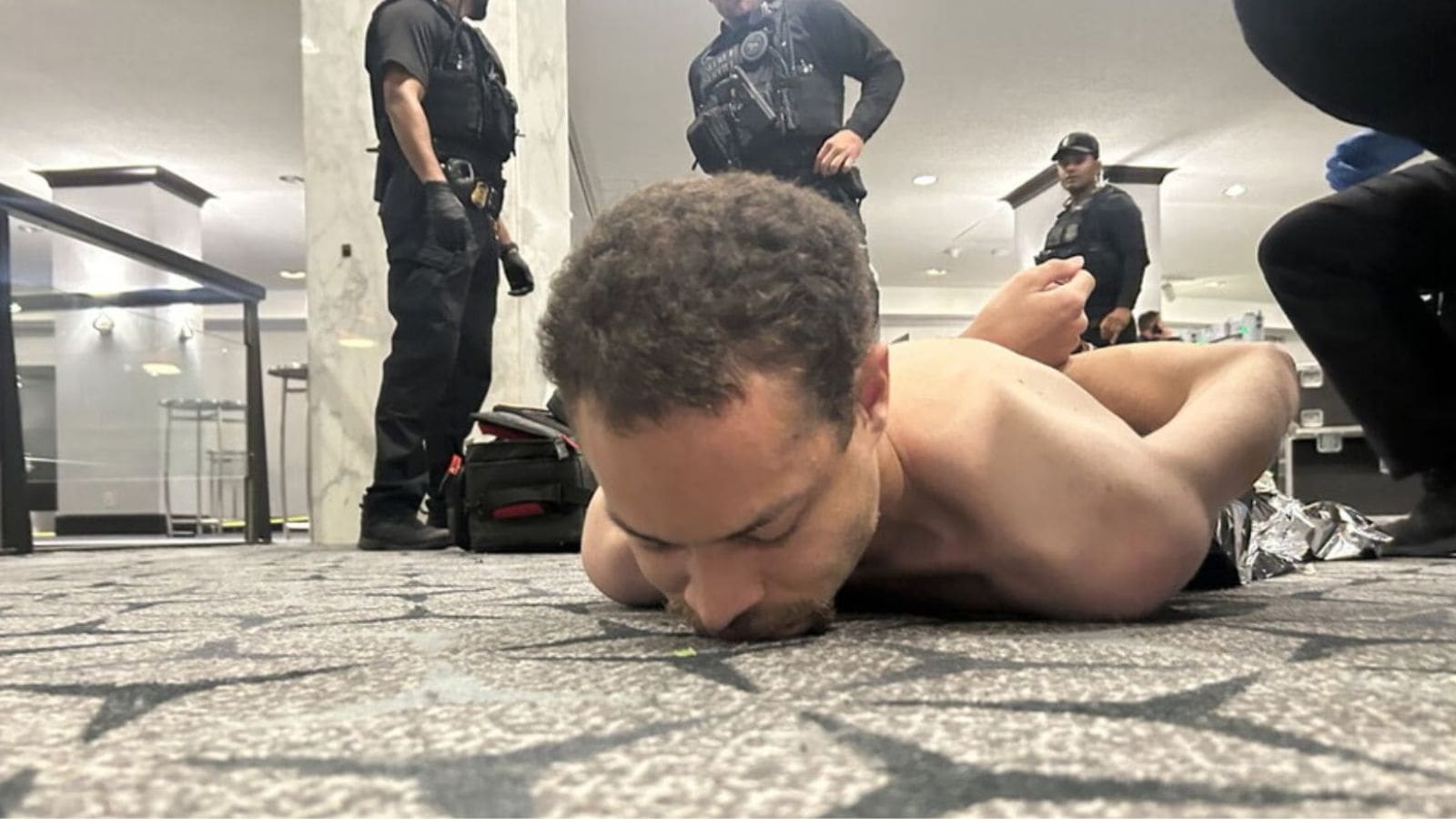
This is where trustworthiness becomes a vital element of the story. It is easy to point fingers and demand immediate retaliation. It is easy to call for tighter borders or total censorship. But the truth is, the system is fundamentally unprepared for the speed at which a human mind can turn from a bystander into a threat. When I look at the photos of Cole, I see the face of an ordinary man. He is wearing a standard winter coat, a blank expression, and the unmistakable look of someone who has lost his grip on reality.
He is us. That is the most terrifying part.
The attack at the dinner on that fateful night was not an isolated anomaly. It was the violent collision of a distant war and a localized crisis. When the first shot rang out, it shattered more than just the glass of the White House windows. It shattered the comfortable belief that the United States is immune to the chaos of the outside world.
Consider the trajectory of the investigation. As the days pass, the details emerging from the Department of Justice become more alarming. They indicate that Cole was in communication with individuals linked to foreign proxies. While the extent of that communication is still being declassified, the implications are profound. If it is proven that he was acting with the encouragement of foreign actors, the response from Washington will not be diplomatic. It will be swift, severe, and potentially devastating.
The security perimeter around the White House has since been reinforced, with concrete barriers and heavily armed patrols making the area look more like a military installation than the seat of a peaceful republic. Tourists still stand outside the fence, looking in. But their expressions have changed. There is a newfound wariness in their eyes. They are looking at the same building, but they are seeing a target.
We must ask ourselves what kind of world we are building when the simple act of breaking bread can be interrupted by the echo of a geopolitical war. The dinner guests have returned to their lives, but the memory of that sharp crack remains in their ears. It is a constant, rhythmic reminder that the borders of our security are only as strong as the minds of our people.
The investigation is ongoing. The FBI continues to sift through the terabytes of data left behind on Cole’s devices. Every new email, every transaction, every video watched is another puzzle piece in a picture that no one wants to see completed. The human cost of these tensions is not measured in billions of dollars or destroyed infrastructure. It is measured in the lives lost, the minds broken, and the pervasive fear that infects the daily rhythm of our lives.
The light from the White House windows still shines out onto the dark streets of Washington. But the darkness feels closer now. It presses against the glass, waiting for the next spark, waiting for the next mind to catch fire in the cold, quiet night.