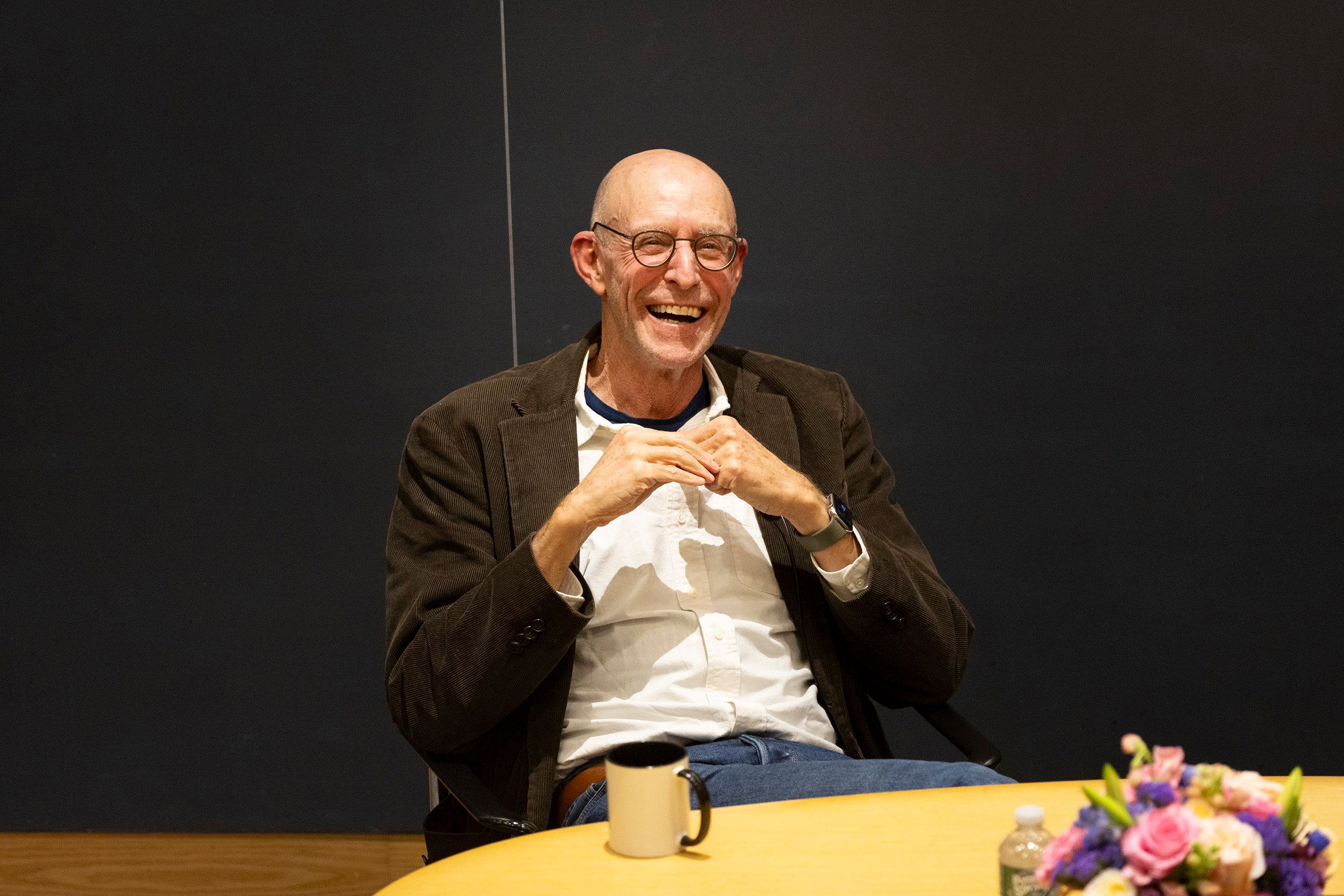
Michael Pollan spent decades telling you what to put in your mouth. He famously boiled down the chaotic world of nutrition into seven words: "Eat food. Not too much. Mostly plants." It was clean. It was grounded. It was about the physical body and the soil it relies on. But if you've followed his trajectory lately, you've noticed a shift that's frankly a bit trippy. The man who was the king of the kitchen is now the leading voice for blowing your mind wide open.
He isn't just writing about gardening or the ethics of eating a pig anymore. He's obsessed with consciousness. Specifically, he’s looking at how substances like psilocybin and LSD can dismantle the ego. It’s a massive pivot from the "Omnivore’s Dilemma" to what we might call the "Consciousness Dilemma." Why did the most sensible man in food journalism decide to spend his time talking about magic mushrooms and ego death?
It turns out the connection between the farm and the pharmacy is tighter than you'd think.
The link between the soil and the soul
Pollan's interest in psychedelics didn't come out of nowhere. It grew from the same place his interest in food did: a deep curiosity about our relationship with the natural world. When he wrote The Botany of Desire, he explored how plants use us just as much as we use them. He looked at the apple, the tulip, marijuana, and the potato. He realized early on that certain plants have evolved specifically to mess with human consciousness.
In his more recent work, like How to Change Your Mind, he takes that idea to the extreme. He's no longer just looking at how a plant tastes or how it nourishes the cells. He’s looking at how a fungus can reset a brain stuck in a loop of depression or addiction. For Pollan, this isn't "hippie science." It’s a frontier of neuroscience that we've ignored for fifty years because of political baggage.
He argues that our modern lives have made us rigid. We have these "default mode networks" in our brains—the parts responsible for our sense of self and our constant internal chatter. For many, that network becomes a prison of rumination. Psychedelics, according to the research Pollan cites from institutions like Johns Hopkins and Imperial College London, temporarily shut that network down. It’s a "reboot" for the human hard drive.
Why the ego is a bad roommate
Pollan is incredibly candid about his own experiences, which is why his shift feels so authentic. He wasn't some lifelong psychonaut. He was a self-described "reluctant" traveler. He was a guy who liked his ego. He liked being in control. But as he hit his 60s, he started to see the limitations of that rigid perspective.
The "ego" is basically that voice in your head that's always judging, planning, and worrying. It’s useful for getting your taxes done or making sure you don't walk into traffic. It’s terrible for feeling connected to other people or the environment. Pollan’s transition from food to consciousness is really a transition from the "self" to the "whole."
When you eat a meal, you're literally taking the environment and putting it inside you. It’s an act of connection. Psychedelics do the same thing, just on a mental level. They break down the barriers between "me" and "everything else." If the food movement was about realizing we are part of a food chain, the psychedelic movement is about realizing we are part of a web of consciousness.
The clinical reality versus the counterculture myth
One thing Pollan does better than anyone else is stripping away the Tie-Dye. He doesn't talk like a guy at a rave. He talks like a science journalist. He’s focusing on "psychedelic-assisted therapy," not recreational abuse.
- Terminal illness and anxiety: He's documented how cancer patients use these experiences to lose their fear of death. They don't necessarily start believing in an afterlife; they just stop being terrified of the end of the "self."
- Treatment-resistant depression: When standard SSRIs fail, psilocybin is showing remarkable results in clinical trials. It’s not a daily pill. It’s one or two high-dose sessions with a therapist.
- Addiction: There's ongoing research into using these tools to break the cycle of smoking and alcoholism. It works by giving the patient a "bird's eye view" of their own destructive patterns.
Pollan acknowledges the risks. These aren't party favors. They are powerful tools that can be destabilizing if used without a "set and setting." He’s very clear that the "setting"—the environment and the presence of a guide—is just as important as the chemical itself.
The garden of the mind
Pollan often uses a gardening metaphor to explain the brain. Think of your thoughts like water running down a hill. Over time, they create deep grooves or "ruts." It becomes very hard for the water to flow anywhere else. This is how habits, addictions, and negative thought patterns form.
Psychedelics are like a fresh snowfall. They fill in the ruts. Suddenly, you have the freedom to choose a new path for the water. You aren't stuck in the same old tracks.
This is why he's "done with dinner" in a professional sense. He’s solved the food puzzle for himself. He knows what to eat. Now, he’s interested in the "ruts" of the human mind that prevent us from changing even when we know we should. You can tell someone to eat better, but if their brain is stuck in a rut of self-loathing or anxiety, the advice won't stick. You have to fix the soil of the mind first.
Modern spirituality for the secular person
Pollan’s work appeals to people who aren't traditionally religious but feel a void. Our culture is increasingly secular, yet we still have a "hunger" for transcendence. We want to feel like we belong to something bigger. For a long time, we tried to find that in food—organic, local, artisanal. But a sourdough starter can only take you so far.
By investigating consciousness, Pollan is providing a map for secular spirituality. He’s showing that "mystical experiences" can be studied, measured, and utilized for mental health. It takes the "woo-woo" out of the equation and replaces it with biology. It’s a middle ground that a lot of people find comforting. You don't have to believe in magic to see that your brain is capable of extraordinary states of wonder.
What happens next for the Pollanites
If you've followed Pollan for his recipes, you might feel left behind. But the core message is the same. It's about awareness. It's about paying attention to what we usually take for granted.
The move from the plate to the mind is a natural progression. Once you've optimized your physical health, you inevitably start looking at your mental health. You start asking why you're here and how you're perceiving the world. Pollan is just doing what he’s always done: acting as our high-level scout on the frontier of what it means to be a healthy human being.
He’s moved from the macro (the industrial food system) to the micro (the neurons in your head). Both are systems that are currently broken and in need of a serious rethink.
If you're curious about this shift, don't just read the headlines. Look into the actual data coming out of the NYU Langone Center for Psychedelic Medicine. Watch the documentaries that feature the actual patients, not just the experts. The "consciousness revolution" isn't about escaping reality. It's about getting closer to it.
Start by questioning your own "default mode." Notice the ruts in your own thinking. You don't need a dose of psilocybin to start observing your own ego. Just like mindful eating changed the way we look at a carrot, mindful awareness can change the way you look at a thought. Pay attention to the internal chatter. Realize that you are the observer of the voice, not the voice itself. That's the first step toward the consciousness Pollan is so hungry for.



/elle-india/media/media_files/2025/02/01/OyynNvuRn9ZetUd464wd.jpg)