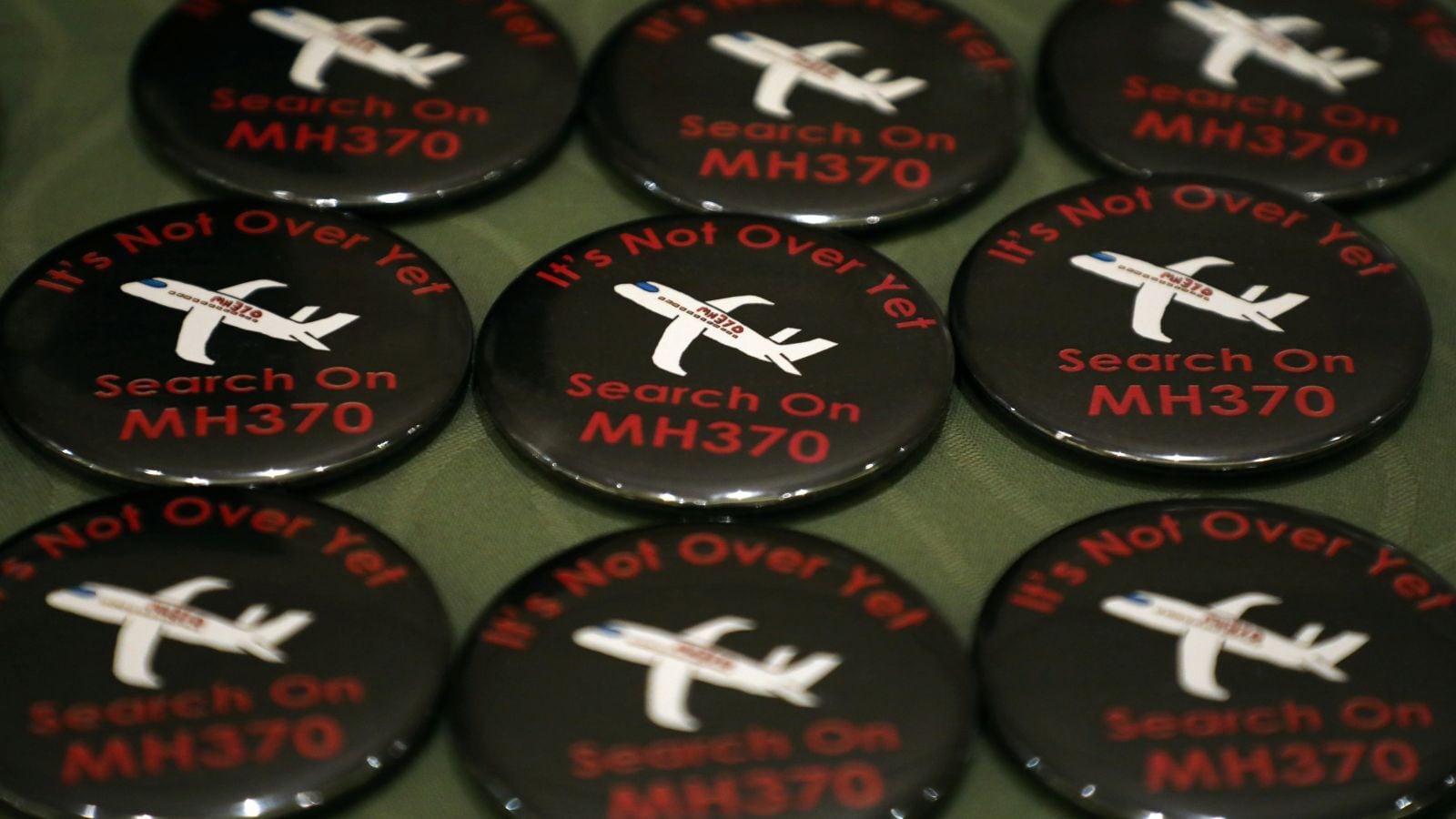
Twelve years is a long time for a ghost to linger in the open ocean. Yet, the Malaysian government just made a move that proves nobody is ready to drop the case on the greatest mystery in modern aviation. Malaysia extends its MH370 search deal with Ocean Infinity by one year, a decision that breathes new life into a hunt that many assumed was dead in the water.
Transport Minister Anthony Loke confirmed the Cabinet approved the twelve-month extension, stretching the contract from July 1, 2026, through June 30, 2027. The goal is simple. Ocean Infinity needs to finish scanning the remaining 7,428.54 square kilometers of a highly targeted zone in the southern Indian Ocean. If you've followed this saga, you know the drill. It's a strict no-find, no-fee arrangement. If the marine robotics firm turns up empty-handed, they don't get a dime. If they find the wreckage of the Boeing 777, they pocket a cool 70 million dollars. If you found value in this post, you should look at: this related article.
This isn't just about money or high-tech underwater drones. It's a calculated gamble on data, closure, and the stubborn refusal to let 239 people vanish without an explanation.
The Reality of the New Timeline
Don't expect ships to drop sonar systems into the water tomorrow. The mechanics of this deal are complicated by the realities of commercial shipping and brutal ocean weather. For another angle on this story, see the latest update from NBC News.
Ocean Infinity actually wrapped up its previous contract phase on January 23, 2026, after spending months deploying its automated Armada fleet. They covered roughly 7,571 square kilometers during those efforts, which leaves about half of the promised 15,000-square-kilometer priority zone untouched. The new extension is designed specifically to let them finish the job, but there's a catch.
The primary search vessels will be temporarily pulled away between November 2026 and April 2027 to fulfill other commercial commitments. That sounds like a massive delay, but it aligns with the seasonal shifts in the southern Indian Ocean. Searching those waters during the wrong months is a fool's errand. The seas are punishing, waves are mountainous, and risking multi-million-dollar autonomous underwater vehicles (AUVs) when data quality drops to zero makes no sense. The search will likely ramp up aggressively outside of that winter window when conditions turn calmer and safer.
Why the No Find No Fee Model Works
Governments are notoriously bad at managing the financial risk of deep-sea exploration. The initial multinational search led by Australia, Malaysia, and China cost somewhere around 200 million Australian dollars before it was called off in 2017. It was the most expensive aviation hunt in history, and it yielded nothing but frustrations and endless conspiracy theories.
That's why the contract structure with Ocean Infinity matters.
- Zero taxpayer risk: If the search fails, the Malaysian government doesn't lose money.
- High-incentive execution: The 70 million dollar bounty forces the exploration firm to use the fastest, most precise technology available.
- Data ownership: Even when these sweeps don't find the plane, they map uncharted sections of the ocean floor, providing invaluable geological data.
Ocean Infinity isn't doing this purely out of charity. They believe their technology can do what traditional crewed vessels can't. By utilizing swarms of autonomous underwater vehicles operating simultaneously from a host ship, they scan the seabed at speeds that were unimaginable a decade ago. They aren't just looking for a needle in a haystack; they are using a massive magnet to sweep the entire floor.
Rethinking the 7th Arc Data
To understand why this specific 7,428-square-kilometer patch is worth another year of effort, you have to look at how our understanding of the flight path has changed. For years, search teams relied heavily on the classic Bayesian search framework developed by Australia's Defence Science and Technology Group. That framework combined satellite handshakes—the famous Inmarsat data—with fixed aircraft dynamics models to pinpoint where the plane crossed the 7th arc after running out of fuel.
But models are only as good as their constraints.
Recent independent analyses published earlier in 2026 suggest that older models might have been too rigid. The original search assumptions assumed the plane followed a relatively straight, heading-based path after it dropped off military radar. If you adjust the math to allow for even a single automated waypoint adjustment or a slight lateral navigation change during its flight south, the potential crash zone shifts significantly along the arc.
That's exactly why Ocean Infinity's CEO Oliver Plunkett has maintained that clearing an area is just as important as finding the plane. By proving where the plane isn't, scientists can throw out flawed assumptions, tweak the flight algorithms, and focus on the remaining unsearched pockets.
The Human Cost of the Unfinished Search
It's easy to get bogged down in autonomous drone specs and satellite ping calculations. But the driving force behind the Malaysian Cabinet's decision is political pressure and human grief.
The next of kin have spent more than a decade living in limbo. When a flight crashes on land, families get a crash site, a recovery report, and a place to mourn. When a plane disappears into a three-mile-deep oceanic trench, you get a vacuum filled by internet grifters, fake debris experts, and alien abduction theories.
Anthony Loke stated directly that this extension is a manifestation of the government's unwavering commitment to providing closure. For Malaysia, walking away entirely when a company is willing to risk its own capital to find the answer would be a public relations nightmare and a moral failure.
What Actually Happens if They Find It
Finding the wreckage isn't the end of the story. It's the beginning of a massive forensic nightmare. If Ocean Infinity spots the debris field within the next year, the operation immediately shifts from a search mission to an international recovery and investigation project.
The Flight Data Recorders
The primary objective will be locating the orange boxes—the flight data recorder and the cockpit voice recorder. Even after twelve years under immense pressure in saltwater, modern solid-state memory units are incredibly resilient. There's a very real chance that if the memory chips are intact, investigators can extract the final hours of data. This would finally resolve the debate over whether the flight was a slow ghost flight caused by hypoxia or a deliberate act of pilot suicide.
Legal and Insurance Cascades
A definitive discovery triggers massive legal mechanisms. Insurance payouts, liability claims against Boeing, and final death certificates for outstanding estates have been stalled or complicated by the lack of physical proof. The discovery establishes a legal point of impact, changing the framework for outstanding litigations.
Deep-Sea Recovery Logistics
Operating at depths of up to 6,000 meters requires specialized remotely operated vehicles (ROVs) equipped with heavy-duty robotic arms. You don't just pull a Boeing 777 to the surface. You identify key components, photograph the debris field extensively to map the impact physics, and carefully retrieve pieces that offer the highest investigative value.
The Strategy Moving Forward
If you're tracking this development, don't look for major updates during the northern hemisphere's summer or the deep winter months when the fleet redeploys. Keep your eyes on the operational windows surrounding the calm sea seasons.
The real work happens when the automated vessels return to the grid, systematically mowing the lawn across that remaining 7,428 square kilometers. The tech is smarter, the search area is tighter, and the terms are set. We are entering what could very well be the final definitive chapter of the MH370 mystery. Either the ocean gives up its secrets in the next twelve months, or the data will officially run out of places to hide.