The Tenth of a Millimeter
Turn off the lights inside a manufacturing plant in Winnipeg on a Tuesday night in February, and the silence feels physical.
Outside, the prairie wind howls across Manitoba at forty kilometers an hour, driving the temperature down into a range where exposed skin hardens in minutes. Inside, the air smells of machine coolant, heated hydraulic fluid, and the faint, sweet trace of metal shavings cooling on hard concrete. You might also find this similar story insightful: Inside the Self Inflicted Agricultural Breakdown Draining Billions From Pakistan.
Standing beside a five-axis milling machine, a machinist named Marc—let us call him Marc, though his hands belong to a hundred men and women across Canadian aerospace—checks the tolerance on a compressor disk.
The tolerance is smaller than a strand of human hair. As reported in recent coverage by Harvard Business Review, the results are significant.
If this piece of metal expands too much under the blinding heat of combustion, a jet engine starves for air six miles above the earth. If it fits too tight, friction turns titanium into dust.
To the casual observer, defense contracts are dry stacks of paper bound in blue leather, signed by executives in dark suits holding Montblanc pens. They are announced in quiet press releases with headlines about supply chains and offset agreements.
That is the lie of high finance.
A defense deal is not paper. It is the sudden, permanent commitment of human hands to the impossible geometry of supersonic flight.
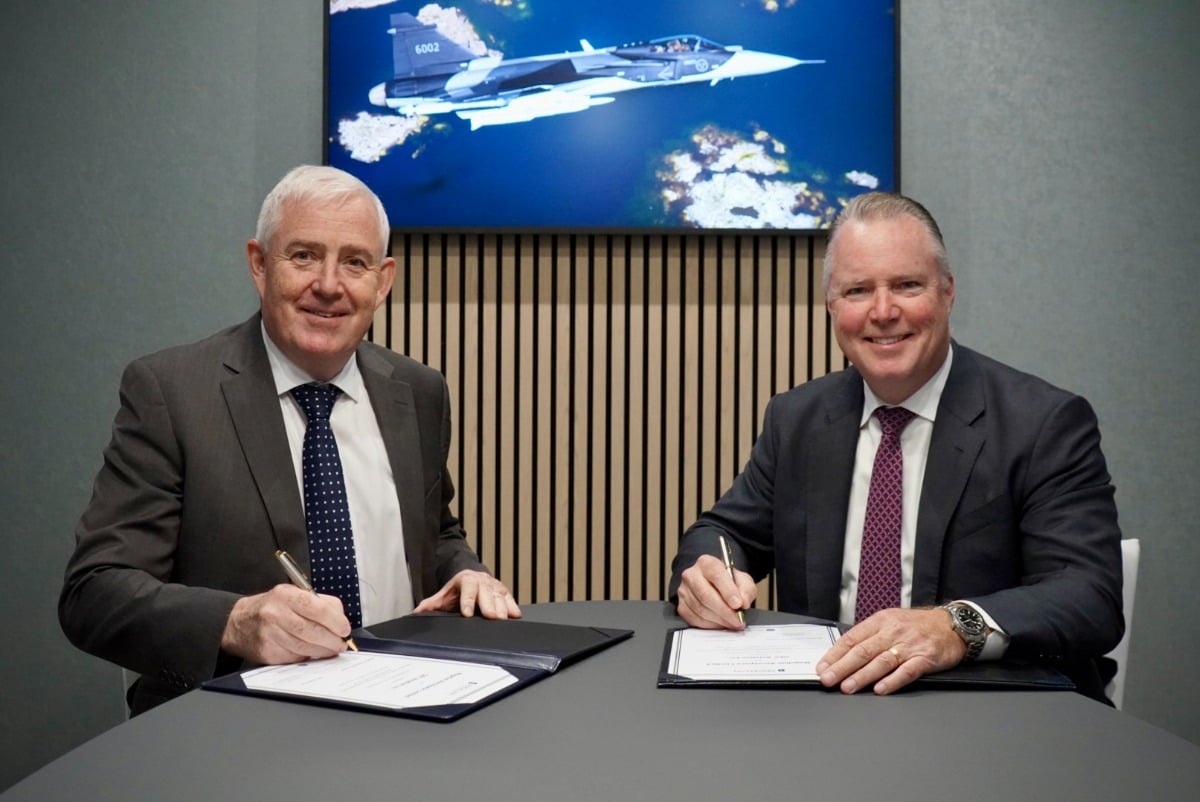
When GE Aerospace signed a strategic agreement with Canada’s Magellan Aerospace to support the engines powering modern fighter aircraft, including the Saab Gripen E, the press release recorded a transaction. The real story took place on the shop floor, where cold industrial precision meets the fierce reality of national defense.
The Cold Logic of Sovereign Skies
For decades, the math of aerospace manufacturing seemed simple.
Engineers in Cincinnati or Stockholm designed the propulsion systems. Massive industrial hubs overseas built the parts. The finished turbines were shipped in climate-controlled crates, bolted into airframes, and flown until maintenance intervals required them to be shipped back across an ocean for repair.
It was efficient. It was elegant.
It was also dangerously fragile.
When international borders tighten and global supply networks stall under economic shocks, the luxury of waiting six months for a turbine blade from halfway across the world evaporates. A nation that cannot service its own wings does not truly control its own airspace.
Canada knows this vulnerability well. With the second-largest landmass on Earth and three oceans to monitor, Canadian defense strategy lives and dies on readiness. An aircraft sitting in a hanger waiting for an overseas shipment is not a defense asset; it is an expensive paperweight.
Enter the partnership between GE Aerospace and Magellan.
GE provides the core design and foundational technology of engines like the F414—the thundering heart that pushes military aircraft through the sound barrier with relentless reliability. Magellan, with deep roots in Ontario and Manitoba, brings something equally vital: the local industrial muscle and precision machining to build, maintain, and sustain those powerplants on Canadian soil.
This is not merely about assembling parts. It is about industrial memory.
The Anatomy of a Flame
Consider what happens inside the combustion chamber of a high-performance jet engine.
Air enters the intake at subsonic speeds, gets crushed by stage after stage of rotating blades, and mixes with atomized fuel. The mixture ignites. The burning gas expands violently, surging backward at thousands of feet per second through a turbine that spins faster than the eye can comprehend.
The temperatures inside exceed the melting point of the metal itself.
The only reason the engine does not liquify into a blob of useless slag is a complex network of cooling channels—microscopic veins engineered into the metal to blow a thin barrier of cold air over the surface.
To build these components, you cannot simply be good at manufacturing. You must be extraordinary.
"A jet engine is controlled lightning. You do not tame it with brute force; you guide it with microscopic accuracy."
For Magellan Aerospace, taking on critical components for powerplants like the GE F414 means bringing that microscopic accuracy to Canadian factories. It means training apprentices to hear the subtle pitch shift in a CNC mill that signals a tool bit wearing down by three microns. It means holding static tests where engineers stare at telemetry charts with the fierce focus of surgeons monitoring a heart transplant.
When GE Aerospace locks arms with Magellan, they are handing over the keys to one of the most sophisticated manufacturing processes in human history.
Why? Because speed demands proximity.
Why the Gripen Matters to the North
To understand the stakes of this industrial pairing, one must look at the aircraft itself: the Saab Gripen.
Designed in Sweden to operate from frozen highway strips in the dead of Nordic winter, the Gripen was built around a specific philosophical premise: defense must be simple, tough, and fast to maintain. A small crew of conscripts standing on a snowy road should be able to refuel, rearm, and send a jet back into the sky in under twenty minutes.
The engine chosen to power this agile Scandinavian predator is GE’s F414 family.
For Canada, evaluating defense options has always been a balancing act between cost, capability, and economic return. By embedding Magellan directly into the supply chain for GE engines, the narrative shifts from an import model to a domestic engine capability.
The math changes.
Every hour a jet spends in the air translates directly into skilled labor hours in Winnipeg and Mississauga. The wealth stays local. The technical knowledge settles into the local community.
Consider what happens next:
A young engineer graduates from the University of Manitoba. Ten years ago, she might have packed her bags for Seattle or Texas to work on cutting-edge propulsion. Today, she drives twenty minutes down the road to a facility where GE-designed turbine components are being sculpted out of solid nickel alloy.
That is how an industrial base survives. Not through grants or speeches, but through hard, high-value work that cannot be easily outsourced.
The Unforgiving Friction of Reality
It is easy to paint this union in triumphant colors, but the path from a signed memorandum to a flawless production line is paved with brutal technical friction.
Titanium does not like to be shaped.
Under high cutting speeds, titanium alloys do not dissipate heat well. The heat flows straight back into the cutting tool, softening the carbide edge and destroying expensive equipment in seconds. Machining high-temperature aerospace alloys requires slow, methodical feed rates, high-pressure coolant jets, and constant vigilance.
Then there is the matter of quality assurance.
In standard automotive manufacturing, a defect rate of one in ten thousand might be acceptable for non-critical parts. In defense propulsion, the acceptable failure rate for a rotating turbine disk is zero. Absolute zero.
Every forging must undergo ultrasonic testing to look for invisible internal voids. Every weld is X-rayed. Every critical surface undergoes fluorescent penetrant inspection, glowing bright green under ultraviolet light to reveal cracks too small to see under a microscope.
The pressure on the workers at Magellan is immense.
A single mistake during a night shift does not just mean a scrapped part; it means lost time, broken schedules, and compromised trust with a global defense partner.
When you speak to the people on these shop floors, you do not hear grand political talking points. You hear discussions about chatter marks, tool wear, and thermal expansion coefficients. They are the quiet stewards of national capability.
Beyond the Contract
We live in an era fascinated by software.
We obsess over algorithms, artificial intelligence, and digital interfaces. We tend to forget that the physical world—the world of gravity, kinetic energy, and raw heat—still governs our existence.
No software update can push an aircraft past Mach 1.5. No algorithm can lift fifty thousand pounds of metal into the thin air of the stratosphere.
At the end of the day, physical reality requires physical hardware. It requires people who know how to turn raw ingot into precise, roaring reality.
The deal between GE Aerospace and Magellan Aerospace is a reminder of this fundamental truth. It is a quiet declaration that physical manufacturing still matters, that high-level technical skill is a form of national strength, and that partnership is built on shared execution rather than empty promises.
Late at night in Winnipeg, the Prairie wind continues to beat against the insulated walls of the factory.
Inside, the five-axis mill hums its high-pitched song. A stream of milky coolant floods over a spinning block of alloy, washing away delicate curls of bright metal.
Slowly, millimeter by tiny millimeter, an engine part takes shape. It has never seen the sun. It has never felt the bite of thirty-thousand-foot air.
Yet, shaped by human hands and backed by decades of engineering history, it is already waiting for the sky.