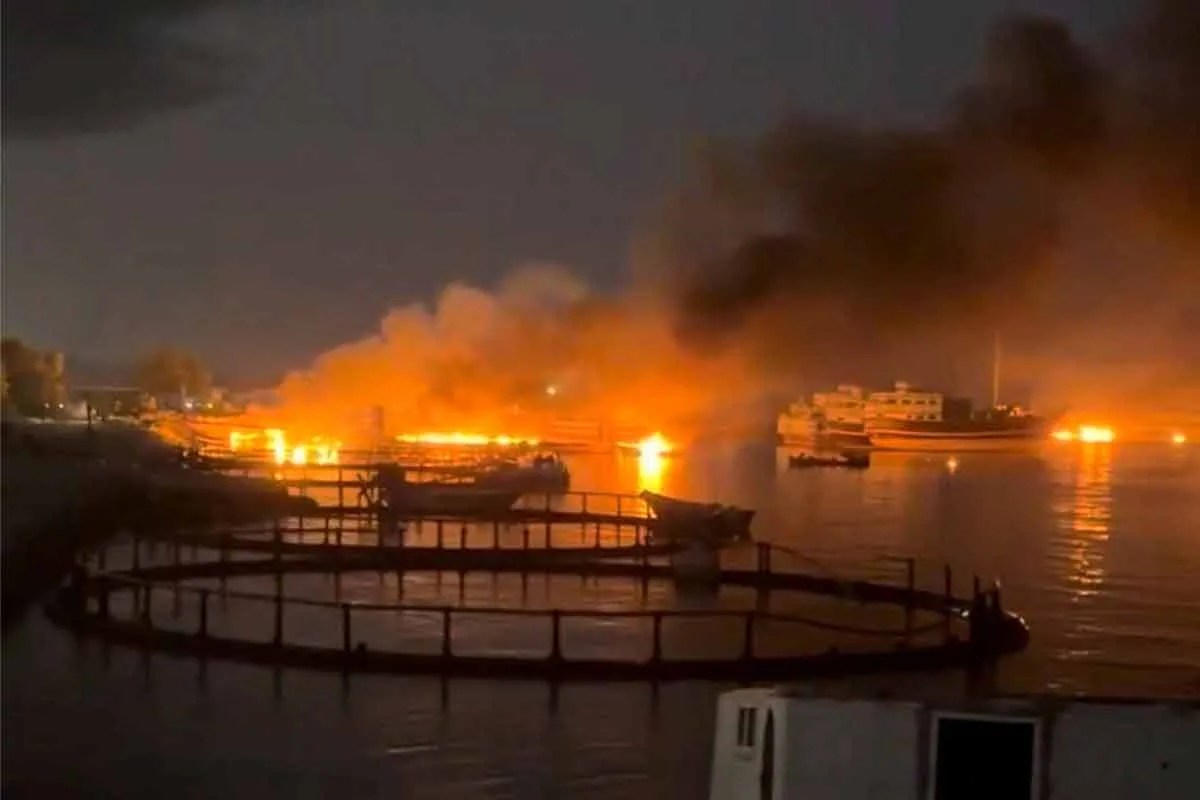
The headlines are reading like a recycled script from 1980. Mainstream outlets are screaming about fresh explosions in southern Iran, immediately pointing fingers at Washington, while US officials issue frantic, late-night denials to keep oil markets from panicking. Everyone is asking the same stale question: Is this the spark that triggers a direct regional war?
They are asking the wrong question. They are fighting the last war.
The media consensus views these explosions through a simplistic geopolitical lens: State Actor A attacks State Actor B, and State Actor B retaliates. This framework is completely broken. What we are witnessing in southern Iran is not the opening salvo of a conventional confrontation between Washington and Tehran. It is something far more volatile, decentralized, and economically devastating.
The Illusion of Direct Escalation
The mainstream narrative relies on the lazy assumption that every kinetic event in the Middle East is directed by a central command room in Washington or Tehran. When an explosion rocks a port facility or an energy depot near Bandar Abbas, the immediate reaction is to check the Pentagon’s press briefing schedule.
This perspective misses the entire structural shift in modern warfare. The obsession with "US vs. Iran" ignores three critical realities:
- Deniability is the Strategy, Not a Cover-up: Modern regional conflict is defined by asymmetric, unattributable operations. The moment a superpower or a major regional state openly claims a strike, the strategic value drops. Washington denies involvement because maintaining ambiguity prevents mandatory escalation cycles that wallop global markets.
- The Proliferation of Non-State Kinetics: The technology required to execute a precision strike on a localized infrastructure node no longer requires the logistics of a superpower. Cheap, loitering munitions and localized sabotage cells mean that attributing every blast to a US carrier strike group is a fundamental intelligence failure.
- The Internal Friction Factor: Southern Iran is a hyper-sensitive economic chokepoint plagued by internal security vulnerabilities, smuggling networks, and regional dissident factions. Attributing every structural failure or localized sabotage to foreign jets is a convenient excuse for state media and a lazy shortcut for Western journalists.
Dismantling the Conventional Wisdom
Let us look at what the mainstream press gets wrong every single time these tensions spike.
Does a blast in southern Iran mean the US is launching a new campaign?
No. The premise assumes the US still operates on a twentieth-century regime-change playbook. Washington’s actual doctrine is containment and economic strangulation. Direct kinetic strikes on Iranian soil create massive downside risk for global shipping lanes without solving the underlying proxy issue.
Will Iran close the Strait of Hormuz in retaliation?
This is the ultimate boogeyman of financial journalism. Closing the strait is a nuclear option that destroys Iran's own economic lifeline and alienates its primary buyers in Beijing. Tehran utilizes the threat of disruption to maintain leverage; actually executing it destroys that leverage instantly.
I have spent years analyzing regional defense logistics and supply chain vulnerabilities. I have watched analysts predict a "total regional shutdown" every time a sea drone misfires or a refinery catches fire. It never happens the way they predict. Why? Because the actors involved are highly rational, risk-averse entities operating within a carefully calculated gray zone. They want friction, not a total collapse of the system.
The Real Target is Infrastructure, Not Sovereignty
The true focus of modern conflict in the region is infrastructure degradation. It is a war of attrition waged against logistics, ports, and energy distribution.
| Metric | Conventional War View | The Reality of Gray Zone Warfare |
|---|---|---|
| Primary Objective | Territorial capture or regime capitulation | Economic friction and supply chain exhaustion |
| Weapon of Choice | Heavy bombers and cruise missiles | Low-cost loitering munitions and cyber sabotage |
| Success Condition | Kinetic destruction of military command | Compounding insurance costs and logistical delays |
When a strike occurs near a southern Iranian shipping hub, the damage is not measured in casualties. It is measured in the immediate spike in maritime insurance premiums, the rerouting of container ships, and the subtle shift in regional deterrence calculations.
The Western press treats these events like a boxing match, scoring points for each side based on public statements and official denials. In reality, it is a game of economic Jenga. You do not need to pull down the entire tower with a massive military campaign; you just need to slide out enough critical pieces to make the opponent's position untenable.
The Cost of Missing the Nuance
The danger of the current media consensus is that it misallocates attention and resources. By focusing entirely on whether the US or Israel will officially claim an attack, analysts miss the evolving capabilities of regional actors who operate entirely outside the traditional chain of command.
This is not a prelude to a massive, coordinated air campaign. This is the permanent state of play. A slow, grinding cycle of deniable strikes, localized sabotage, and economic warfare that defies traditional treaties and red lines.
Stop waiting for a formal declaration of war. Stop analyzing twentieth-century troop movements to understand twenty-first-century asymmetric friction. The explosions you are seeing are not the start of something new—they are the continuation of a highly sophisticated, deeply entrenched conflict system that the mainstream media is structurally incapable of understanding.
Rethink the framework, or get left behind reading the same outdated headlines every single week.