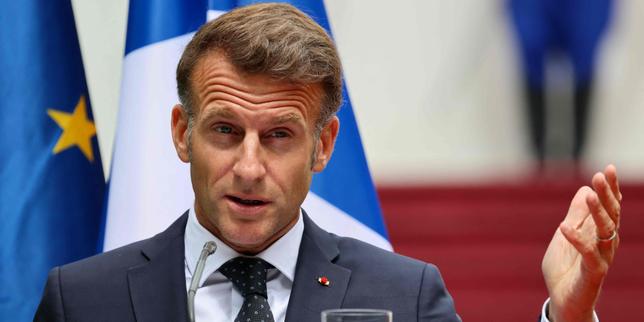
Sovereign states designed their bureaucratic and legal structures for an era of physical borders and discrete, state-backed entities. When these legacy systems encounter decentralized, modern information operations, the result is a systemic failure of state self-defense. This vulnerability is demonstrated by the ongoing controversy in France regarding Xenia Fedorova, the former head of RT France. Despite explicit declarations from French President Emmanuel Macron characterizing her activities as state-directed propaganda dating back to 2017, the state's internal administrative apparatus automatically renewed her ten-year residency permit in 2024.
This friction reveals a deep structural disconnect: the political executive identifies an asset of foreign influence, yet the domestic legal framework lacks the agility to neutralize that asset without undermining its own foundational tenets of free speech and administrative law.
The Three Pillars of Modern Information Arbitrage
Foreign influence operations do not exploit technical loopholes; they exploit the structural features of liberal democracies. The current distribution of pro-Kremlin narratives within the French domestic media ecosystem relies on three specific strategic pillars.
Legal Asymmetry and the Free Speech Capture
Liberal democracies operate on the principle of content-neutral free expression. When a state bans a formal state-backed network like RT under emergency sanctions, the human capital behind that network does not disappear. Instead, individual actors transition to domestic media platforms as independent commentators, columnists, or authors.
Because the legal system protects individual opinion, the state cannot easily distinguish between a legitimate domestic political perspective and a systematic repetition of foreign state directives without executing high-level political interventions that risk violating constitutional protections.
Institutional Alignment with Domestic Elite Objectives
Foreign influence vectors rarely succeed by operating in isolation; they achieve scale by aligning with the commercial or ideological objectives of domestic media tycoons. In this case, Fedorova’s integration into media outlets controlled by the Vincent Bolloré group (such as CNews, Europe 1, and Le Journal du Dimanche) serves a specific localized function.
For a domestic media conglomerate aiming to disrupt the political establishment or mobilize conservative voters ahead of the 2027 presidential election, an aggressive, anti-establishment viewpoint is highly valuable commercial content. The foreign agent of influence provides the narrative payload; the domestic media infrastructure provides the amplification engine.
[Foreign State Payload] -> [Domestic Media Conglomerate] -> [Mass Audience Amplification]
                               (Commercial/Ideological Vested Interest)
Administrative Automation vs. Strategic Intent
The issuance of a ten-year residency permit to a flagged foreign national exposes the operational silos within modern state bureaucracies. The executive branch, via intelligence assessments and public diplomacy, frames the individual as an agent of influence. Concurrently, the police prefecture and interior ministry process immigration renewals through highly standardized, deterministic administrative checklists.
If an applicant meets the rigid statutory criteria for renewal—such as duration of continuous residency or standard public order thresholds that require a high burden of criminal proof—the system processes the application automatically to avoid legal challenges. The state's defensive left hand remains entirely disconnected from its administrative right hand.
The Cost Function of Counter-Influence Operations
To understand why states fail to respond effectively to these operations, it is necessary to examine the cost function governing counter-disinformation strategies. Every defensive action taken by a democratic state carries a severe penalty in political or institutional capital.
The state operates under three distinct constraints:
- The Constitutional Cost: Banning individuals or stripping residency permits based on ideological speech requires expanding executive powers. This sets a legal precedent that can be used by future regimes against internal political opponents.
- The Bureaucratic Friction: Overriding standard administrative processes (like an automatic visa renewal) requires active ministerial intervention, which consumes significant executive focus and exposes the state to protracted litigation in administrative courts.
- The Narrative Paradox: When the state actively censors an individual, it validates that individual's narrative of victimhood. Publishing a book titled Bannie ("Banned") allows an influence actor to frame state self-defense as authoritarian censorship, increasing their appeal to anti-establishment audiences.
The Strategic Path Forward
To counter modern information operations without compromising democratic principles, states must move away from reactive, content-based bans and shift toward structural transparency.
The primary vulnerability is not the message itself, but the hidden financial and operational connections between foreign state apparatuses and domestic media platforms. The state must build robust corporate and financial tracking systems that treat foreign information operations as an issue of illicit foreign capital intervention rather than a free-speech issue.
State intelligence and regulatory bodies should mandate explicit financial and algorithmic audits for any domestic media organization that regularly features individuals previously tied to sanctioned foreign state media. By increasing the regulatory and compliance costs for domestic media syndicates that host these actors, the state shifts the economic incentive structure. When amplifying foreign state talking points incurs severe financial audit penalties and transparency mandates, domestic media networks will naturally deprioritize those actors to protect their core commercial operations.


