The proliferation of the "Senior Assassin" game represents a critical failure in risk perception where gamified social incentives override fundamental safety protocols. At its core, the game is a high-stakes simulation of stalking and assassination, usually played by graduating high school seniors. Participants pay an entry fee into a winner-take-all pot, then use water guns to "eliminate" assigned targets while following a complex set of "safe zone" rules. While participants view this as a harmless rite of passage, a structural analysis of the game’s mechanics reveals a dangerous convergence of three distinct risk vectors: visual ambiguity, trespass escalation, and law enforcement response latency.
The Architecture of Misinterpretation
The primary driver of physical danger in Senior Assassin is the degradation of the "toy" distinction. In a high-stress or low-light environment, the human brain utilizes heuristic processing to identify threats. The physical profile of many modern water blasters—specifically those modeled after tactical gear or painted in matte finishes—mimics the silhouette of functional weaponry.
The Visual Identification Bottleneck
When a bystander or a police officer encounters a participant, they must make a binary "threat/no-threat" decision in a window often lasting less than two seconds. Several variables compress this decision window:
- Modification of Equipment: Players frequently paint water guns black or camouflage colors to avoid detection by their targets, inadvertently stripping away the "blaze orange" tip required by federal toy safety standards.
- Tactical Posturing: The game incentivizes behaviors such as "casing" a house, hiding behind vehicles, or wearing masks. These behaviors are indistinguishable from the precursors to a violent crime.
- Environmental Context: A teenager sprinting through a backyard at 11:00 PM with a dark, pistol-shaped object triggers an immediate fight-or-flight response in residents. The context of "it’s just a game" is internal to the participants but invisible to the public.
The Geography of Risk: Safe Zones and Boundary Erasure
The game’s logic relies on a fragile "safe zone" framework—typically school grounds, places of worship, and moving vehicles. However, these rules create a pressure cooker effect. Because players are "safe" in these areas, the "kill zones" (neighborhoods, parks, and retail parking lots) become sites of extreme aggression.
The Trespass Loop
To bypass the difficulty of finding a target in a neutral zone, players frequently resort to "home invasions" or "vehicle ambushes." This creates a direct conflict with Castle Doctrine or "Stand Your Ground" legal frameworks in many jurisdictions. A resident who sees a masked individual attempting to force entry into a garage or window does not have the luxury of assuming the intruder is armed with a pressurized water tank. The delta between a "successful tag" and a "justifiable use of force" is often a matter of inches.
Vehicle Dynamics and Kinetic Energy
One of the most neglected variables in the Senior Assassin cost function is the use of vehicles as both shields and transport. Reports indicate players often chase one another at high speeds or attempt to lean out of windows to spray targets. The transition from a low-speed neighborhood game to a high-speed vehicular pursuit introduces kinetic energy risks that far outweigh the intended "fun" of the simulation. A 3,500-pound vehicle used as a tactical tool in a suburban cul-de-sac transforms a water game into a potential multi-casualty incident.
Social Media as a Force Multiplier
Unlike previous iterations of the game, current versions are managed through dedicated apps and social media platforms. This digitization introduces a "quantified status" element that drives risk-taking behavior.
- The Digital Paper Trail: Everything is recorded. The desire for "clout" or viral footage of a clever kill encourages players to perform more daring—and thus more dangerous—stunts.
- Algorithmic Pressure: When a player sees a peer from a neighboring district achieve viral success by jumping off a roof to tag a target, they feel a social compulsion to escalate their own tactics.
- Real-Time Tracking: Some iterations use GPS sharing, which removes the "hide" aspect of hide-and-seek and turns the game into a constant, high-cortisol pursuit. This prevents the physiological "cool down" that usually limits aggressive play.
Law Enforcement Engagement and the OODA Loop
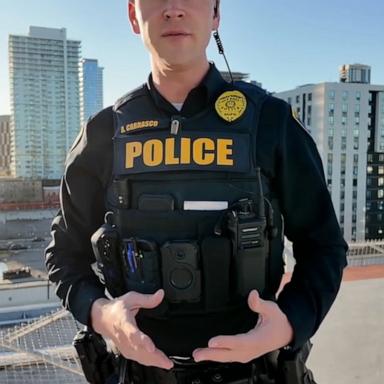
From a strategic standpoint, law enforcement agencies are placed in an impossible position by Senior Assassin. An officer responding to a "man with a gun" call must operate through the OODA Loop (Observe, Orient, Decide, Act).
- Observe: An individual is seen with a firearm-shaped object.
- Orient: The individual is masked and moving tactically.
- Decide: The officer must determine if lethal force is necessary to protect themselves or the public.
- Act: The officer draws their weapon.
The game’s mechanics deliberately shorten the "Observe" and "Orient" phases for the observer while lengthening them for the participant (who thinks they are in a safe simulation). If a player turns toward an officer with a water gun, the officer may have no empirical data to suggest the weapon is a toy. This creates a high probability of a "Blue-on-Blue" style accident where the victim is a civilian playing a game.
Structural Mitigation and Liability
Schools and municipalities often struggle to regulate the game because it technically occurs off-campus and outside school hours. However, the liability trail is significant.
The Organizer's Liability
Students or third-party entities who collect money and distribute target lists may be legally classified as "event organizers." In the event of a shooting, car accident, or injury, these individuals could face civil or even criminal negligence charges. The "pot" of money acts as a contract, turning a casual activity into an unregulated, high-stakes competition with inherent physical risks.
Parental Complicity
Parents who provide vehicles or allow their children to modify toy weapons to look "realistic" are effectively subsidizing a high-risk environment. The failure to recognize the transition from "play" to "unintentional threat" is a lapse in risk assessment that cannot be corrected after a kinetic encounter with law enforcement or an armed homeowner.
Systemic Failure of the "It's Just a Toy" Defense
The defense that "it’s just a water gun" fails because it ignores the psychology of the observer. In urban and suburban environments, the default assumption regarding firearms has shifted toward high-alertness due to the prevalence of real-world violence. Senior Assassin exploits this high-alert environment for "thrills," effectively "swatting" oneself as a game mechanic.
The game relies on the assumption that the "outside world" will recognize the game as a game. This is a cognitive bias known as the Illusion of Transparency, where participants believe their internal state (knowledge that they are playing) is visible to external observers. To a neighbor or a patrol officer, there is no "game"; there is only a masked intruder or a brandished weapon.
Strategic Realignment for Communities
To de-escalate the risk profile of these games without relying on ineffective "bans," a structural shift in the game's constraints is required.
- Mandatory Visual Variance: Any equipment used must be neon-colored or clearly non-conforming to firearm silhouettes. Modified or painted equipment must result in immediate disqualification and forfeiture of the buy-in.
- Strict Curfews: Eliminating nighttime play removes the low-light ambiguity that leads to tragic misidentifications.
- Zero-Tolerance for Trespass: Redefining the game boundaries to exclude private property and residential backyards removes the primary friction point with armed homeowners.
The current trajectory of Senior Assassin leads toward an inevitable catastrophic intersection between a student participant and a homeowner or officer who is operating under the assumption of a lethal threat. The game’s design—high stakes, visual ambiguity, and boundary transgression—is a blueprint for a kinetic disaster. Communities must treat the game not as a nuisance, but as a systemic risk to be managed through aggressive boundary setting and the restoration of visual clarity in public spaces.
Any student participating in these simulations must recognize that the "win condition" of the game is incompatible with the "stay alive" condition of real-world tactical encounters. The moment a participant prioritizes a "tag" over their own visibility as a non-threat, they have lost control of the outcome.
The most effective play for law enforcement and school administrations is to break the financial incentive. By targeting the "pot" of money as an illegal or unsanctioned lottery, authorities can remove the primary driver of high-risk behavior. Without the financial reward, the risk-to-reward ratio collapses, and the game naturally reverts to a lower-stakes, safer format.