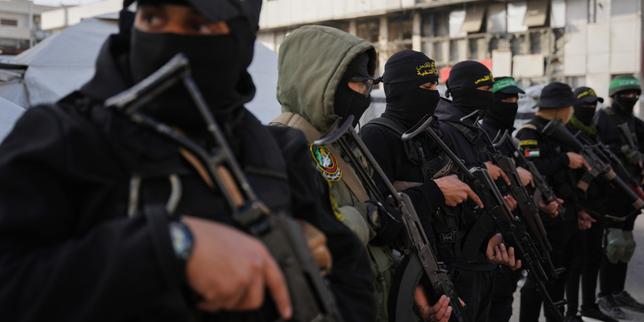
The stability of any non-state governing entity relies on a dual-spectrum exercise of power: external deterrence and internal coercion. While international geopolitical analysis consistently focuses on the external kinetic friction between Hamas and Israeli forces, a critical structural baseline is frequently overlooked—the systematic extraction of political compliance from the domestic population. The United Nations Independent International Commission of Inquiry on the Occupied Palestinian Territory recent findings shift the analytical focus inward. The report documents a highly structured framework of domestic violence, arbitrary detention, and extrajudicial enforcement executed by Hamas against Palestinian civilians within the Gaza Strip.
Understanding these dynamics requires moving past emotional rhetoric to examine the operational mechanics of authoritarian survival under siege conditions. Hamas operates not merely as an insurgent force, but as a de facto state authority managing a complex domestic risk profile. To maintain absolute authority while under severe external military pressure, the administration relies on a specific cost-function of domestic dissent. The UN documentation reveals that internal coercion is not random or reactive; it is a calculated structural strategy designed to neutralize political rivals, suppress civil dissatisfaction, and conscript civilian infrastructure into military architecture.
The Tri-Centric Framework of Internal Coercion
The UN Commission’s findings detail structural violence that can be categorized into three distinct operational pillars. Each pillar addresses a specific threat vector to Hamas's domestic hegemony.
1. Political Liquidation and the Elimination of Pluralism
The primary threat to any autocratic regime is the emergence of an organized domestic alternative. Hamas’s internal security apparatus systematically targets Fatah affiliates, political activists, and independent civil society leaders. During periods of heightened external conflict, the administration routinely accelerates the execution and detention of political rivals under the label of "collaboration." This mechanism serves a dual purpose: it eliminates structural opposition while leveraging wartime conditions to justify the suspension of basic legal protections. The UN report establishes that these actions lack any semblance of due process, functioning purely as a mechanism for elite survival and monopoly of force.
2. Digital and Physical Panopticism
The maintenance of domestic control requires high-efficiency information asymmetry. Hamas utilizes a pervasive network of informants, digital surveillance, and physical checkpoints to map the social architecture of Gaza. The UN findings highlight the systematic targeting of journalists, human rights defenders, and citizens who express dissent on digital platforms.
The operational chain reaction functions as follows:
- Identification: Digital surveillance teams monitor local social media channels and communications infrastructure to flag keywords associated with dissent or economic dissatisfaction.
- Interrogation: Targeted individuals are subjected to arbitrary arrest by internal security forces without warrants or formal charges.
- Neutralization: Physical abuse and psychological coercion are applied to extract confessions, identify broader networks of dissent, and force the signing of loyalty pledges.
3. Structural Integration of Civilian Infrastructure
The most logistically complex pillar documented by the UN is the deliberate enmeshing of military assets within civilian nodes. From an analytical perspective, this is a rational, albeit illegal, asymmetric warfare strategy. By placing command networks, weapon caches, and transit tunnels beneath or adjacent to residential areas, hospitals, and schools, Hamas shifts the strategic calculus of its adversary. This integration creates an administrative bottleneck for international law compliance, effectively forcing the civilian population to absorb the defensive costs of the military apparatus. Civilians who protest this structural proximity face immediate classification as security threats, leading to severe physical reprisals or indefinite detention.
The Asymmetric Cost-Function of Dissent
To quantify why domestic resistance within Gaza remains fragmented despite widespread economic misery and physical insecurity, one must analyze the cost-function governing civilian behavior. In standard political science models, a citizen’s decision to engage in dissent is a function of the perceived benefit of political change weighed against the probability and severity of state retaliation.
In the Gaza ecosystem, Hamas has artificially inflated the cost of dissent to near-infinite levels while reducing the perceived probability of successful change to near zero. The UN documentation provides the data points necessary to reconstruct this equation. Retaliation is not limited to the individual dissident; it extends to the familial and economic network.
Cost of Dissent = (Probability of Detection × Severity of Immediate Physical Reprisal) + Permanent Capital Loss (Loss of Employment/Permits) + Familial Retaliation Factor
Because Hamas controls the distribution of humanitarian aid, public sector employment, and cross-border movement permits, any sign of political non-compliance results in immediate economic excommunication. The individual loses not only physical liberty through arbitrary detention but also strips their entire extended family of the scarce resources required for survival. This creates a self-enforcing system of horizontal surveillance, where families actively suppress their own members' political expressions to prevent collective economic ruin.
Methodological Constraints and Information Bottlenecks
A rigorous analysis must acknowledge the data limitations inherent in the UN Commission's report. Operating within a active conflict zone under an authoritarian administration introduces significant information blockages.
First, the Commission was denied direct access to the territory, forcing reliance on remote testimonies, verified digital forensics, satellite imagery, and cross-referenced NGO documentation. This creates a selection bias toward incidents that leave a digital footprint or involve individuals with the means to communicate externally.
Second, the fear of horizontal retaliation prevents a statistically representative sampling of the population. The testimonies secured by the UN represent a subset of highly courageous actors or individuals who have already fled the territory. Consequently, while the mechanisms of coercion are clearly defined and verified, the precise volume and frequency of internal executions and tortures remain under-quantified. The numbers presented in international reports should be treated as conservative baselines rather than exhaustive tallies.
The Strategic Realignment of International Aid and Oversight
The documented reality of Hamas’s domestic governance model invalidates the traditional paradigms of international humanitarian assistance. For decades, international bodies have operated under the assumption that aid could be decoupled from the governing political architecture. The UN findings demonstrate that this decoupling is an operational impossibility in a totalized coercive state.
When an authoritarian entity exercises absolute control over geographic distribution networks and civilian infrastructure, international aid inadvertently acts as a structural subsidy. By absorbing the costs of basic civic governance—such as healthcare, food security, and education—international donors free up Hamas’s internal revenue streams (extracted via informal taxation and smuggling tariffs) to be allocated exclusively toward military procurement and the maintenance of the internal security apparatus.
Furthermore, the integration of civilian personnel into the administrative matrix of international organizations creates a severe vulnerability. Local staff operating within Gaza are subject to the same tri-centric framework of coercion detailed above. They cannot report diversion of aid, infrastructure exploitation, or human rights abuses without facing immediate existential risk to themselves and their families.
Operational Execution for International Stakeholders
To address the structural challenges identified by the UN Commission of Inquiry, international policy must abandon passive observation and implement a high-rigor, verified framework for engagement. The following steps outline the required operational realignment:
- Imposition of Independent Third-Party Aid Auditing: Transition away from reliance on local administrative staff for compliance reporting. Implement decentralized verification mechanisms, utilizing satellite telemetry, algorithmic supply-chain tracking, and off-site biometric verification of aid recipients to bypass the Hamas distribution monopoly.
- Decoupling Civil Infrastructure Funding: Halt all capital deployment for dual-use infrastructure projects unless real-time, unannounced physical access is guaranteed to independent international inspectors. Any structural node found to be co-located with military assets must face immediate, automated funding suspension.
- Jurisdictional Isolation of Coercive Actors: Utilize the specific evidentiary chains compiled in the UN report to initiate targeted international legal actions against individual commanders of Hamas’s internal security service (Internal Security Force/Al-Majd). Shifting the focus from the abstract political entity to the specific human architecture executing domestic torture creates internal friction within the regime's command structure.
- Protection of Digital Dissidence Vectors: Fund and deploy resilient, out-of-band communication technologies to lower the detection probability within the civilian cost-of-dissent equation. Providing secure, encrypted channels for domestic reporting allows the population to document internal governance abuses without triggering the automated surveillance apparatus of the state.


