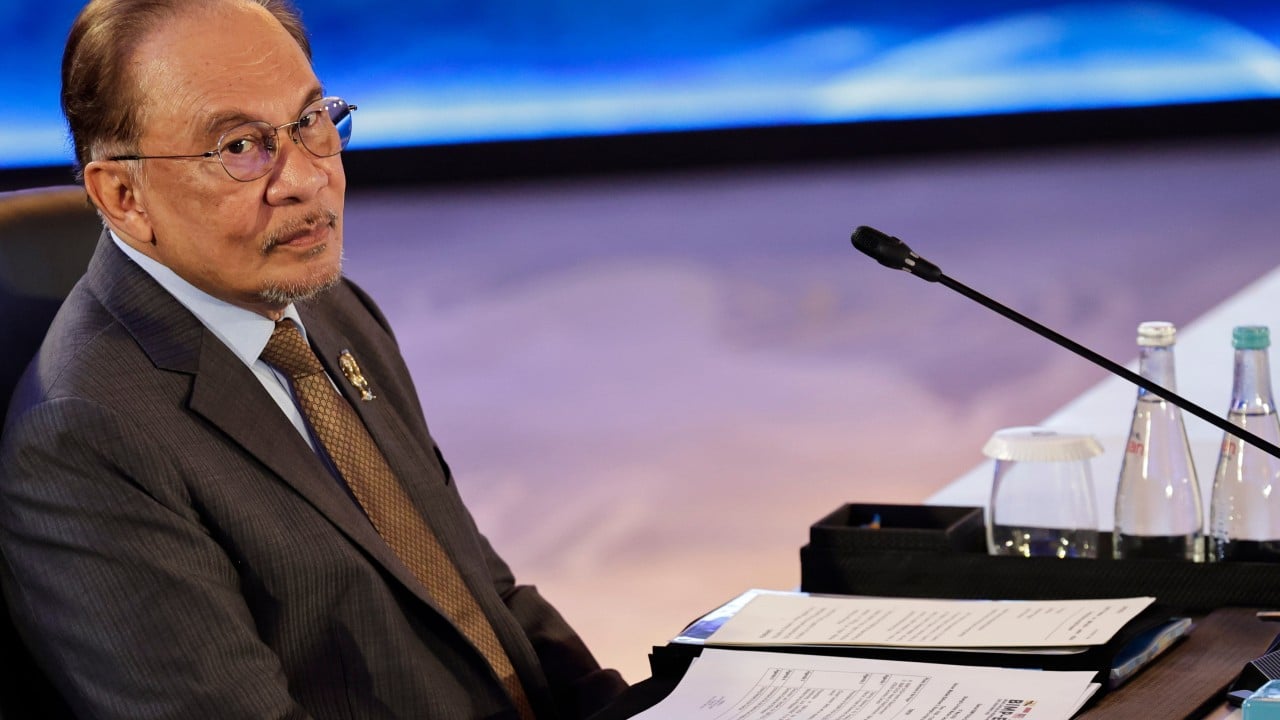
The survival of Malaysia’s Unity Government until the end of its parliamentary term is not a function of shared ideology, but a byproduct of high exit costs and institutional safeguards. Political stability in a fragmented multi-party system depends on three specific variables: the severity of the Anti-Hopping Law, the distribution of patronage through the federal budget, and the absence of a viable alternative coalition that can satisfy the conflicting demands of both ethnic nationalists and secular progressives. When Minister Fadillah Yusof asserts the coalition’s commitment to a full term, he is describing a strategic equilibrium where the risks of defection currently outweigh the rewards of realignment.
The Structural Architecture of Retention
The primary mechanism preventing the collapse of the current administration is the Constitution (Amendment) (No. 3) Act 2022, colloquially known as the Anti-Hopping Law. Before this legislation, individual Members of Parliament (MPs) served as the primary currency for political coups. The 2020 "Sheraton Move" demonstrated that a handful of defecting individuals could trigger a collapse. Under the current legal framework, the locus of power has shifted from the individual MP to the party leadership.
This creates a Hierarchy of Defection:
- Individual Defection: Virtually eliminated as a threat, as vacating a seat triggers a by-election that the incumbent may lose.
- Bloc Defection: A party or coalition (such as Gabungan Parti Sarawak or Barisan Nasional) must move in its entirety to shift the balance of power.
- Strategic Abstention: MPs may remain in the party but vote against government bills, though recent amendments to party constitutions (notably within DAP and Amanah) now classify such acts as constructive resignation, triggering seat vacancies.
The stability Fadillah Yusof references is essentially the stabilization of these blocs. The current government commands a two-thirds majority, creating a buffer that requires the simultaneous exit of multiple major partners to threaten the Prime Minister’s tenure.
The Economic Moat of Federalism
Stability is further reinforced by the fiscal relationship between the federal government and the East Malaysian states of Sarawak and Sabah. The "Madani" framework operates as a resource distribution system. For Gabungan Parti Sarawak (GPS) and Gabungan Rakyat Sabah (GRS), the incentive to remain in the coalition is tied to the fulfillment of the Malaysia Agreement 1963 (MA63) and the consistent flow of development expenditure.
The federal budget acts as a Cost-of-Stability Index. Any challenger attempting to court East Malaysian kingmakers must not only match current federal allocations but also offer superior guarantees on autonomy and oil royalty rights. Currently, the opposition (Perikatan Nasional) lacks the federal leverage to offer such guarantees, effectively locking GPS and GRS into the status quo.
The logic of the "End of Term" commitment is therefore a calculation of certainty. A full term allows for the multi-year implementation of infrastructure projects, such as the Pan Borneo Highway, which are vital for the political survival of regional partners. Breaking the coalition prematurely introduces a period of fiscal uncertainty that regional leaders view as an unacceptable risk to their local mandates.
The Zero-Sum Logic of the Opposition
A coalition’s endurance is often defined by the lack of a "Best Alternative to a Negotiated Agreement" (BATNA). The Malaysian political landscape is currently bifurcated into two mutually exclusive visions:
- The Multi-Ethnic Status Quo: Represented by the Pakatan Harapan-led government, which attempts to balance urban progressivism with traditionalist safeguards.
- The Ethno-Religious Alternative: Represented by Perikatan Nasional (PN), specifically the PAS-Bersatu nexus.
For the United Malays National Organisation (UMNO), the weakest link in the current government, moving to the opposition side would require merging into a space already dominated by PAS and Bersatu. In such a scenario, UMNO risks further cannibalization of its voter base. Therefore, despite internal friction, UMNO’s survival strategy dictates staying within the Unity Government where it can maintain a distinct identity as the "Malay voice" in a multi-ethnic cabinet.
This creates a Political Deadlock of Convenience. Each component party recognizes that while the current arrangement is suboptimal, the alternative—a return to the polls or a shift to the PN camp—poses an existential threat to their specific demographic appeal or institutional power.
Institutional Friction and Frictionless Governance
The minister’s rhetoric of unity masks the operational friction inherent in a "Grand Coalition." Stability does not imply efficiency. In a cabinet composed of former rivals, policy-making follows a Consensus or Stagnation model.
Major reforms, such as the removal of blanket fuel subsidies or the introduction of new tax frameworks, are slowed by the need to satisfy the populist requirements of UMNO and the fiscal discipline demands of the DAP. The commitment to stay until the end of the term provides the time necessary to dilute these frictions. It allows for a "phased implementation" strategy where controversial policies are delayed until the middle of the term to minimize the impact on the next general election cycle.
Assessing the Defection Threshold
While the government appears secure, three specific variables could lower the threshold for defection before the term ends:
- The Legitimacy Gap: If by-elections or state elections show a continuing swing of the Malay-Muslim majority toward the opposition, UMNO leadership faces a "Sinking Ship" dilemma. If the cost of staying (electoral wipeout) exceeds the cost of leaving (loss of cabinet positions), the coalition’s integrity will fail.
- Legal Contingencies: The current stability relies heavily on the internal cohesion of UMNO. Any change in party leadership or a shift in the legal status of key figures could trigger a realignment of the party’s parliamentary bloc.
- Fiscal Shock: A global recession or a sharp decline in commodity prices would reduce the federal government’s ability to "fund" the consensus. When the development expenditure budget shrinks, the regional partners (GPS/GRS) lose their primary incentive for loyalty.
Strategic Trajectory
The declaration that the government will serve its full term is a signal to foreign investors and the civil service that the era of the "revolving-door premiership" has ended. By projecting a five-year horizon, the administration is attempting to move the country from "crisis management" to "structural planning."
The strategic play for the administration is the institutionalization of the coalition. This involves moving beyond a mere "Memorandum of Understanding" toward a formal electoral pact for the 16th General Election. If the component parties begin to coordinate their grassroots machinery and seat allocations now, the "unity" becomes a permanent feature rather than a temporary ceasefire.
The survival of the Malaysian government is a test of whether institutional rules (the Anti-Hopping Law) and economic incentives (MA63 fulfillment) can override the centrifugal forces of identity politics. For the remainder of the term, expect a government that prioritizes "survivalist governance"—incremental policy changes that avoid upsetting the delicate balance of its constituent parts. The focus will remain on capital-intensive projects and subsidy rationalization, provided these moves do not trigger a mass exodus of the middle-class or the Malay heartland. Stability is not the absence of conflict; it is the successful management of it through the calculated distribution of power and resources.


/cdn.vox-cdn.com/uploads/chorus_asset/file/12849563/penthouses.0.1510182761.jpg)