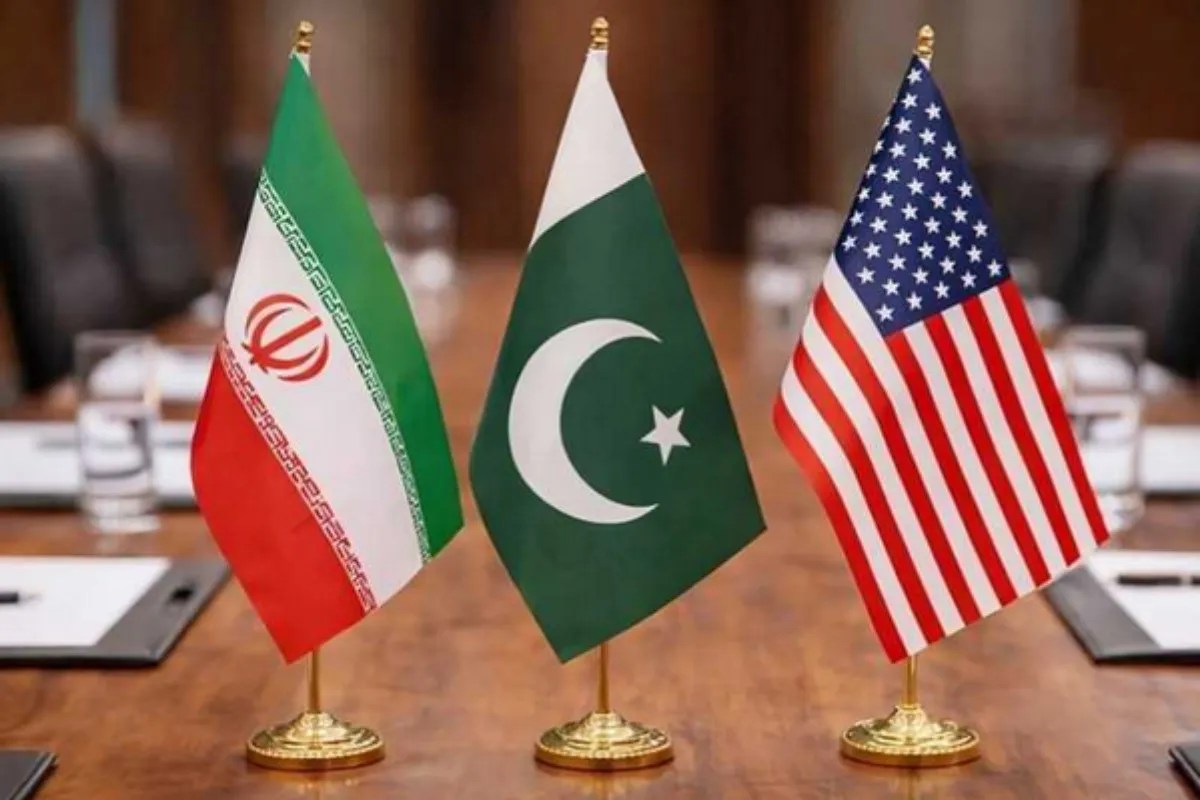
The structural bottlenecks in direct Washington-Tehran communications have historically forced both nations to rely on third-party intermediaries to manage escalation cycles. Pakistani Prime Minister Shehbaz Sharif’s recent public optimism regarding Islamabad hosting potential talks between the United States and Iran highlights a recurring geopolitical mechanism: the utilization of a non-aligned, geographically contiguous state to facilitate deniable, low-stakes diplomatic exploration. This analytical deconstruction evaluates the strategic viability, structural constraints, and systemic incentives driving this diplomatic initiative.
The Tripartite Incentive Structure
Backchannel diplomacy operates on a calculus of mutual utility. For a summit or preliminary dialogue to occur in Islamabad, all three participating actors must identify distinct strategic payoffs that outweigh the domestic and international costs of engagement.
1. The Pakistani Calculus: Leverage and Economic Stabilization
For Islamabad, positioning itself as a diplomatic bridge serves two immediate strategic imperatives:
- Geopolitical De-escalation: Pakistan shares a volatile 900-kilometer border with Iran. Security frictions, cross-border insurgencies, and kinetic skirmishes mean that any broader US-Iran escalation directly threatens Pakistan’s western frontier. Stabilization of US-Iran relations reduces the risk of Pakistan being caught in a regional proxy crossfire.
- Economic and Diplomatic Leverage: Facing prolonged macroeconomic instability, Pakistan requires sustained engagement with Western financial institutions alongside stable regional trade. By demonstrating utility to Washington as a critical diplomatic asset, Islamabad seeks to alter its transactional relationship with the US from a purely security-centric focus to that of a strategic facilitator, potentially easing pressure on other diplomatic fronts.
2. The Iranian Calculus: Sanctions Relief and Strategic Maneuvering
Tehran’s participation in Pakistani-hosted talks is governed by defensive economic needs and offensive regional positioning:
- Economic Bottleneck Mitigation: Decades of primary and secondary US sanctions have constrained Iran’s energy export capacity and isolated its banking sector. Backchannel talks offer a low-risk environment to test Washington's willingness to grant targeted sanctions waivers or freeze assets without signaling domestic political weakness.
- Strategic Diversification: By engaging via Islamabad rather than traditional Gulf Arab intermediaries like Oman or Qatar, Iran diversifies its diplomatic channels. This limits the leverage any single mediator holds over Tehran’s foreign policy portfolio.
3. The United States Calculus: Escalation Management and Regional Containment
Washington’s interest in an Islamabad-hosted channel is defined by risk minimization rather than grand normalization:
- Conflict Prevention: With US forces deployed across the Middle East, establishing a rapid, reliable backchannel reduces the probability of miscalculation during periods of heightened regional tension.
- Nuclear and Alignment Monitoring: Direct, unpublicized access to Iranian negotiators allows US officials to gauge Tehran's compliance thresholds regarding uranium enrichment and regional proxy funding, away from the distorting lens of public media scrutiny.
Operational Constraints and Structural Bottlenecks
While the incentives for hosting talks are clear, the execution of effective backchannel diplomacy via Islamabad faces severe structural limitations. These variables function as a friction coefficient, reducing the probability of a breakthrough.
The Credibility Deficit and External Veto Players
A primary constraint is the presence of powerful external actors who view US-Iran rapprochement through an existential lens. Israel and Saudi Arabia historically track Western engagement with Tehran with high skepticism. Any indication that Washington is offering substantive concessions via an unmonitored Pakistani channel will trigger immediate pushback from regional allies, complicating the US domestic political landscape.
Furthermore, Pakistan’s internal political and economic volatility acts as a destabilizing variable. For a nation to serve as a credible guarantor of highly sensitive diplomatic talks, its state apparatus must project long-term continuity. Foreign policy shifts within Islamabad’s civilian government, paired with the structural influence of the military establishment, create an environment where long-term diplomatic secrets are difficult to safeguard.
The Asymmetry of Diplomatic Mandates
Past diplomatic failures demonstrate that backchannel talks stall when negotiators lack the structural authority to execute agreements.
- The Iranian Decision-Making Hierarchy: Ultimate authority over foreign policy and security matters rests with the Supreme Leader, not the civilian presidency or foreign ministry. If the negotiators sent to Islamabad lack a direct mandate from the highest echelons of the clerical and military establishment (specifically the Islamic Revolutionary Guard Corps), the talks degrade into performative dialogue.
- The US Electoral Clock: Foreign policy commitments made by a current US administration face existential risks during election cycles. Tehran remains highly hesitant to enter structural agreements that can be unilaterally dismantled by a subsequent US administration, a precedent established by the 2018 withdrawal from the Joint Comprehensive Plan of Action (JCPOA).
The Strategic Path Forward
If Islamabad is to successfully transition from an aspiring host to an effective diplomatic venue, the preparatory phase must abandon vague rhetorical ambitions in favor of a highly codified, incremental framework.
The initial phase must prioritize De-escalation Protocols over Comprehensive Agreements. Attempting to address the totality of US-Iran frictions—ranging from nuclear enrichment to regional proxy networks and global maritime security—will guarantee immediate deadlock. Instead, the agenda must be restricted to verifiable, micro-level concessions, such as reciprocal prisoner releases or localized maritime safety protocols in the Persian Gulf.
Concurrently, Pakistan must establish a Segregated Diplomatic Infrastructure. To mitigate the risk of intelligence leaks or external sabotage, the management of this channel must be insulated from standard bureaucratic channels. This requires the creation of a discrete task force operating under joint civilian-military oversight, answering exclusively to the Prime Minister and the Chief of Army Staff, ensuring absolute operational security.
Finally, all parties must utilize a mechanism of Parallel Asymmetric Concessions. Progress should not be measured by signed treaties, which are politically toxic in both Washington and Tehran. Success relies on coordinated, unilateral actions: Washington issues time-limited sanctions waivers for specific humanitarian or energy sectors, while Tehran simultaneously slows enrichment rates or constrains specific regional proxy operations. This approach bypasses the need for formal political consensus, allowing both leadership structures to maintain domestic plausible deniability while systematically lowering the regional flashpoint temperature.