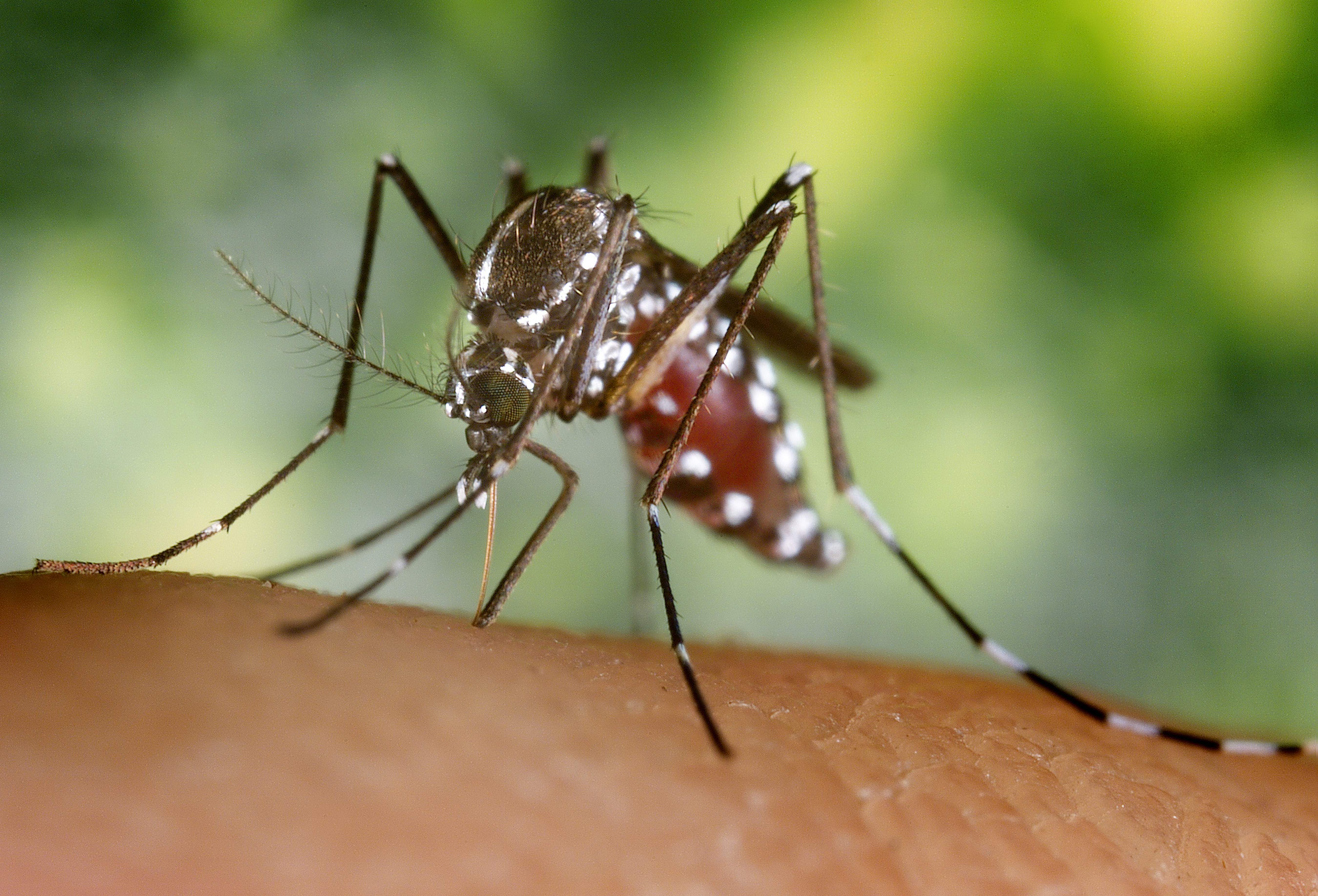
The confirmation of the initial human case of West Nile virus in Toronto for the active cycle marks a predictable threshold in seasonal epidemiological tracking. Municipal public health reporting treats these occurrences as isolated health events, yet baseline vector data indicates they are structural outputs of urban ecology meeting seasonal meteorological parameters. Understanding the trajectory of mosquito-borne pathogens requires looking past the single patient announcement and examining the underlying environmental variables that govern virus amplification cycles.
The Vector Amplification Equation
The transmission cycle of the West Nile virus relies on an enzootic loop primarily involving mosquitoes of the genus Culex and various avian reservoir hosts. When ambient temperatures rise, the extrinsic incubation period—the time it takes for the pathogen to replicate within the vector and reach the salivary glands—shortens significantly.
- Temperature Acceleration: Higher thermal averages increase metabolic and feeding rates in mosquitoes, multiplying contact frequencies between vectors and hosts.
- Hydrological Retention: Irregular precipitation patterns followed by high heat create micro-pools of stagnant water, which serve as optimal larval habitats across urban infrastructure.
- Amplification Phase: As infected bird populations circulate the viremia, local Culex mosquitoes acquire the pathogen, shifting the risk profile from avian reservoirs to incidental human hosts.
This sequence explains why human cases cluster in mid-to-late summer. The timeline between vector population peaks and clinical case reporting typically spans several weeks, meaning public health warnings issued upon the first human diagnosis capture a process that has been compounding since early June.
Surveillance Architecture and Blind Spots
Municipal monitoring programs rely on distributed trap networks to sample mosquito populations and test pooled samples for the virus. In Toronto, surveillance operates through a network of traps deployed weekly from mid-June to mid-September. However, this framework contains structural limitations that skew risk assessment.
Trap placement is static, whereas urban microclimates are dynamic. Heat islands, localized stormwater management efficiency, and canopy cover create hyper-local variations in vector density that a city-wide trap average fails to capture. A neighborhood with poor drainage and dense vegetation can experience intense viral amplification while aggregate municipal metrics remain below threshold levels.
Furthermore, passive human surveillance creates a lag effect. Most individuals infected with the pathogen remain asymptomatic or experience mild, unreported symptoms resembling seasonal viral infections. Clinical reporting captures only the fraction of cases progressing to severe neurological manifestations or requiring formal medical intervention. Consequently, official counts function as lagging indicators of environmental transmission rather than real-time threat maps.
The Cost Function of Personal Mitigation
Public health directives universally emphasize individual behavioral modifications: applying chemical repellents, altering clothing choices to minimize exposed skin, restricting outdoor exposure during crepuscular windows, and eliminating standing water on private property.
Evaluating the efficacy of these measures reveals a heavy reliance on human compliance within an environment where compliance is notoriously variable. Structural vector control—such as larviciding catch basins and public stormwater infrastructure—transfers the burden of risk reduction from systemic engineering to individual vigilance.
The economic and operational friction of personal protection creates variance in exposure risk across socioeconomic strata. Populations residing in multi-unit housing with degraded window screens or living adjacent to unmanaged public green spaces face elevated vector exposure independent of behavioral modifications. True risk mitigation requires shifting resources from educational bulletins to automated environmental controls, targeting subterranean breeding sites before adult emergence occurs.
Vector Management Operations
Mitigating future amplification spikes demands a shift from reactive communication to predictive vector suppression. Public health authorities must integrate real-time meteorological modeling with geographic information systems to map high-probability breeding zones prior to vector population surges.
Deploying biological larvicides such as Bacillus thuringiensis israelensis into high-risk urban water retention nodes disrupts the life cycle before adult biting vectors emerge. By treating vector control as an infrastructure maintenance problem rather than a seasonal public awareness campaign, municipal health systems can compress the transmission window and lower the probability of human exposure across vulnerable urban sectors.

.png?width=1200&auto=webp&trim=73%2C0%2C139%2C0)