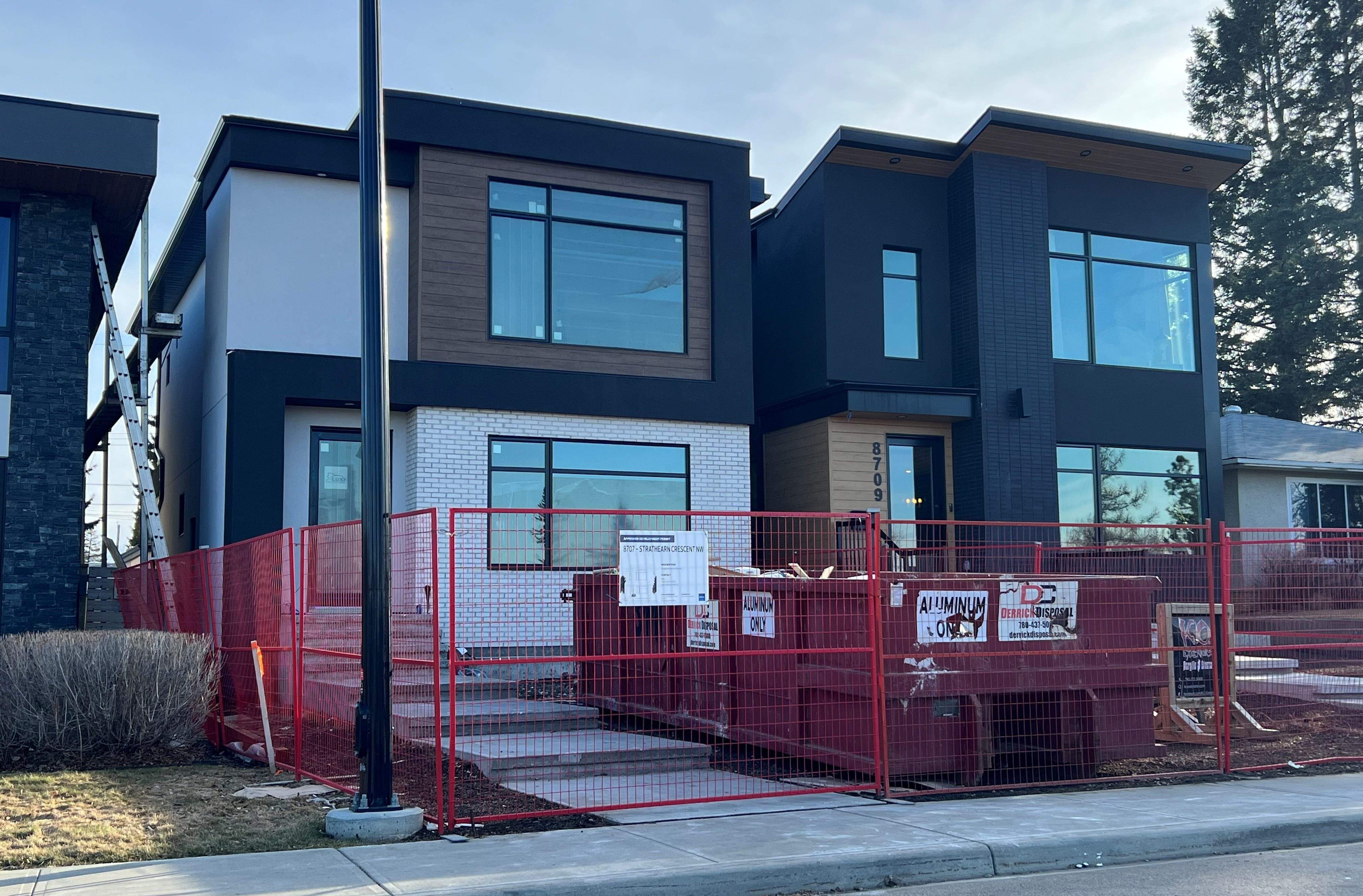
Municipal zoning policy operates as a complex price-setting mechanism for urban land. When administrative bodies alter the allowable density parameters of residential lots without properly accounting for localized infrastructure carrying capacities, the resulting market distortion triggers predictable economic frictions. The regulatory friction surrounding urban infill policies in Western Canada provides a clear case study in how misaligned housing directives conflict with baseline economic realities.
The core tension in urban housing economics centres on the friction between land value maximization and neighbourhood externalities. Blanket zoning modifications allow developers to replace single-family structures with multi-unit multiplexes. While proponents argue this expansion of supply curbs price appreciation, it fundamentally alters the cost function of adjacent properties. Without mandatory parking minimums and strict height ceilings, the private developer captures the development margin while externalizing the cost of congestion and grid stress onto the existing community. Discover more on a related subject: this related article.
The economic mechanisms driving this friction can be broken down into three core variables: land acquisition costs, construction capital expenditures, and municipal infrastructure amortization.
First, land acquisition costs in mature neighbourhoods are a function of the underlying land value rather than the depreciated value of the structure sitting on it. When regulations permit up to eight units on a single mid-block lot, the theoretical yield per square metre increases. This potential yield inflates the bidding power of land speculators, driving up baseline acquisition costs for all prospective buyers. Consequently, the anticipated affordability dividend fails to materialize because the residual land value absorbs the maximum allowable revenue potential. Additional journalism by The New York Times explores similar perspectives on the subject.
Second, the capital expenditure required for high-density multi-unit construction involves structural framing and servicing upgrades that smaller footprints do not demand. When municipalities remove off-street parking requirements entirely, developers externalize vehicle storage onto public asphalt. This creates a classic tragedy of the commons scenario. The developer saves substantial capital by omitting underground or pad parking, but the neighbourhood absorbs the capacity deficit.
Third, municipal infrastructure carries a fixed carrying capacity designed decades prior. Water mains, sanitary sewers, and electrical transformers installed for single-family low-density use experience exponential demand spikes when density increases eightfold on a single parcel. When provincial regulators intervene to mandate rollbacks or force a return to baseline parking minimums, they are attempting to correct an infrastructure deficit caused by rushed, uncalibrated municipal policy.
The policy intervention by provincial authorities illustrates the limits of municipal autonomy when zoning changes create systemic negative externalities. Restoring pre-existing density caps and parking minimums is not merely a regression to historical stagnation; it represents a recalibration of risk. Capital allocators and developers must now price in regulatory volatility. When zoning rules shift abruptly, the predictability required for long-term real estate investment evaporates. Projects modeled on maximum theoretical yield face sudden margin compression when height limits and parking mandates are abruptly reinstated.
To stabilize housing markets without inviting chaotic neighbourhood disruption, municipal frameworks must abandon blunt instruments. Blanket upzoning without concurrent capital investment in civil infrastructure guarantees friction. Future land-use strategies must tie density increments directly to verifiable infrastructure capacity upgrades, ensuring that private yield gains do not compromise public asset longevity.