Extreme weather events do not test the raw fury of nature as much as they interrogate the load-bearing capacity of human infrastructure. When Typhoon Dolphin made landfall along the eastern coast of Zhejiang province packing maximum sustained winds of 151 kilometers per hour, it initiated a cascade of systemic failures across eastern China. The storm's trajectory bypassed a random rural expanse to collide directly with the economic machinery of the Yangtze River Delta. By examining the structural response of Shanghai and surrounding regional hubs, we can deconstruct how high-density urban nodes fail under catastrophic hydrological pressure.
The Urban Drainage Bottleneck in Shanghai
The primary variable determining damage output during a coastal meteorological strike is precipitation velocity relative to basin discharge capacity. In central Shanghai, a localized weather station recorded nearly 313 millimeters of rain within a single 24-hour window, while other collection points registered up to 400 millimeters. This volume represents the highest 24-hour accumulation recorded in the municipality over more than 150 years of meteorological record-keeping.
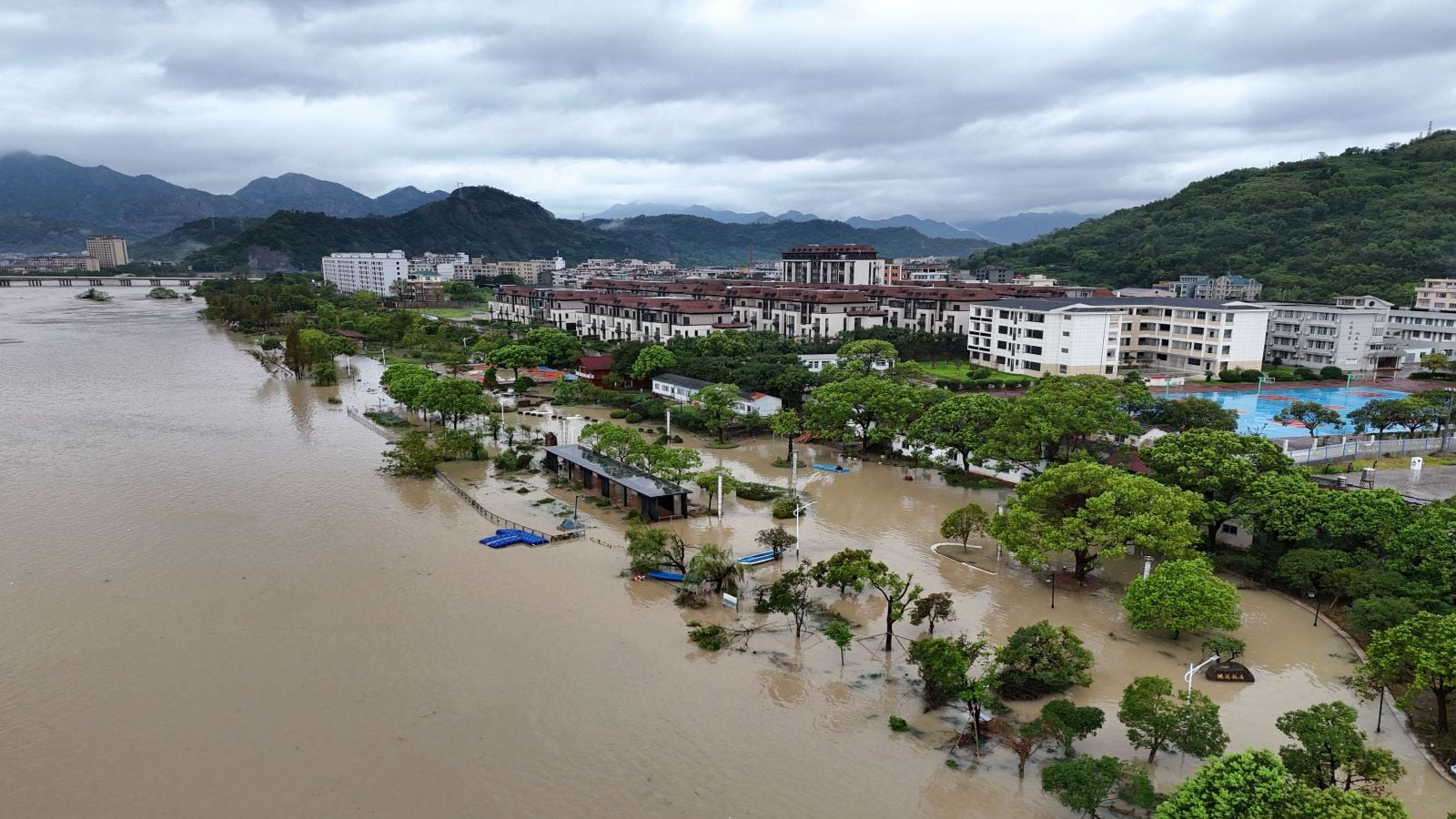
Subsurface municipal drainage systems are historically engineered to process a specific threshold of volumetric flow per hour. When precipitation rates outstrip this coefficient by orders of magnitude, surface pooling is mathematically guaranteed. Suburban districts such as Jiading and Qingpu experienced prolonged waterlogging, with residents documenting knee-high inundation. The economic friction caused by this standing water is immediate: commercial districts shut down non-essential operations, retail supply chains halted, and localized labor productivity dropped to zero as transit arteries became impassable.
The Network Effects of Aviation and Transit Reductions
Modern megacities operate on strict scheduling tolerances where inventory and personnel buffers are kept near zero to maximize efficiency. Typhoon Dolphin shattered these margins, demonstrating how localized wind and rain force systemic shutdowns across regional transport corridors.
Shanghai Pudong International Airport and Shanghai Hongqiao International Airport combined to cancel more than 1,300 flights, reducing operational capacity by nearly 40 percent on peak travel days. These cancellations are not isolated events; they propagate outward through global and domestic supply chains. Aircraft displaced from Shanghai fail to service connecting hubs in Beijing, Guangzhou, and international destinations, creating a multi-day recovery lag.
Concurrent actions taken by regional authorities compounded the transport bottleneck:
- Suspension of ferry services and closure of maritime transit lanes across major commercial shipping hubs.
- Partial shutdowns of urban subway networks and long-distance bus terminals in high-risk districts.
- Preemptive halting of rail services across the Yangtze River Delta region by China Railway Shanghai Group.
These transport interlocks reveal an underlying vulnerability in centralized logistics networks. When primary arteries are severed, secondary road networks absorb the overflow, quickly generating gridlock that prevents emergency vehicles from moving fluidly.
The Logistics of Preemptive Population Relocation
Disaster mitigation at scale requires balancing the economic cost of disruption against the human cost of structural failure. In the wake of Dolphin, local governments executed massive population displacement protocols. Official counts indicate that over one million individuals were relocated across eastern China prior to and during landfall, including approximately 390,000 residents in Taizhou and over 215,000 in designated high-risk zones within Shanghai.
The operational mechanics of moving hundreds of thousands of people require an immense mobilization of state resources, temporary emergency shelters, and security personnel. While these preemptive evacuations successfully kept the direct mortality rate low compared to historical events of similar magnitude, they introduce severe economic friction. Small businesses face inventory decay, manufacturing plants lose shifts of output, and municipal balance sheets absorb the direct costs of shelter maintenance and logistical support.
Regional Ripple Effects and Inland Vulnerability
While coastal regions absorb the initial kinetic energy of a typhoon, inland provinces bear the prolonged hydrological aftermath. As Dolphin degraded from a typhoon into a slow-moving tropical storm, its vector shifted northward and deeper into the interior, threatening agricultural and industrial zones across Anhui, Jiangsu, Shandong, Hubei, and Henan.
The primary danger shifts from wind shear to cumulative soil saturation. When topsoil reaches 100 percent saturation, the risk coefficient for flash floods and structural mudslides increases exponentially, as evidenced by concurrent landslide fatalities in mountainous regions influenced by the broader monsoon dynamics. Infrastructure investments that focus solely on coastal sea walls fail to account for these inland drainage deficits.
Allocate municipal capital toward decentralizing stormwater retention basins within high-density suburban sub-districts to decouple local commercial survival from primary drainage canal capacities during historical precipitation anomalies.
:max_bytes(150000):strip_icc()/ar-American-Cheese-taste-test-horizon-4x3-54cc339550cd44b9a818c17bdfd5428d.jpg)