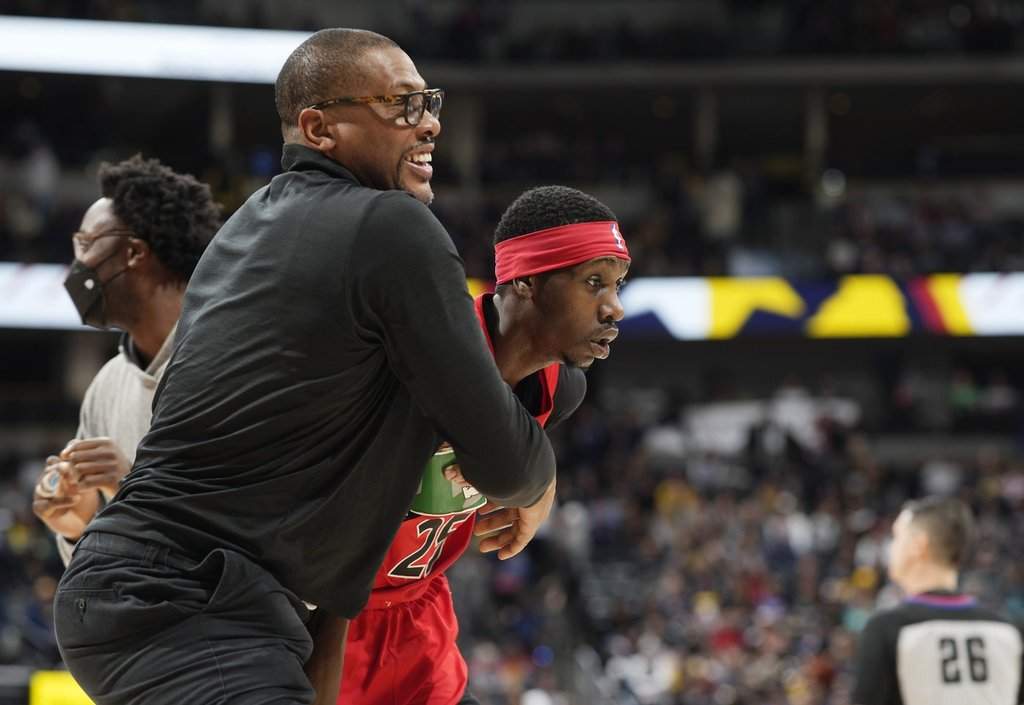
The induction of Jamaal Magloire into the Canadian Basketball Hall of Fame as part of the 2026 class represents more than a retrospective celebration of a twelve-year NBA career. It serves as a benchmark for evaluating how pioneer infrastructure translates into modern systemic output. Evaluating this class—which features high-performing athletes like Miranda Ayim alongside structural architects like coaching dynasty builder Dave Smart—requires looking past standard biographical achievements to analyze the structural leverage these figures exerted on the Canadian basketball ecosystem.
The Three Pillars of Modern Canadian Basketball
Evaluating the composition of the 2026 Hall of Fame class reveals a deliberate taxonomy of sports development. The inductees do not merely represent isolated athletic excellence; they map directly onto three operational pillars required to scale a national sport from an outlier market into an international pipeline.
- Pioneer Representation: Athletes who validate the domestic talent pipeline by proving that elite pathways exist from Canadian high schools to global platforms.
- Dynastic Architecture: Coaches and program builders who establish institutional continuity, turning localized training environments into predictable talent generators.
- Cultural Stewardship: Figures who bridge competitive success with community access, ensuring that sports infrastructure remains anchored to social equity.
Magloire functions primarily within the first and third pillars. Selected 19th overall in the 2000 NBA Draft by the Charlotte Hornets out of the University of Kentucky—where he finished as the program's all-time blocks leader—Magloire operated in an era when Canadian representation in the NBA was scarce. His 2003-04 All-Star campaign with the New Orleans Hornets, where he averaged 13.6 points and 10.3 rebounds across 82 games, provided tangible proof of concept for a generation of guards and forwards who would later flood the league.
The Transition Cost Function from Player to Executive
A common analytical blind spot in sports media is treating athletic retirement as an endpoint rather than a capital reallocation event. When elite players transition into front offices, coaching staffs, and ownership groups, their value shifts from direct on-court output to institutional knowledge transfer.
Magloire's post-playing career trajectory highlights this operational shift:
- Technical Coaching Integration: Joining the Toronto Raptors coaching staff, culminating in a championship ring during the 2018-19 season.
- Domestic League Scaling: Serving as vice president and special advisor for the Scarborough Shooting Stars in the Canadian Elite Basketball League (CEBL), securing a title in 2023.
- Philanthropic Risk Mitigation: Establishing the Jamaal Magloire Foundation in 2017 to offset systemic socioeconomic barriers for underrepresented youth in the Greater Toronto Area.
This progression demonstrates a deliberate mitigation of the talent drain that historically plagued Canadian basketball. Rather than letting elite domestic experience dissipate post-retirement, the ecosystem absorbed Magloire back into local franchise development, grassroots governance, and professional league scaling.
Comparative Structural Impact within the 2026 Class
To understand why this specific class represents a watershed moment, one must contrast Magloire’s trajectory with fellow inductee Dave Smart. While Magloire scaled his impact horizontally—moving from NBA All-Star to local franchise builder and cultural ambassador—Smart operated as a vertical monolith at Carleton University, capturing 13 U Sports national championships.
Smart engineered a closed-loop tactical system that routinely outperformed heavily resourced NCAA programs in efficiency metrics. Meanwhile, athletes like Miranda Ayim sustained the senior women's national team program across more than a decade of international competition, establishing baseline expectations for professional longevity and leadership.
The juxtaposition of these figures underscores a fundamental economic reality of sports development: a nation cannot rely solely on NBA-level outliers. Sustainable output requires the gritty, foundational mechanics provided by university architects and national team captains to stabilize the floor while elite pioneers raise the ceiling.
Strategic Execution for Domestic Pipeline Continuity
The recognition of the 2026 class by Canada Basketball president and CEO Michael Bartlett signals an institutional pivot toward valuing holistic ecosystem builders over box-score metrics alone. As the domestic talent pool expands past 25 active NBA players, the bottleneck has shifted from talent identification to coaching retention and front-office governance.
Future development models must leverage the blueprint laid by this induction class. Retaining retired talent within domestic structures like the CEBL and U Sports ensures that tactical acumen remains localized, reducing the reliance on external developmental systems. The strategic play moving forward is clear: institutionalize the pathways pioneered by this generation, treating basketball development not as an accidental byproduct of raw athleticism, but as a deliberately engineered industrial pipeline.