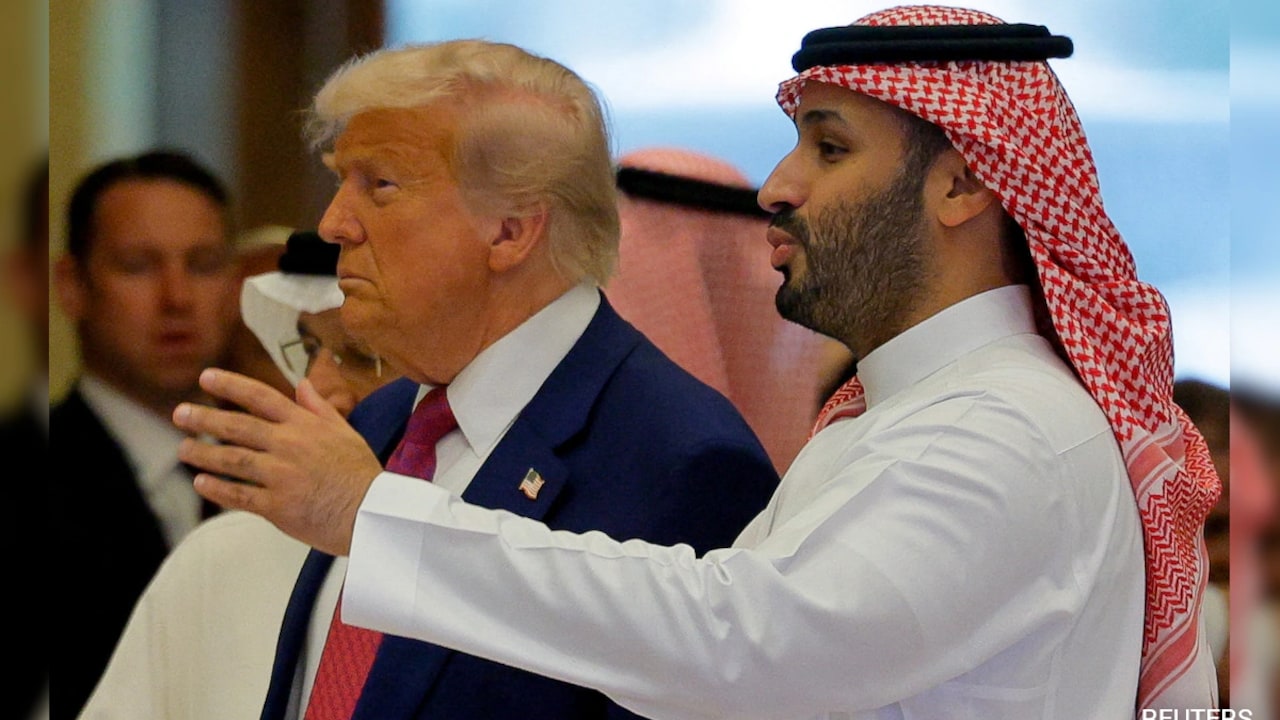
The foreign policy establishment is having a collective meltdown over Washington keeping its powder dry. The consensus narrative coming out of Washington thinks tanks is that because Donald Trump declined to launch direct American airstrikes against Yemen's Houthis at Crown Prince Mohammed bin Salman's request, the historic security architecture of the Gulf is finished. Former officials love to wring their hands and warn that Mohammed bin Salman will never forget the slight.
It is a lazy, surface-level reading of modern statecraft that completely misunderstands what Riyadh is actually trying to achieve.
I have watched defense contractors and diplomatic analysts obsess over the illusion of unyielding American protection for decades. The entire premise rests on a defunct twentieth-century model where Washington acts as the global bodyguard while Gulf capitals pay for the umbrella. That model died the day the first drone hit Saudi oil infrastructure years ago. Believing that MBS is sitting in his palace plotting revenge because the White House refused to bail him out of a quagmire of his own making is to misread the entire trajectory of modern Saudi strategy.
Let us define terms clearly. Saudi Arabia did not enter the Yemen conflict in 2015 expecting a multi-year attrition war against a resilient, asymmetric insurgent force. They expected a swift restoration of a client government. When that failed, Riyadh found itself trapped in a financial and geopolitical bleeding ulcer. When an outside power declines to pull your chestnuts out of a fire, it does not mark the end of your security; it marks the forced beginning of your sovereignty.
The conventional wisdom assumes Saudi Arabia wants American intervention because American firepower solves local problems. The exact opposite is true. Every time Washington steps in to fight a regional proxy war for a Gulf monarchy, it infantilizes that monarchy’s military apparatus and ties its diplomatic hands to American domestic politics. MBS has spent the last several years executing Vision 2030, a massive structural overhaul meant to pivot the Kingdom away from absolute dependency on foreign security guarantees.
Imagine a scenario where the United States obliged every request for kinetic retaliation in the Middle East. You would have an immediate escalation with Iran, a spike in global energy volatility, and zero incentive for Riyadh to build its own indigenous defense ecosystem or pursue regional diplomacy. By holding back, Washington inadvertently handed Riyadh the greatest strategic gift possible: absolute freedom of maneuver.
Look at what is actually happening on the ground rather than what disgruntled former officials are whispering to reporters. Saudi Arabia has pivoted toward direct bilateral diplomacy with Tehran, normalized conversations with regional adversaries, and recognized that buying peace is infinitely cheaper and more durable than outsourcing your national security to a volatile American electoral cycle.
The idea that MBS is nursing a permanent grudge ignores how realpolitik works at the top tier of global power. Leaders do not operate on emotional scorecards; they operate on ledgers. Riyadh's foreign policy is transactional, cold, and entirely focused on economic transformation. If American restraint forces the Kingdom to accelerate its diplomatic diversification and fix its own backyard, the Crown Prince will look back on this era not with bitterness, but with strategic gratitude.
Stop mourning the death of the old security pact. It was a crutch that kept the Gulf structurally weak. Real power cannot be ordered from Washington; it has to be forged in the fire of local realities. MBS knows this better than anyone.



