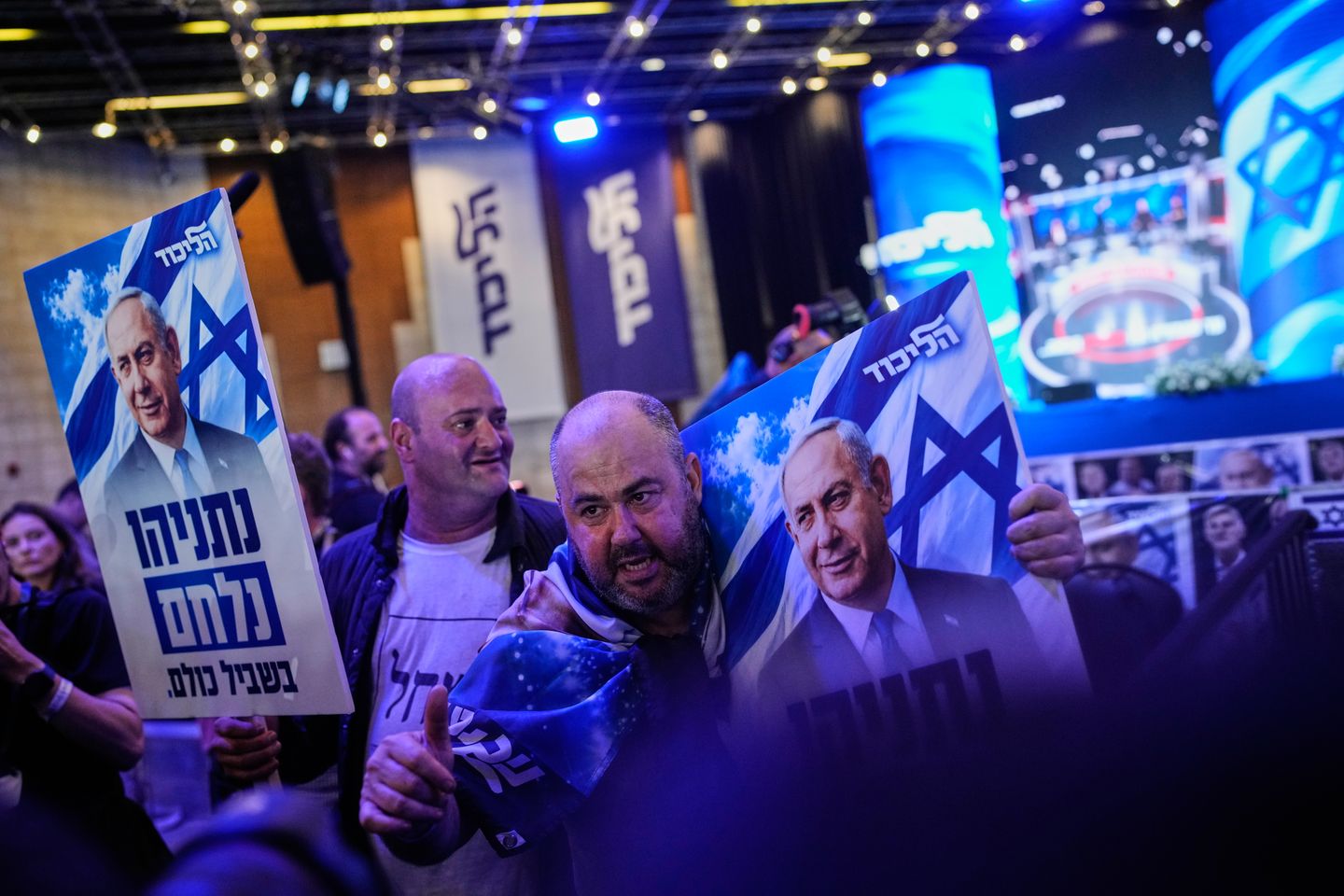
Standing inside a fluorescent-lit school gymnasium in Tel Aviv, staring at a cardboard box taped shut with blue masking tape, you realize something unsettling. The box is heavy with tiny white slips of paper. Each slip carries one, two, or three Hebrew letters printed in stark black ink. There are no candidate names on them. There are no policy summaries. Just a handful of letters representing a party, sitting in a row of plastic compartments behind a cardboard privacy screen.
Pick one. Slip it into a blue envelope. Drop it into the slot. For a closer look into this area, we recommend: this related article.
Simple.
Yet the moment that envelope hits the bottom of the box, it vanishes into one of the most volatile, math-driven political machines on earth. If you have ever looked at headlines coming out of Jerusalem—governments collapsing after eight months, mortal enemies signing coalition deals at three in the morning, five national elections crammed into less than four years—and felt a dull ache behind your eyes, you are not alone. Even people who have spent their entire lives casting those blue envelopes sometimes stare at the television screen on election night, coffee going cold, trying to calculate how a party that won barely four percent of the vote suddenly holds the keys to the Ministry of Finance. For additional details on this topic, in-depth coverage can be read on Reuters.
To understand why Israeli politics feels like a perpetual earthquake, you have to stop looking at it like an American or British election. Forget the binary comfort of red versus blue, or Labour versus Conservative. Imagine, instead, a crowded dinner table where twelve different relatives have to agree on what to order for dinner, nobody gets to eat unless at least seven of them sign off on the exact same menu, and Uncle Avi threatens to flip the table over if anyone orders mushrooms.
That dinner table is the Knesset.
The Architecture of a Perpetual Stalemate
Let us invent a voter to carry us through this maze. Call her Maya. She is thirty-four, lives in Haifa, pays exorbitant rent, worries about rocket sirens in the north, and wants a functioning bus system that runs on Saturdays.
When Maya steps behind that cardboard screen on election day, she is not voting for a prime minister. Not directly. Unlike the United States, where voters cast ballots for a specific executive, or the United Kingdom, where candidates win individual geographic districts, Israel treats the entire country as one single electoral district. Every vote from the snowy slopes of Mount Hermon to the sun-bleached boardwalks of Eilat goes into the exact same mathematical pot.
Inside that pot sit 120 seats. Why 120? Because ancient tradition anchors the modern parliament to the Knesset HaGedolah—the Great Assembly convened in Jerusalem during the fifth century BCE. Numbers carry heavy ghosts in this part of the world.
To claim even a single chair in that 120-seat chamber, a political party has to clear a specific hurdle known as the electoral threshold. Currently, that bar sits at 3.25 percent of all valid votes cast. Miss it by a hair—say, 3.24 percent—and every single ballot cast for your party evaporates into thin air. Those votes do not count toward the final tally. They are discarded, redistributing power to the parties that survived the cut.
Think about what that does to Maya’s psychology standing in the voting booth. She might love a small, idealistic green party campaigning on climate reform and coastal protection. She holds their paper slip between her thumb and forefinger. Then the anxiety creeps in. What if they only get 3.1 percent? If they fall short, Maya hasn't just lost her representation; she has effectively handed extra seats to the exact parties she despises most. So she puts the green slip back. She reaches for a larger, safer bloc—a party she merely tolerates, hoping her vote won't vanish into the statistical void.
This is the first invisible tax on the Israeli voter: the constant, agonizing calculus between voting your conscience and voting to prevent a catastrophe.
The Magic Number 61
Suppose the polls close at ten o'clock at night. The exit polls flash across the screen with dramatic orchestral music. Maya sits on her couch, watching the colorful bar graphs shift. Party A has 32 seats. Party B has 24. Party C has 14.
Notice something missing? Nobody has 61.
In the entire history of the State of Israel, since its founding in 1948, no single party has ever won an outright majority of 61 seats in the Knesset. Not David Ben-Gurion at the height of his mythic stature. Not Menachem Begin. Not Yitzhak Rabin. Not Benjamin Netanyahu.
Never. Once.
Because the system uses pure proportional representation—meaning if your party wins ten percent of the national vote, you get roughly twelve seats—it rewards fragmentation. Every distinct tribe in Israeli society can form its own political vehicle and send champions to Jerusalem. Secular tech workers from Tel Aviv have their party. Ultra-Orthodox Haredi communities have theirs. Religious Zionists living in West Bank settlements have theirs. Arab citizens—making up roughly a fifth of the population—have theirs. Russian-speaking immigrants who arrived after the collapse of the Soviet Union built their own political home.
Each group gets a microphone. Each group gets a seat at the table.
And then comes the morning after the election, when the real game begins. Because no one holds 61 seats, the leader tasked by the President with forming a government has to go shopping. They have to stitch together a patchwork quilt of rival ideologies, cobbling together four, five, sometimes even six different parties until the combined seat count hits that magic threshold of 61.
Consider what happens next. Imagine a large center-right party wins 30 seats. They need 31 more to rule. They turn to smaller ideological allies, perhaps picking up 18 seats from religious parties and 7 from nationalist factions. Now they are sitting at 55 seats. They are six seats short of power, staring at a ticking clock—Israeli law gives a prospective prime minister a strict window of weeks to assemble a coalition before the mandate is ripped away and handed to someone else.
Enter a tiny faction sitting on 6 seats. Let us call them the Swing Party. They won barely five percent of the national vote. Ninety-five percent of the country did not vote for them.
Yet in that smoky negotiation room in Jerusalem, the leader of that 6-seat party holds absolute, unchecked leverage. Without their six hands raised in favor of the government, the coalition dies on the operating table. So what does the Swing Party demand? They don't just ask for a polite nod in a policy speech. They demand the Ministry of Finance, or the Ministry of National Security, or hundreds of millions of shekels funneled directly into their specific school systems, or a veto over judicial appointments.
The prime minister-designate signs the deal. What choice do they have?
When Maya wakes up two weeks later and reads the coalition agreements, she feels a flash of betrayal. She voted for a moderate platform, yet the government is suddenly enacting hardline policies championed by a fringe faction she never supported. That is not a glitch in Israeli democracy. It is the core operating mechanism of proportional representation pushed to its absolute limit.
When Arithmetic Replaces Ideology
For decades, this messy bazaar worked well enough because Israeli politics was organized along a clear axis: hawks versus doves, left versus right, land for peace versus security through strength. Everyone knew where they stood. When elections ended, horse-trading happened, compromises were struck, and governments generally limped along for three or four years.
Then, slowly at first and then all at once, the axis rotated.
Between April 2019 and November 2022, Israel plunged into an unprecedented spiral of five national elections in less than four years. To an outsider watching on the evening news, it looked like collective madness. Why couldn't these people just govern?
The answer lies in a shift from ideological politics to personal loyalty—a phenomenon that froze the 61-seat math into concrete.
During those years, the country split into two rigid, warring camps: those who believed Benjamin Netanyahu was the indispensable statesman uniquely qualified to steer Israel through regional storms, and those who believed his ongoing corruption trial and divisive rhetoric made him unfit to hold office. Suddenly, right-wing politicians who agreed with Netanyahu on almost every economic and security policy refused to sit in a government led by him. Meanwhile, center-left politicians found themselves sharing opposition benches with hardline nationalists simply because both sides shared a single goal: keeping one man out of the prime minister's residence.
When ideology vanishes and personal boycotts take over, the arithmetic breaks.
Think back to that dinner table metaphor. Imagine half the family refuses to sit down if Uncle David is at the head of the table, while the other half refuses to eat unless Uncle David carves the roast. You can reshuffle the chairs five times. You can change the tablecloth. You can order pizza instead of chicken. Nobody is eating.
In 2021, an extraordinary political experiment briefly broke the deadlock. Eight wildly incompatible parties—spanning secular liberals, right-wing settlement advocates, socialists, and, for the first time in Israeli history, an independent Arab Islamist party—locked arms to form a 61-seat "government of change." For twelve months, they passed a national budget and kept the lights on.
Then, inevitably, the math caught up with them. One member of parliament defected over a dispute regarding unleavened bread in hospitals during Passover. Then another stepped away over West Bank legal regulations. With a razor-thin 61-seat majority, losing just two individuals meant losing the entire government. The coalition collapsed, triggering election number five.
The Invisible Weight of the Ballot
It is easy to treat all of this like a high-stakes chess match or an entertaining political soap opera. Pundits love dissecting the parliamentary maneuvers, the late-night leaks from coalition talks, the arcane rules of the Knesset plenum.
If you live there, though, the endless cycle of elections carries a quiet, exhausting toll.
Every election freezes the country. For months at a time, Israel operates under a caretaker government with limited authority. Major infrastructure projects stall. Healthcare budgets sit in limbo. Educational reforms get shelved because no minister knows if they will still have an office in ninety days. Imagine trying to run a household where every six months, you have to stop paying bills, freeze your savings account, and spend weeks arguing over who gets to hold the debit card.
And then there is the emotional fatigue. Maya, our hypothetical voter in Haifa, watches her WhatsApp family group fracture into bitter arguments every few months. Every election is framed by campaign strategists not as a choice between competing policies, but as an existential battle for the soul of the nation. Vote for us, or the country will be destroyed. When you hear that message five times in four years, your nervous system wears thin. Cynicism sets in—not the lazy cynicism of people who don't care, but the sharp, bitter cynicism of people who care deeply and feel powerless to break a rigged equation.
The tragedy is that almost everyone in Israel agrees the electoral system is broken. Politicians regularly give fiery speeches promising to raise the electoral threshold, introduce regional districts, or enact a formal constitution to stabilize the government.
Yet reform never happens. Why? Because fixing the system requires passing a law in the Knesset. And passing a law requires 61 votes. The very same small parties that thrive under the current rules—the ones holding the balance of power in every coalition—will never vote to abolish the leverage that keeps them relevant. Asking the Knesset to reform Israel's electoral system is like asking turkeys to vote for Thanksgiving.
Inside the Curtain
This brings us back to that school gymnasium in Tel Aviv, where the air smells faintly of floor wax and chalk dust.
Outside, volunteers wearing brightly colored T-shirts hand out flyers, shouting slogans over the hum of traffic. Television crews set up tripods on the sidewalk. Political analysts on the radio are already spinning scenarios, calculating surplus-vote agreements—an obscure mathematical mechanism where two parties sign a pact before the election to pool their leftover votes so not a single fraction of a seat goes to waste.
Inside, the room is surprisingly quiet.
A line of ordinary people—retirees leaning on canes, twenty-somethings checking their phones, parents juggling toddlers—waits patiently behind a folding table staffed by local election officials. They hand over their blue ID cards. Their names are crossed off a paper ledger with a ruler and a pen. They are handed a small blue envelope.
For all the cynicism, for all the broken promises and collapsed coalitions and maddening 61-seat arithmetic, Israelis still show up in numbers that put most Western democracies to shame. Voter turnout routinely hovers around seventy percent—sometimes pushing past seventy-two.
Why do they keep coming back to that cardboard box?
Because in a tiny country where history presses against the windowpane every single day, people understand viscerally that politics is not an abstract spectator sport. The names on those tiny white slips determine whether young men and women are sent to war, how taxes are spent, what gets taught in classrooms, and what kind of society their children will inherit.
Maya steps behind the cardboard screen. She looks down at the rows of little paper squares, each bearing two or three bold black letters. She knows the math is messy. She knows her single slip will likely be traded, diluted, and reshaped inside some windowless room in Jerusalem long after she goes to sleep tonight.
She picks up a slip anyway. She folds it carefully into the blue envelope, walks out from behind the screen, and slides it through the narrow slot into the dark box.