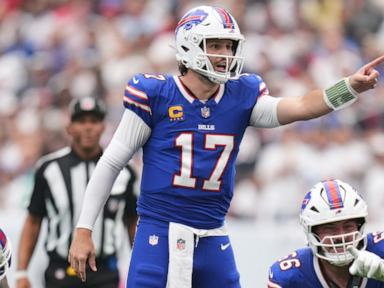
Every September in western New York begins with the exact same theatrical performance. The autumn air turns crisp, the tailgates stretch across asphalt lots like sea-green kingdoms, and Josh Allen straps on a metaphorical cape that has grown far too heavy for any single human being. For years, the story of the Buffalo Bills has been told through a lens of heroic manufacturing. When the offense clicks, it hums with the terrifying efficiency of a kinetic storm. When the defense wobbles, fractures, or completely disintegrates under the weight of injuries and personnel miscalculations, Allen simply scrambles backward, absorbs a vicious collision, and fires a laser forty yards downfield to keep the entire operation afloat.
This is not a sustainable architectural model for a professional football franchise. It is a high-wire act performed without a safety net, funded entirely by the extraordinary physical gifts of a generational quarterback.
To understand why the Bills open every autumn trapped in this familiar loop requires looking past the routine box scores and examining the ledger of front-office decisions. General manager Brandon Beane and head coach Sean McDermott have built a culture of consistent regular-season competence. They draft well enough to stay relevant, find mid-round gems, and maintain a locker room culture that players genuinely respect. Yet, an unmistakable structural ceiling has formed over Highmark Stadium. Year after year, the front office attempts to patch defensive deficiencies with aging stopgaps, scheme-dependent role players, and a prayer that Sean McDermott's zone-heavy defensive design can mask a glaring lack of elite pass-rush talent and speed at the second level.
The math of modern roster construction is unforgiving. Once a franchise quarterback commands a massive market-rate contract, the margin for error in surrounding him with complementary talent shrinks drastically. In Buffalo, that shrinkage has been absorbed almost entirely by the defense. When premier pass rushers command astronomical fees on the open market, the Bills have frequently opted for volume over potency, collecting solid, high-effort contributors rather than game-wreckers who can alter an opponent's blocking scheme single-handedly.
Consider how this manifests on a random Sunday in October. The opposing offense lines up against a depleted front seven that is missing its primary anchor. Pass protection holds up just long enough for an average quarterback to pick apart the zone seams. Linebackers who excel against the run find themselves isolated in space against explosive modern tight ends and slot receivers. The yards accumulate in agonizing chunks. By the time the fourth quarter arrives, the statistical reality is stark: the defense has surrendered three consecutive scoring drives, and the margin for error has evaporated.
Then the ball goes to Allen.
For the next ten minutes of game clock, ordinary football rules are suspended. He converts a third-and-fourteen by lowering his shoulder into a safety who outweighs him by fifteen pounds. He pump-fakes a linebacker out of his cleats and lofts a touch pass over a cornerback's outstretched fingers. The stadium erupts. The existential dread that hung in the damp air just moments prior is temporarily erased by sheer athletic audacity.
This is where the narrative usually diverges into lazy media tropes about grit and character. Analysts talk about how Allen wills his team to victory, as if offensive execution exists in a vacuum separate from defensive liability. But veteran observers who watch the tape without sentimentality see something else entirely: a magnificent illusion masking structural fragility.
The defensive philosophy under McDermott has long prized discipline, positional versatility, and assignment execution above raw, chaotic disruption. It is a system built to thrive when playing with a lead. When the Bills jump ahead by two scores, defensive linemen pin their ears back and the secondary plays with aggressive leverage. The problem arises when elite offenses dictate terms. Against top-tier competition—the kind encountered deep in January—disciplined zone coverage without an elite four-man pass rush becomes an exercise in slow bleeding. Quarterbacks with quick processing speeds dissect the spacing, find the soft spots between the hashes, and convert manageable third downs with metronomic regularity.
Buffalo's personnel strategy has continually chased depth at the expense of top-end defensive firepower. Draft capital has been poured into projects and rotational pieces, hoping to catch lightning in a bottle. Meanwhile, divisional rivals and conference heavyweights load up on explosive edge threats and dynamic cover corners who can win one-on-one matchups without requiring exotic blitz packages. When you rely solely on scheme to manufacture pressure, any minor communication breakdown or physical mismatch gets exposed immediately.
The danger of the current trajectory is not that the Bills will suddenly collapse into irrelevance. As long as Allen stands behind center, this team will win double-digit games, capture division crowns, and host playoff matchups. The floor is exceptionally secure. But the ceiling is governed by the laws of physics and football economics. No quarterback can orchestrate miraculous fourth-quarter comebacks forever without eventually paying a physical toll. The hits accumulate. The connective tissue stretches. The margin for error grows thinner with every grueling season spent carrying a top-heavy roster.
Fixing this dynamic requires a hard, unromantic pivot in philosophy. It demands acknowledging that building an elite defense requires the same premium investment currently reserved for the offensive skill positions and the quarterback room. It means occasionally letting solid, veteran role players walk in order to clear financial space for true difference-makers who can alter the geometry of an opposing offense.
Until that shift occurs, the ritual will remain untouched. The leaves will change color, the pundits will praise the resilience of the organization, and Josh Allen will lace up his cleats knowing full well that if he does not play a flawless sixty minutes of football, the structural cracks in the foundation will finally swallow the entire enterprise whole.