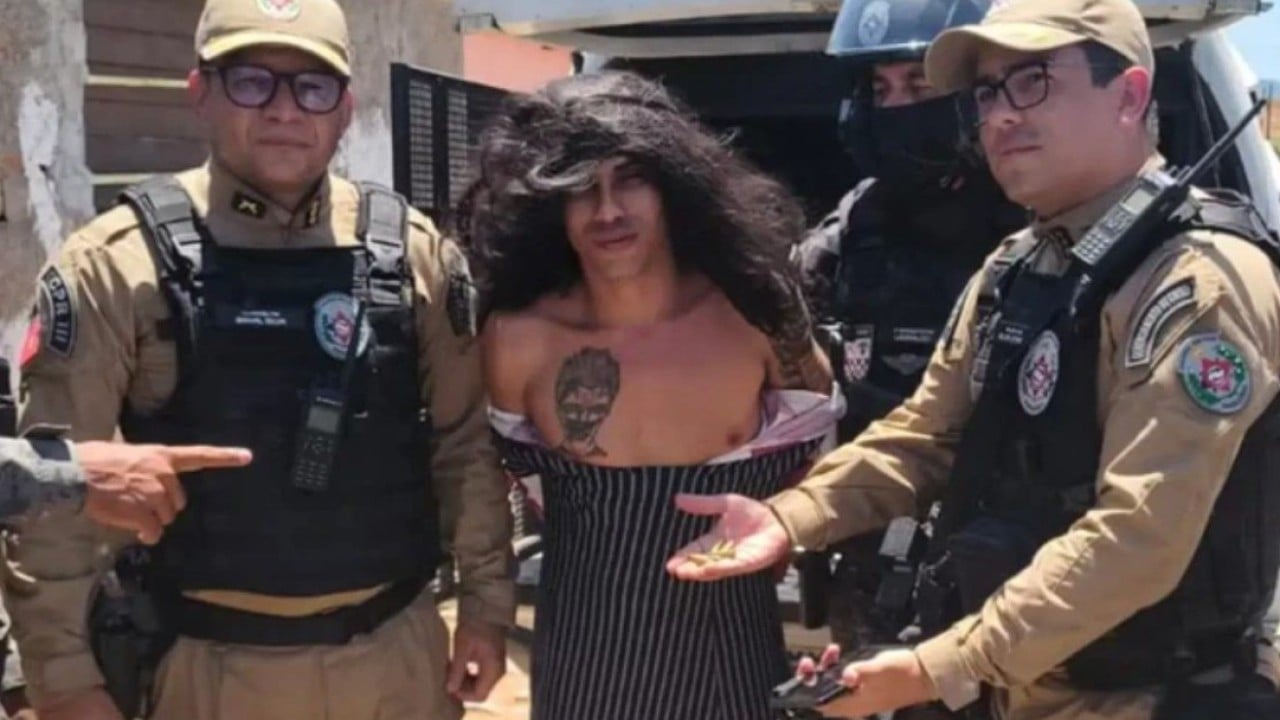
Fear has a very specific sound in the damp heat of a Brazilian night. It is not the sudden crack of a gunshot or the screech of tires on asphalt. It is the muted scuff of a sneaker against concrete, the hurried click of a deadbolt, the sudden, desperate silence of a neighborhood holding its collective breath.
For weeks, the shadow known only as Mosquito hung over the community like a heavy, suffocating fog. People whispered behind shuttered windows. They traded fragments of rumors at the local market, their eyes darting toward every passing stranger. The details of the hunt were grim, sketched out in police blotters and rushed radio broadcasts, but beneath the statistics lay a chilling reality: a predator moving invisibly through the crowd, wrapped in the most ordinary of disguises.
Consider what happens when a community realizes the monster is not hiding in the deep woods or behind a locked gate. He is walking among them. He is looking right at them.
The suspect, tracked by authorities through a labyrinth of dusty alleyways and crowded bus stations, had perfected an art of concealment that felt almost cinematic if it were not entirely terrifying. In a society where women move through the world with their own distinct vigilance, constantly assessing threats, the killer allegedly weaponized that very visibility. He dressed as a woman. A wig, a dress, the careful application of everyday garments meant to dissolve suspicion. It was a calculated inversion of safety. Every woman he passed on the street became an unwitting alibi, a walking shield for a predator who understood that a skirt and a wig could render a dangerous man completely invisible to a tired police force scanning for broad shoulders and heavy boots.
Darkness descended early during those weeks of panic. The investigation was not a clean Hollywood procedural. It was a messy, exhausting grind of exhausted detectives drinking lukewarm coffee in unmarked cars, sifting through grainy security camera footage that flickered with static, and knocking on doors where people answered with a mixture of rage and terror.
The human mind struggles to process this kind of duality. We crave simplicity. We want our villains to look like villains, marked by some unmistakable deformity of spirit or face. Yet history teaches us that evil is frequently devastatingly mundane. It wears a cardigan. It waits at the bus stop. It adjusts its clothes in the mirror before stepping out into the evening air to hunt.
When the net finally closed, there was no grand shootout on a sunlit plaza. There was only the sudden rush of heavy boots, the flash of badges in the harsh fluorescent light of a cramped corridor, and the end of a nightmare that had paralyzed a community.
Yet, the arrest does not wash away the lingering unease. The mugshots will fade from the front pages. The headlines will shift to the next tragedy. But for the people who walked those streets while Mosquito moved among them, the world has subtly shifted. Every shadow under a streetlamp now looks a little sharper. Every stranger passing by on the sidewalk demands a second glance.
We are left to wonder about the masks we all wear, and the terrifying ease with which a human being can slip out of his own skin and into a costume, walking in broad daylight among the living.



