Maritime border enforcement is fundamentally an exercise in risk mitigation under conditions of extreme operational friction. When a vessel carrying 21 individuals was intercepted near San Clemente Island, resulting in a fatality, the public discourse typically defaults to binary political narratives. This misses the underlying mechanics. The incident highlights systemic vulnerabilities in coastal surveillance, vessel tracking limitations in high-energy maritime environments, and the friction inherent in tactical interdiction protocols at sea. Evaluating this event requires stripping away ideological noise and examining the physical, operational, and tactical variables that govern maritime interdiction operations off the Southern California coast.
The Geography of Risk in the Southern California Bight
San Clemente Island sits within the Southern California Bight, a complex oceanographic and geopolitical zone that creates distinct operational challenges for federal and state maritime agencies. Smuggling operations and unauthorized maritime migration exploit the structural blind spots of this environment.
The geography introduces three compounding operational variables:
- Radar Horizon and Surface Clutter: Small vessels, particularly low-profile pangas or unlit skiffs, possess minimal radar cross-sections. In sea states characterized by high wave action, surface clutter degrades the utility of conventional marine radar, making passive detection difficult until vessels cross a close-proximity threshold.
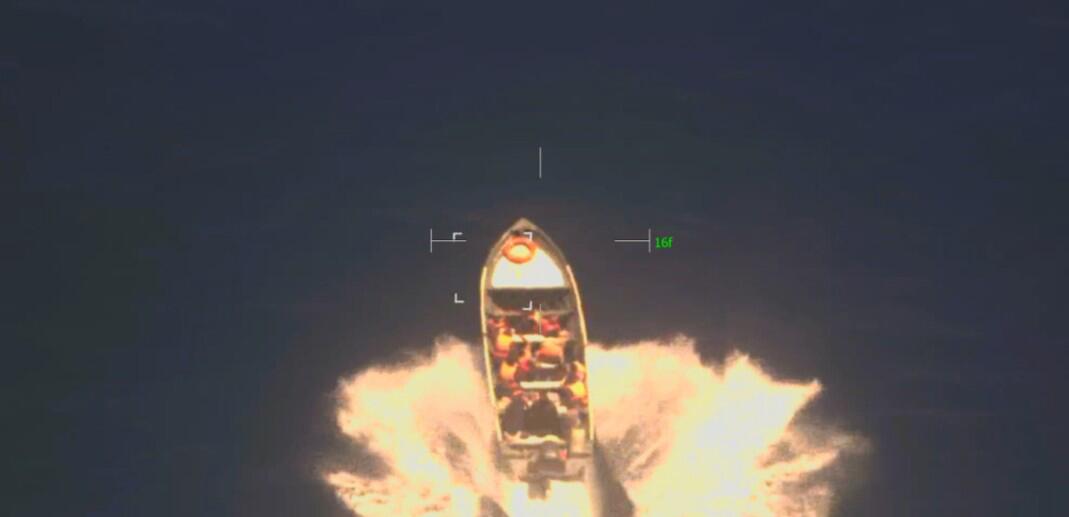
- Acoustic and Visual Obscuration: Nighttime operations or heavy marine layers compound visibility deficits. Thermal imaging provides an advantage, but maritime thermal signatures fluctuate wildly depending on ambient water temperature, fog density, and engine heat dissipation.
- Jurisdictional and Resource Allocation Friction: The expanse of ocean between the mainland and the Channel Islands requires a vast coverage area. Border Patrol, Coast Guard, and Navy assets operate under severe resource constraints, forcing reliance on predictive intelligence rather than absolute perimeter saturation.
When these physical constraints interact with human trafficking networks operating under high economic incentives, interdiction shifts from a routine enforcement action to a high-speed, high-stakes tactical confrontation.
The Cost Function of Maritime Smuggling Operations
To understand why individuals embark on perilous maritime journeys in overloaded vessels, one must analyze the economic and structural pressures driving the enterprise. Maritime smuggling is governed by supply, demand, and risk premiums set by transnational criminal organizations.
The operational economics follow a distinct logic:
- Asset Deprecation and Disposability: Smugglers utilize inexpensive, high-horsepower outboard vessels that are treated as disposable capital assets. If a boat is captured, the financial loss is baked into the operating margins of the smuggling ring.
- Human Cargo Density: Maximizing per-trip yield requires overloading vessels beyond structural and safety margins. A boat carrying 21 individuals in a small hull severely compromises stability, freeboard, and maneuverability. This creates an inverse relationship between trip profitability and physical safety.
- Regulatory Arbitrage: Smugglers exploit gaps between land-based border enforcement and maritime enforcement. As land boundaries harden, illicit transit shifts to maritime routes, shifting the risk burden from land-based infrastructure onto the open ocean.
This economic model dictates that interdiction pressure does not eliminate the flow; it merely forces adaptation. Smugglers adjust transit vectors, utilize darker hull colors, travel during adverse weather windows, and select high-risk landing zones like rocky island coastlines or remote beaches.
Mechanics of High-Risk Interdictions at Sea
The tactical phase of an interception—the transition from tracking to boarding or stopping a vessel—represents the point of highest catastrophic risk. Unlike vehicular stops on a highway, maritime stops involve two moving platforms interacting in a fluid medium governed by currents, swells, and wind shear.
During a night interception near an island shelf, tactical units face acute operational hazards:
- Inertial Disparity: A heavily loaded smuggling vessel moving at high speed possesses momentum that cannot be arrested quickly. Attempting a forced stop or blocking maneuver risks a collision that can instantly capsize a fragile craft.
- Comms and Compliance Deficits: Language barriers, panic, sudden shifts in weight distribution by occupants, and intentional non-compliance complicate tactical communication. When passengers move to one side of an overloaded panga out of fear or confusion, the vessel experiences immediate destabilization.
- Environmental Trauma: Cold water immersion, exhaustion, and dehydration among passengers degrade physiological resilience. An abrupt maneuver during interdiction can pitch individuals into deep, cold water where survival times are measured in minutes without immediate rescue infrastructure.
The fatality associated with the San Clemente Island interception is the manifestation of these systemic pressures colliding at a single operational bottleneck. When tactical intervention meets a destabilized platform operating at the edge of its physical envelope, the margin for error narrows to zero.
Evaluating Surveillance Deficits and Technological Gaps
Critics frequently attribute maritime migration failures to a lack of political will, but the constraints are fundamentally technical and logistical. Current sensor architecture deployed along the coast is optimized for large commercial shipping lanes and traditional drug interdiction rather than high-frequency, low-signature maritime migration.
Addressing these deficits requires examining the limits of current detection paradigms:
- Persistent vs. Reactive Surveillance: Assets like aerostats, fixed-wing maritime patrol aircraft, and cutter patrols operate on schedules or coverage rotations. They are not omniscient. Gaps in persistent stare capabilities allow small craft to launch from remote or unmonitored anchorages south of the international maritime boundary.
- Data Integration Lag: The fusion of intelligence from radar tracks, thermal feeds, and tip lines often suffers from latency. By the time tactical commanders correlate sensor data and vector an interdiction asset to the intercept point, the target vessel has altered course or reached shallow water where heavy enforcement craft cannot safely follow.
Strategic Realignment of Coastal Interdiction
Relying solely on tactical interdiction at the point of landing is a reactive strategy with diminishing marginal returns. A resilient defense-in-depth framework requires shifting capital and operational focus upstream and downstream simultaneously.
The primary strategic adjustment involves decoupling enforcement from purely reactive surface pursuits. Intelligence-led targeting of staging hubs on the Baja California peninsula disrupts logistics before vessels ever touch the water. Concurrently, expanding cooperative maritime domain awareness frameworks with regional partners allows for earlier cueing of suspicious vessels while they are still in international waters, where interdiction carries lower density and reduced risk of catastrophic capsizing.
Investment in autonomous, persistent surface and aerial drone surveillance grids can mitigate the radar horizon problem, providing continuous tracking of unlit hulls without risking personnel in high-speed nocturnal pursuits. Until the structural economics of the trade and the technological gaps in wide-area coastal monitoring are systematically addressed, maritime routes will remain a high-leverage, high-risk vector for unauthorized transit.