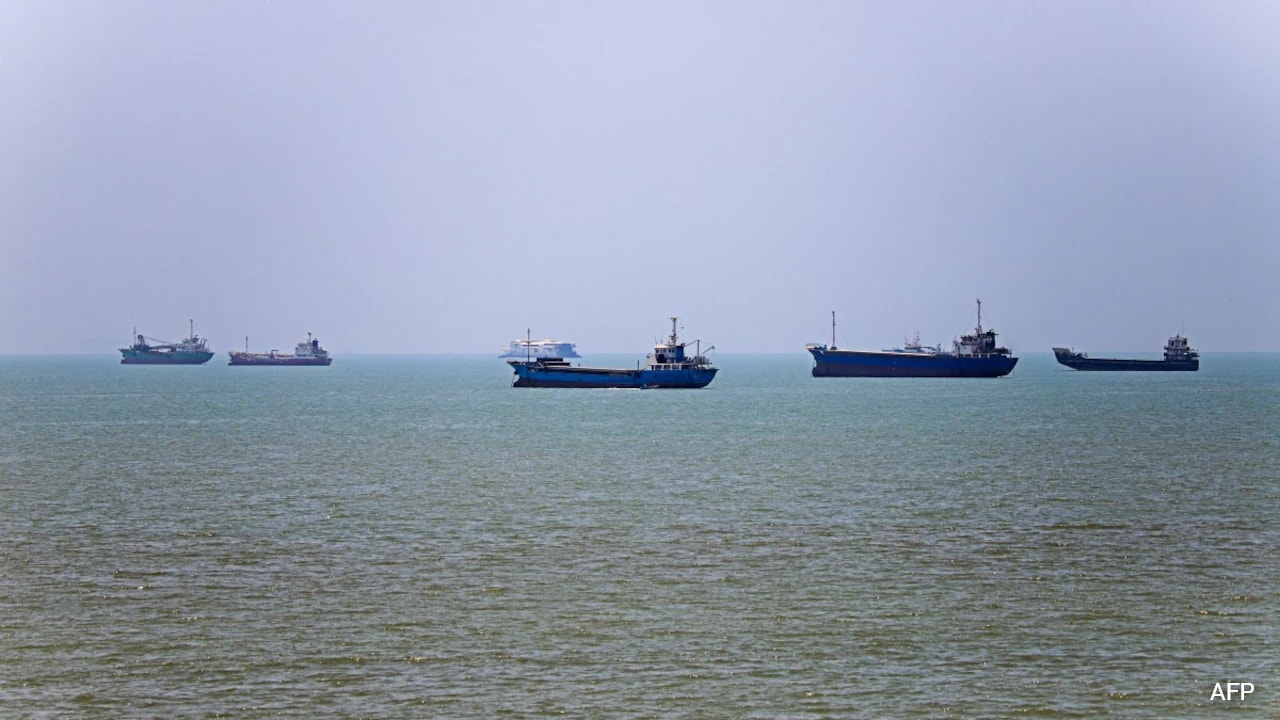
The kinetic disruption of commercial shipping within the Strait of Hormuz does not merely interrupt the flow of global energy assets; it fundamentally dismantles the operational framework governing multilateral humanitarian interventions in contested waters. When a United Nations-sanctioned evacuation protocol for stranded mariners is abruptly halted by a targeted strike, the failure is not merely tactical. It is a structural breakdown demonstrating that international neutrality protocols no longer mitigate kinetic risk in asymmetric maritime warfare environments.
This operational paralysis stems from a miscalculation of how state and non-state actors evaluate the strategic yield of targeting civilian or humanitarian assets. The suspension of the UN evacuation plan highlights a critical vulnerability: the total reliance of international bodies on commercial compliance and private maritime insurance markets to execute humanitarian mandates. When these market mechanisms fail due to elevated threat profiles, international mandates become unenforceable.
The Triad of Maritime Risk in Chokepoint Operations
To understand the systemic failure of the aborted UN evacuation mission, the operational environment must be disaggregated into three distinct vectors of risk.
1. Kinetic Threat Symmetrical Asymmetry
Maritime chokepoints like the Strait of Hormuz compress geography, stripping commercial vessels of their primary defense: sea room and unpredictable routing. A vessel restricted to a narrow transit corridor becomes a static variable in a targeting matrix. In this specific incident, the weapon systems deployed—whether anti-ship cruise missiles, waterborne improvised explosive devices, or uncrewed aerial vehicles—demonstrate an asymmetric cost-to-target ratio. The cost of a single low-tech strike asset is orders of magnitude lower than the hull value, cargo value, and historical insurance premiums of the targeted vessel. This economic imbalance incentivizes persistent disruption.
2. The Liability Trap of Humanitarian Neutrality
International organizations frequently operate under the assumption that the white hull or flag of a UN-chartered vessel provides a psychological deterrent. In modern asymmetric theaters, neutrality is not viewed as a shield; it is weaponized as a point of maximum leverage. By striking a vessel tied to a diplomatic or humanitarian mission, an aggressor signals a complete disregard for international legal frameworks, effectively raising the risk premium for all subsequent maritime traffic. This creates an immediate policy bottleneck for the flag states and shipowners who must authorize the physical deployment of hulls into the hot zone.
3. The Insurance Risk-Premium Threshold
No commercial vessel moves without protection and indemnity (P&I) club coverage and war risk underwriters. The moment a kinetic event occurs within a designated high-risk area, underwriter mathematical models reprice risk instantly. For humanitarian missions, which often operate on fixed budgets or rely on commercial vessels operating under temporary charters, the sudden imposition of exorbitant war risk surcharges or the outright cancellation of coverage creates a hard operational ceiling. The UN plan did not halt solely because of metal fatigue or physical damage; it halted because the financial risk became uninsurable overnight.
The Mechanics of the Evacuation Failure
The breakdown of the stranded sailor extraction plan follows a predictable sequence of institutional risk aversion. The process begins with a kinetic trigger, moves through market reaction, and terminates in operational paralysis.
[Kinetic Trigger: Vessel Strike]
               │
               ▼
[Hull & War Risk Insurance Revocation]
               │
               ▼
[Commercial Charter Compliance Failure]
               │
               ▼
[Sovereign Flag-State Transit Bans]
               │
               ▼
[Operational Halt of UN Mandate]
The first failure point lies in the assumption of commercial volunteerism. The United Nations does not possess a standing white-hull fleet capable of conducting large-scale amphibious extractions. It relies on commercial operators who contract their vessels for these missions. When the target ship was struck, the commercial owners of the extraction vessels exercised their standard war-risk clauses, allowing them to refuse transit into an active conflict zone without breaching their charters.
The second bottleneck is sovereign flag-state compliance. Even if a shipowner is willing to accept the physical risk, the registry nation under whose flag the vessel sails retains the legal authority to issue a mandatory directive forbidding entry into the geographic coordinates of the Strait. This double layer of veto power—held first by the private insurer, second by the shipowner, and third by the flag state—means that a single successful kinetic strike can veto the diplomatic consensus of the entire UN Security Council.
Quantifying the Cost of Trapped Human Capital
The human cost of this operational halt is frequently framed in purely sentimental terms, yet it operates as a distinct economic and security variable. Stranded mariners inside an active conflict zone represent a highly vulnerable class of civilian hostages.
- Contractual Abandonment: Mariners trapped on vessels unable to exit the gulf face a legal limbo where their standard contracts expire, yet they cannot legally be repatriated due to the closure of safe transit corridors.
- The Supply-Chain Talent Drain: Incidents of this nature exert a long-term chilling effect on global crew retention rates. The willingness of qualified officers to staff high-risk routes correlates inversely with the frequency of unpunished attacks on civilian shipping.
- Psychological Degradation as a Strategic Weapon: Leaving crews exposed to ongoing kinetic threats serves the strategic objective of the attacking force by demonstrating the impotence of international protective regimes, thereby coercing shipping companies into self-imposed blockades.
Structural Flaws in the Sanctioned Corridor Model
The reliance on "sanctioned corridors" or "humanitarian windows" is an antiquated operational strategy derived from mid-twentieth-century conventional warfare. This approach fails in modern chokepoint dynamics for two precise reasons.
The first limitation is the absence of a unified command structure. A UN evacuation plan typically operates via diplomatic consensus, meaning that no single military authority owns the tactical decision-making process. If an escort vessel from a western coalition is present, its rules of engagement may prevent it from taking proactive counter-battery action to protect a civilian vessel unless directly fired upon. This fragmentation of command creates tactical blind spots that asymmetric actors exploit with precision.
The second limitation involves the sensor-to-shooter loop of modern coastal defense networks. The proliferation of shore-based radar, commercial satellite imagery, and long-range drones allows coastal actors to monitor every square meter of the Strait of Hormuz. There are no hidden movements. Any vessel participating in an evacuation is completely visible from the moment it weighs anchor, rendering the "humanitarian window" entirely dependent on the continuous, explicit permission of the hostile forces.
The Realignment of Strategic Interventions
To resume the evacuation of trapped mariners under these conditions, international actors must abandon the commercial charter model. Future maritime extraction frameworks require a shift toward sovereign, non-commercial execution.
The primary tactical requirement is the deployment of grey-hull military assets explicitly re-tasked for humanitarian extraction. This eliminates the private insurance bottleneck entirely, as sovereign naval vessels are self-insured by their respective governments. Furthermore, military hulls possess the organic point-defense systems—such as close-in weapon systems and active electronic warfare suites—necessary to neutralize the specific low-tech, high-impact asymmetric threats present in the Strait.
The secondary requirement is the establishment of a mandatory, joint-command escort mechanism. If international bodies intend to maintain global shipping liquidity and honor humanitarian commitments, the distinction between commercial transport and state asset must be blurred during crises. This necessitates a pre-negotiated legal framework where merchant vessels under UN charter are automatically integrated into a military convoy structure, with rules of engagement shifted from passive defense to active preemption against any shore-based or waterborne targeting systems.
The immediate operational priority must be the transition of the evacuation plan from a civilian-led maritime transit to a heavily escorted sovereign military extraction. Failure to implement this structural shift guarantees that the trapped sailors remain static high-value targets, while the Strait of Hormuz transitions from a contested waterway into an uninsurable dead zone for humanitarian operations.