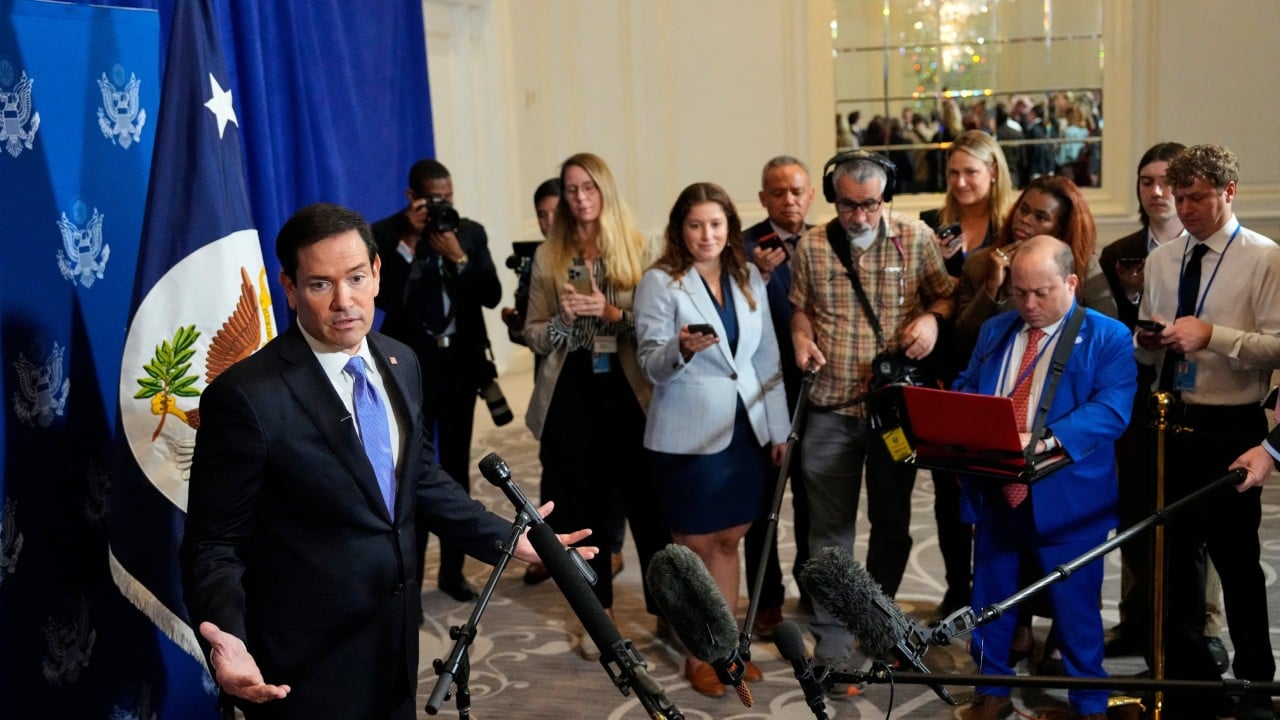
When U.S. Secretary of State Marco Rubio stepped up to defend President Donald Trump’s decision to host Chinese President Xi Jinping for a state visit in Washington, D.C., plenty of political observers did a double take. For over a decade, Rubio built his foreign policy reputation in the Senate as one of Beijing's fiercest critics. Yet in September 2026, Rubio didn't just sign off on the summit—he called any refusal to engage at the highest level "irresponsible" and "outrageous".
That shift isn't a sign that Washington has suddenly gone soft on Beijing. Instead, it reflects a cold calculation about how two nuclear-armed superpowers manage fierce competition without stumbling into a crisis.
The Reality Behind Rubio's Diplomatic Pivot
To understand why a longtime China hawk is championing face-to-face diplomacy, you have to look at the stakes Rubio laid out. Speaking in late September 2026 alongside Xi's trip to Washington, Rubio stated plainly that the relationship between the United States and China will define the 21st century.
It's a straightforward argument. You don't have to like your adversary to realize that cutting off communication makes miscalculation far more likely.
The September visit didn't happen in a vacuum. It followed President Trump's own trip to China earlier in May 2026, creating a deliberate rhythm of reciprocal leader-level meetings. Before Xi even boarded his plane for Washington, Rubio spent months laying the groundwork with Chinese Foreign Minister Wang Yi—including pivotal sideline talks during ASEAN meetings in Manila back in July. Both sides characterized those preparatory discussions as pragmatic and constructive, setting the stage for direct talks between Trump and Xi.
Deep Disagreements Still Dominate the Agenda
Defending a summit isn't the same as papered-over harmony. Rubio was quick to acknowledge that serious friction remains across nearly every major sector of the bilateral relationship.
Trade, Supply Chains, and Critical Minerals
Economic competition remains the sharpest point of contact. Rubio pointed directly to ongoing disputes over trade balances, vulnerable supply chains, and access to critical minerals. For years, Washington has worked to reduce its reliance on Chinese processing of rare earths and battery components, while Beijing has pushed back against U.S. tariffs and export controls. Putting both leaders in the same room doesn't erase those structural conflicts, though it does allow each side to clarify where its economic red lines actually sit.
Taiwan and Regional Security
Security flashpoints haven't cooled down either. During their July preparatory talks in Manila, Wang Yi pressed Rubio to respect what Beijing terms its "core interests," uphold the One China principle, and avoid actions that could escalate tensions. Meanwhile, back in Washington, Rubio addressed questions regarding proposed U.S. arms sales to Taiwan. He noted that any weapons transfers must be weighed carefully against the U.S. military's own readiness requirements and its industrial capacity to replenish stockpiles. Tensions in the South China Sea also remained squarely on the table.
Global Crises and Nuclear Talks
Beyond bilateral friction, Washington wants Beijing to use its influence elsewhere—or at least stay out of the way. Rubio has been sharply critical of Iran, arguing that actions by the Islamic Revolutionary Guard Corps have undermined past understandings by targeting shipping lanes. At the same time, high-level U.S.-China channels have expanded to cover broader strategic stability. Following up on the Washington summit, Rubio and Wang Yi held further discussions in November 2026 ahead of the APEC summit in China, touching on leader-level engagement and prospects for denuclearization talks.
Critics and Supporters See Very Different Outcomes
Not everyone buys Rubio's framing that top-level summits are an obvious net positive. In Washington and across foreign policy circles, hosting Xi on a red carpet in D.C. sparks sharp debate.
Critics of the administration's approach argue that high-profile state visits hand Beijing a major propaganda victory without guaranteeing concrete concessions in return. Some skeptics contend that Beijing enters these negotiations believing it holds strong leverage over supply chains and manufacturing, potentially allowing Xi to extract diplomatic legitimacy while stalling on structural economic reforms. Others within the broader political spectrum point out the tension between years of tough anti-Beijing rhetoric on the campaign trail and the sudden embrace of summitry once in office.
Supporters of Rubio's position counter that refusing to talk achieves nothing. In their view, allies across the Indo-Pacific actually want to see Washington and Beijing talking, because smaller nations in the region bear the brunt when superpower rivalry spirals out of control. From this perspective, holding firm on national security while keeping the phone lines open isn't a contradiction—it's basic statecraft.
How to Read U.S.-China Diplomacy Right Now
If you're trying to track where U.S.-China relations actually stand amid the headlines, don't get distracted by whether a summit looks friendly or frosty on television. Watch three concrete indicators instead:
- Follow-through after summits: Look past the joint readouts and track whether scheduled follow-ups—like the APEC summit in China or the G20 gathering in Florida—actually produce working-level agreements on trade or military communication.
- Supply chain and export actions: Compare diplomatic rhetoric against real policy moves, such as new restrictions on critical minerals, semiconductor rules, or tariff adjustments.
- Taiwan and South China Sea signaling: Pay close attention to how Washington balances defense commitments and weapons replenishment timelines alongside Beijing's military posture in the region.
High-level diplomacy between Washington and Beijing won't solve their underlying rivalry anytime soon. By insisting on keeping those channels open, Marco Rubio is betting that talking directly to your biggest competitor is still safer than guessing what they'll do next.
For a closer look at how the U.S. Secretary of State laid the groundwork for the Washington summit during earlier talks, check out Rubio expects 'very positive' US visit from China's Xi, which captures his remarks on why maintaining direct diplomatic momentum with Beijing matters.


