The plane sits on a tarmac in Washington while the air outside crackles with tension.
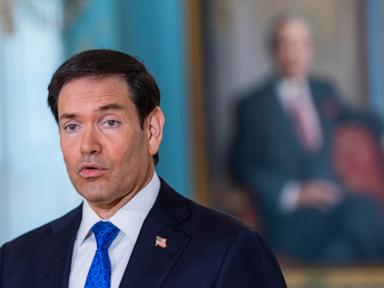
Inside the State Department, long hallways hum with the standard rhythm of international crises: cables flashing across secure screens, press briefing documents being stacked in tight piles, and aides walking fast with coffee cups balanced against their chests. At the center of it all sits the Secretary of State, Marco Rubio. The map spread before him does not focus on the burning headlines standard evening broadcasts cover. His eyes are fixed farther east, on the high steppes and mountain passes of Central Asia.
To his critics, the itinerary looks like a deliberate retreat. Why fly thousands of miles to Tashkent or Astana when the middle of the world seems to be catching fire elsewhere? Why visit nations tucked between powers when immediate, burning fires demand every drop of diplomatic energy back home?
It is easy to call it an evasion. It is far harder to look at the geometry of global power and realize that the quiet places are often where the future is secretly decided.
The Weight of the Map
Diplomats carry a specific kind of exhaustion. You can see it in the way a veteran envoy settles into an airplane seat, the briefing binder already thumbed to threads, the reading light throwing sharp angles across a tired face.
Imagine an envoy sitting in the cabin, watching the lights of Washington fade into the cloud cover. In his pocket is a note about domestic squabbles, cable news debates, and congressional inquiries demanding immediate answers. Yet, on his lap is a file containing mineral rights, transit corridors, and delicate security treaties in Uzbekistan and Kazakhstan.
The contrast is brutal. One sphere demands instant, dramatic performance. The other requires patient, quiet presence.
Foreign policy is rarely about solving the problem directly in front of your face today. It is about preventing three different problems from cornering you five years down the road. Central Asia—sandwiched between Russia to the north, China to the east, and Iran to the south—occupies a geopolitical zone where quiet movements yield massive shifts over time. To ignore it because the room back home is loud is to mistake noise for significance.
When a diplomat boards a plane heading toward the Eurasian steppe, the silence of the journey is not an escape. It is a calculated risk.
The Illusion of Distance
We like our foreign policy dramatic. We want press conferences in front of smoking ruins, sudden summits signed under flashbulbs, and sharp declarations that fit inside a short video clip.
Central Asia does not offer easy drama. It offers complexity.
Consider how energy and trade actually flow across the globe. Pipelines do not care about daily news cycles. Trade routes carved through ancient valleys do not shift because a commentator on television demands attention elsewhere. China has spent two decades building physical connections across this terrain, anchoring its economic footprint in concrete, steel, and fiber-optic cable. Russia views the region through the long lens of historical habit and security buffers.
When an American Secretary of State steps onto a tarmac in Central Asia, every leader in the region is measuring the same thing: duration.
They do not ask what Washington thinks today. They ask what Washington will care about when the current administration changes, when the news cycle turns, when the next sudden crisis erupts in a different hemisphere. If the United States only shows up when it needs a favor or wants to project strength, it loses the baseline trust required to stay relevant.
Calling a diplomatic trip to this region a distraction misunderstands how international influence is built. Influence is not a light switch. It is a slow, methodical accumulation of presence.
The Noise at Home and the Silence Abroad
Back in the briefing rooms of Capitol Hill, the accusations write themselves. Political opponents point to empty desks and unaddressed headlines. They measure leadership by immediate proximity to the crisis of the hour.
It feels intuitive. If your house is leaking, you do not go out to trim the hedges at the back of the property.
Except the globe is not a single house with a single leak. It is a complex ecosystem of interlocking security agreements, critical mineral supplies, and strategic airspace. The rare earth elements essential for modern technology, the transport corridors that bypass volatile maritime choke points, and the diplomatic votes in international assemblies are negotiated in places that rarely make the front page.
There is an art to taking the hit. A statesman willing to absorb short-term political criticism at home in order to secure long-term structural footing abroad is engaging in a gamble as old as republic governance itself.
The risk, of course, is that the home front suffers while the envoy is away. If the immediate fires grow too hot, the long-term planning becomes academic anyway. Balance is everything, and balance is terrifyingly easy to lose.
The Long View from the Steppe
When the jet finally touches down in Central Asia, the noise of Washington fades into the background. The air is cold, dry, and thin. The conversations in grand marble halls are measured, polite, and dense with unspoken history.
The local leaders sitting across the table do not care about American political cable commentary. They look at the man sitting across from them and calculate whether America is a reliable counterweight or a temporary visitor. They know their geographic reality: Russia is permanent, China is permanent, and America is far away across an ocean.
To make that distant presence real requires physical arrival. It requires sitting in the chair, listening through interpreters, and signing modest agreements that accumulate weight over decades.
As the meeting wraps up, the Secretary steps back into the night air. Somewhere thousands of miles away, cameras are rolling, headlines are screaming, and commentators are questioning his priorities. But looking out across the vast expanse of Eurasia, where the modern world's supply lines and alliances silently intersect, the picture looks very different.
The plane will fly back toward the noise soon enough. But for a few hours, deep in the quiet heart of the continent, the real map remains open on the table.