History loves its loud conquerors. It carves their profiles into granite and writes their names in margins drenched in drama. But sometimes, the architect of a fragile peace is someone who simply refuses to shout.
Think back to the turn of a century. The sky over Victoria Harbour was heavy with anticipation, smelling faintly of salt, diesel, and the electric anxiety of millions. On July 1, 1997, a flag came down, and another went up. Sovereignty shifted like tectonic plates beneath the feet of six million people. Into this swirling vortex of political gravity stepped Tung Chee-hwa.
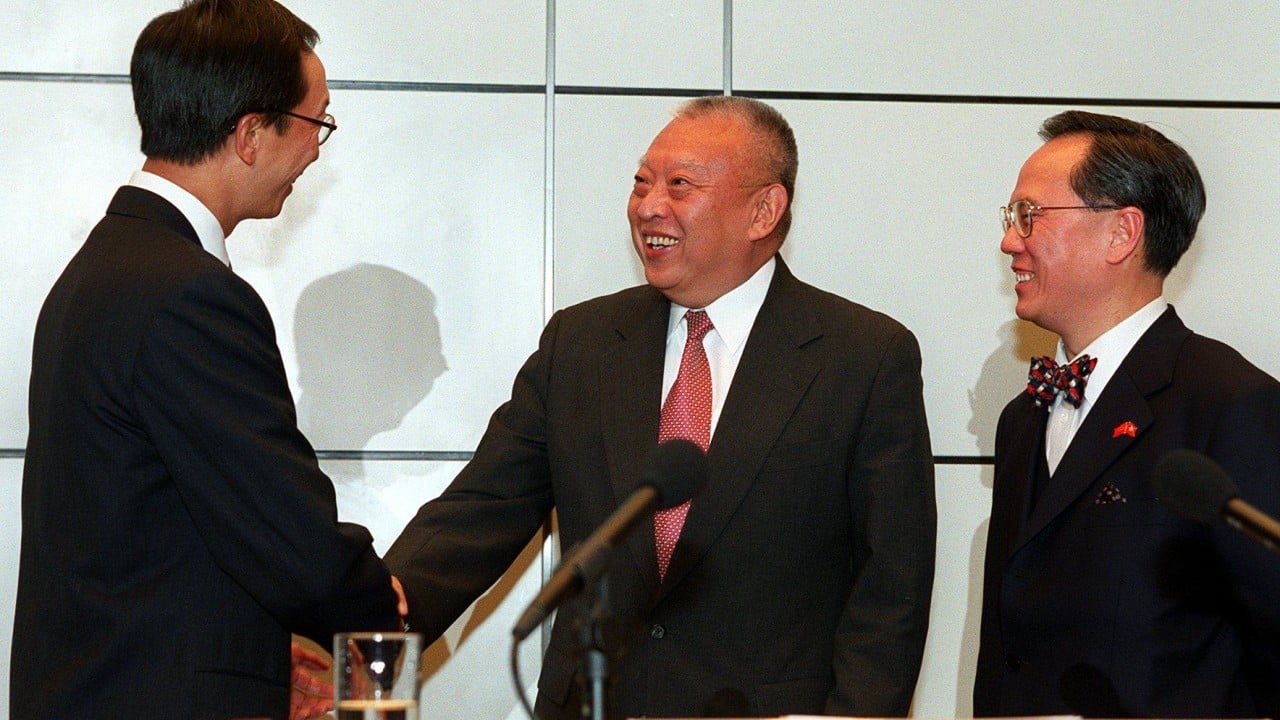
He was not a career politician with a theatrical voice or a practiced gift for fiery rhetoric. He was a shipping magnate. He smelled of old paper, oil tankers, and the steady, unglamorous rhythm of maritime trade. When Beijing tapped him to become the first Chief Executive of the Hong Kong Special Administrative Region, he did not inherit an office. He inherited a high-wire act with no safety net.
To understand what came next, you have to understand the psychological architecture of the city at that exact moment. Fear was a physical presence. It sat in living rooms, murmured in elevator shafts, and packed suitcases at Kai Tak Airport. People were fleeing, not just with their money, but with their roots. They looked at the new leader for a sign. What they got was a man who looked like an accountant, spoke with careful deliberation, and possessed an almost stubborn sincerity.
History often judges him through the lens of crisis—the Asian Financial Crisis that hit days after the handover, the property market collapse, the devastating sweep of SARS, and the massive political tremors of 2003. These are the dry bullet points of standard articles. Cold data. Gross domestic product drops, infection rates, protest headcounts.
But numbers do not bleed.
Imagine walking through the narrow, damp alleys of Sham Shui Po during the depths of the economic slump. Small shop owners watched their life savings evaporate as property values plummeted by fifty percent in what felt like overnight. Despair had a taste, and it was bitter. In stories told later by those who worked closely with him, Tung was not insulated in a glass tower. He was acutely, sometimes agonizingly, aware of the human collateral.
(Note: While government archives record the official policy responses, the personal toll is captured best in the oral histories of civil servants who watched him absorb blow after blow behind closed doors.)
He was fundamentally a kind man thrust into a brutal arena. Kindness in politics is often mistaken for weakness. When the Asian Financial Crisis struck, defending the pegged exchange rate cost billions, punishing ordinary families with soaring interest rates and negative equity. Tung took the hits personally. He did not deflect. He absorbed the fury of a populace unaccustomed to democratic failure because they had never truly owned their political destiny before.
He walked softly. That was his undoing, and perhaps his quiet grace. In a city wired for speed, commerce, and razor-sharp efficiency, his cautious, consultative style read to an impatient public as hesitation. When crises piled up—culminating in the monumental half-million-strong protests of July 1, 2003, against the national security legislation—the pressure became an unbearable weight.
Two years later, he stepped down, citing health reasons. The official announcements were polite, wrapped in diplomatic cellophane. But the reality was simpler and heavier: the ship had weathered the worst of the storm, but the captain was exhausted.
Years later, looking back at his tenure, the caricature of a struggling leader gives way to a more nuanced human truth. He was a reluctant captain who took the helm during a category-five storm because someone had to. He did not seek the glory of the transition; he inherited its collateral damage.
Those who encountered him away from the television cameras remember small gestures. A hand placed gently on a shoulder during hospital visits at the height of SARS. A genuine, sorrowful gravity when listening to families displaced by economic ruin. He was approachable in a way that defied the traditional pomp of colonial governors or the hardened armor of party cadres. He was simply Tung, the shipowner trying to keep a floating city from sinking.
When we remember him now, across the span of decades and shifting political tides, the noise fades. We are left with the image of a man standing on a bridge in the dark, hands resting on the rail, watching the lights of the harbor blink through the fog, holding the line until morning came.