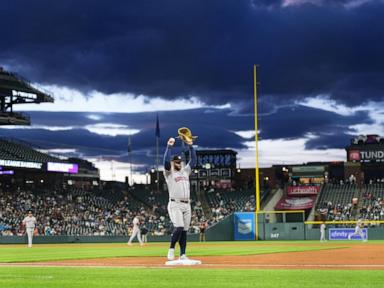
Federal authorities and local law enforcement are shifting from education to enforcement as unauthorized drone flights over Coors Field reach a breaking point. During the current Colorado Rockies season, a surge in heavy-duty consumer drones breaching Temporary Flight Restrictions (TFRs) has created a volatile safety environment for thousands of fans. These incidents are no longer viewed as harmless hobbies; they are federal crimes that carry the weight of prison time and six-figure fines. The Federal Aviation Administration (FAA) and the Denver Police Department have issued a blunt directive to the public: the grace period for "I didn't know the rules" has officially expired.
The issue isn't just about a pesky plastic bird hovering over the outfield. When a drone enters a restricted stadium zone, it triggers a chain reaction of security protocols that distract law enforcement from ground-level threats and pose a direct physical risk to the crowd. If a battery fails or a signal drops, a three-pound piece of carbon fiber and glass becomes a kinetic projectile falling toward a densely packed grandstand.
The Invisible Fence Being Ignored
Most fans walking into Coors Field look at the scoreboard or the mountains, rarely the sky. Yet, for three hours before, during, and one hour after every Rockies home game, a three-nautical-mile radius around the stadium is legally classified as "no-go" territory. This is a standard FAA 14 CFR Section 99.7 security mandate, yet the number of pilots claiming ignorance is staggering.
The problem lies in the accessibility of the tech. You can buy a high-performance drone at a suburban big-box store, charge the battery, and be airborne in twenty minutes. These devices frequently lack the sophisticated geofencing software required to hard-block flights in restricted zones, or worse, savvy users find workarounds to bypass those digital leashes. When a pilot launches from a nearby rooftop in LoDo to get a "cinematic" shot of the sunset over the stadium, they aren't just breaking a stadium rule. They are violating federal law.
Law enforcement isn't just watching with binoculars anymore. The Denver Police and federal partners utilize specialized detection technology that can triangulate the location of both the drone and the pilot in real-time. This isn't a cat-and-mouse game where the mouse has the advantage. The moment that remote connects to the aircraft, the digital signature is visible to authorities.
Why the Warning is Getting Louder
The recent escalation in warnings from the U.S. Attorney’s Office for the District of Colorado stems from a specific pattern of repeat offenses. This isn't about one teenager making a mistake. It is about a growing culture of social media "clout-chasing" where the value of a viral aerial shot outweighs the perceived risk of a fine.
Authorities have identified several core reasons why this specific season has become a flashpoint:
- Social Media Monetization: High-resolution footage of a packed stadium can garner millions of views, incentivizing pilots to take illegal risks for ad revenue or follower growth.
- Hardware Evolution: Newer drones are quieter and harder to spot with the naked eye, leading pilots to believe they are "stealthy" enough to avoid detection.
- Urban Density: Coors Field is nestled in a high-density neighborhood. Launching from a private balcony just a block away feels low-risk to a pilot who doesn't realize their signal is being monitored by federal sensors.
The Department of Justice is making it clear that the honeymoon phase of the drone industry is over. We are moving into an era of prosecution. A single violation can lead to the permanent loss of pilot certification and criminal charges that can derail a career.
The Physical Risk of Kinetic Failure
Gravity is undefeated. Even the most expensive consumer drones rely on lithium-polymer batteries that are notoriously fickle. If a drone suffers a "flyaway" or a total power failure over a crowd of 40,000 people, the result is catastrophic. These machines are essentially flying lawnmowers. The high-speed propellers can cause severe lacerations, and the weight of the chassis falling from 200 feet is enough to cause fatal blunt-force trauma.
Stadium officials also worry about the "panic factor." If a drone loses control and hits a spectator, the ensuing localized panic can lead to trampling or secondary injuries as people scramble to get out of the way of an unknown falling object. In a post-9/11 security environment, an unidentified object hovering over a mass gathering also forces security to consider the possibility of a payload—even if 99% of the time it is just a camera.
The Technology Gap in Enforcement
While the FAA has the authority, they don't always have the boots on the ground. This leaves local police in a difficult position. Denver officers have to balance the immediate need to secure the stadium with the complex legal requirements of federal aviation law.
There is also the "interception" dilemma. Security experts often discuss the use of signal jammers or "drone-killing" technology. However, using these devices in a crowded urban area is a legal minefield. Jamming a drone's signal can interfere with legitimate communication channels, including emergency services and even the stadium’s own internal radio networks. If a drone is "shot down" electronically, where does it fall? The risk of the drone falling onto the crowd after being jammed is often higher than the risk of letting it fly.
Instead, the strategy has shifted toward finding the operator. Detection systems now provide a "breadcrumb trail" back to the launch point. By the time the drone lands, an officer is often waiting at the pilot's feet.
Legal Consequences Beyond the Fine
For those who think a few hundred dollars will settle the score, the reality of federal prosecution is a cold shower. The FAA can assess civil penalties of up to $37,377 per violation. That is just the civil side. Criminal charges brought by the Department of Justice can lead to imprisonment for up to one year.
Furthermore, the FAA has begun a "name and shame" campaign. These violations stay on a permanent federal record, making it nearly impossible for an individual to ever obtain a commercial drone license or pass certain high-level background checks. The "fun" of a three-minute flight over a Rockies game isn't worth a lifetime of restricted employment opportunities.
Counter-Arguments and Pilot Rights
Some in the drone community argue that the TFRs are overly broad and that the "three-mile" rule is an antiquated solution for modern technology. They argue that a drone flying at 100 feet over a parking lot shouldn't be treated the same as one flying over the pitcher's mound.
However, the FAA remains unmoved by this logic. The margin for error in a stadium environment is zero. The agency maintains that the complexity of managing urban airspace during a mass gathering requires a "blanket" approach to ensure there are no gaps in security. If you are a pilot, your "right" to fly ends where the public's right to safety begins.
What Spectators Need to Know
The public plays a massive role in this enforcement loop. Most drone pilots are caught because someone on the ground saw them launch or noticed suspicious behavior. If you are at a Rockies game and see a drone, do not assume it is a team-sanctioned camera. The Rockies and Major League Baseball have extremely strict rules regarding their own aerial coverage, and they rarely, if ever, fly directly over the seating bowls during play for safety reasons.
If you see someone operating a drone near the stadium:
- Note the location: Look for someone looking up while holding a large controller or a smartphone attached to a device.
- Describe the aircraft: Is it white, black, or grey? Does it have four rotors or more?
- Alert Stadium Security: They have direct lines to the police units tasked with airspace monitoring.
The Future of the Skyline
As we move toward a world of drone deliveries and expanded urban air mobility, the friction between hobbyists and public safety will only intensify. Coors Field is the current staging ground for this debate, but the outcome will set the precedent for stadiums across the country.
The authorities in Denver have stopped asking nicely. They are now monitoring, tracking, and preparing to prosecute. The sky above 20th and Blake is no longer a playground for amateur photographers; it is a strictly regulated corridor where one mistake can lead to a federal indictment. If you want a photo of the stadium, buy a ticket and use your phone from the stands. Anything else is a gamble with your freedom.
Stop flying over the games. The FAA is tired of the warnings, and the next flight caught on radar won't end with a slap on the wrist; it will end in a courtroom.
/origin-imgresizer.tntsports.io/2024/01/28/3875473-78742388-2560-1440.png)


