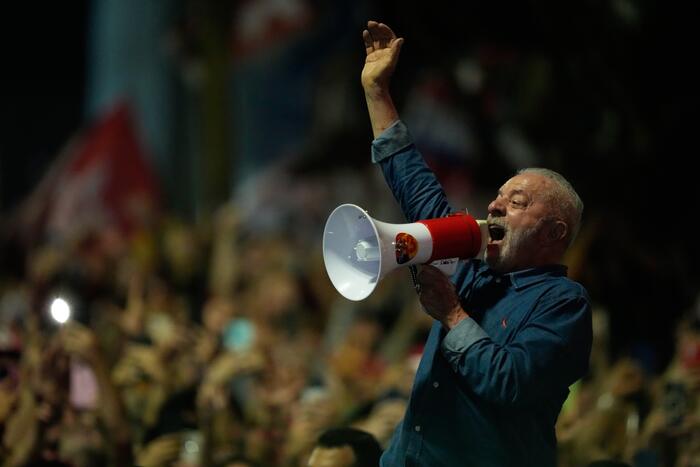
Luiz Inácio Lula da Silva, the 80-year-old veteran of the Brazilian left, has secured an unprecedented fourth term as president of Brazil following a fiercely contested 2026 election. By defeating his right-wing opposition, Lula extended his dominance over modern Brazilian politics, cementing a legacy that spans more than two decades of democratic governance in Latin America's largest economy. While international headlines focused heavily on his advanced age, the victory was driven by institutional alliances, targeted social spending, and a deeply fractured conservative opposition.
The headline number—80 years old—was the primary weapon used by critics throughout the campaign. Political opponents framed the race as a choice between geriatric stagnation and generational renewal. Yet the electorate in Brazil responded to a very different set of pressures. Voters in the decisive swing states of the Southeast and the reliable strongholds of the Northeast weighed Lula's age against the tangible economic metrics of his third term, which began in January 2023. Building on this idea, you can also read: The Quiet Truce in the Desert (And Why Every Shipment on Earth Depends on It).
The Mechanics of the Fourth-Term Coalition
Winning a fourth presidential mandate in a fragmented multiparty democracy requires far more than personal charisma. Brazil's political system, characterized by dozens of parties represented in the National Congress, forces any executive to build broad, often ideologically contradictory coalitions to survive.
During his 2023–2026 term, Lula governed with a notably conservative legislature. Rather than attempting to steamroll Congress with purely progressive legislation, his administration relied on traditional power-sharing agreements with the Centrão, a loose bloc of pragmatic, center-right parties that hold the balance of power in Brasília. Experts at Reuters have also weighed in on this matter.
This governing strategy carried directly into the 2026 campaign. By allocating key ministerial posts and federal budget amendments to centrist power brokers, Lula neutralized potential defections and secured vital local machinery in municipalities across the country. In Brazilian elections, mayors and state governors act as critical vote multipliers. Having their quiet cooperation—or at least their neutrality—proved decisive in tightening margins in industrial hubs like São Paulo and Minas Gerais.
Economic Reality Versus Political Rhetoric
Voters rarely cast ballots based on macroeconomic theory. They vote on the price of beef, the cost of diesel, and the availability of credit.
Throughout his third term, Lula's economic team, led by Finance Minister Fernando Haddad, walked a tightrope between fiscal responsibility and social expansion. Financial markets frequently expressed alarm over public spending increases and adjustments to the federal fiscal framework. Critics argued that expanding social programs would inevitably trigger inflation and erode investor confidence.
However, the data on the ground told a more complicated story for the average household.
- Minimum Wage Adjustments: The administration reinstated a formula linking minimum wage increases to both inflation and prior GDP growth, directly boosting purchasing power for tens of millions of formal workers and pensioners.
- Bolsa Família Expansion: The flagship cash-transfer program was restructured to include additional payouts for families with young children and pregnant women, anchoring support among low-income voters.
- Tax Reform Implementation: After decades of gridlock, Congress passed a landmark consumption tax reform aimed at simplifying Brazil's notoriously complex tax code, a move that won cautious praise from segments of the industrial sector.
While interest rates remained elevated for much of the cycle due to central bank caution, steady employment numbers and falling food prices in the months leading up to the vote blunted the opposition's primary economic attacks. For millions of working-class Brazilians, the immediate memory of purchasing power gains outweighed warnings from financial analysts in Faria Lima about long-term debt-to-GDP ratios.
A Divided Conservative Opposition
An incumbent rarely wins on their own merits alone; they often win because the opposition fails to present a unified alternative.
Following the 2022 election and the subsequent legal battles that rendered former president Jair Bolsonaro ineligible to run for public office, the Brazilian right entered a prolonged period of succession crisis. Without Bolsonaro on the ballot, conservative voters fractured among several competing figures, including state governors from the South and Southeast who vied to inherit his political capital while distancing themselves from his more polarizing rhetoric.
This internal rivalry prevented the right from coalescing early around a single standard-bearer. By the time a unified front began to take shape for the runoff, the opposition had lost months of valuable narrative control. Furthermore, the conservative movement struggled to bridge the gap between its ideological base—focused heavily on cultural issues, law enforcement, and anti-establishment sentiment—and moderate voters who prioritized economic stability and institutional predictability.
Lula's campaign exploited this divide relentlessly. By portraying himself as a seasoned statesman capable of guaranteeing democratic stability and international standing, he successfully courted moderate, middle-class voters who had previously viewed the Workers' Party (PT) with deep skepticism.
The Age Factor and the Question of Succession
To ignore Lula's age would be journalistic malpractice. Taking the oath of office at 81 years old places him among the oldest elected leaders in the world. Throughout the 2026 campaign, every public appearance, vocal inflection, and travel schedule was scrutinized by both domestic media and foreign investors.
Lula had undergone hip surgery in 2023 and faced minor health scares during his third term, fueling persistent speculation about his stamina for another four years in the Palácio do Planalto. His campaign countered these concerns with an aggressive, high-energy travel schedule during the final stretch of the race, deliberately projecting vigor.
Yet the age issue remains the central vulnerability of his fourth administration. Within the Workers' Party and the broader left-wing coalition, the question of succession has been repeatedly deferred. Lula's towering presence has historically overshadowed potential heirs, leaving the party without an obvious, nationally competitive successor ready to step into his shoes. As he begins his fourth term, the internal pressure to groom a viable next-generation leader—while simultaneously managing the immediate demands of governing—will define the political calculus in Brasília.
Foreign Policy as a Domestic Asset
Unlike many global leaders who view foreign affairs as a distraction from domestic politics, Lula has consistently used international diplomacy to bolster his standing at home.
Between 2023 and 2026, Brazil reasserted itself on the global stage, hosting the G20 summit in Rio de Janeiro in 2024 and the COP30 climate conference in Belém in 2025. These high-profile events allowed Lula to position Brazil as an indispensable power in global climate negotiations, agricultural trade, and multipolar diplomacy.
Critics on the right and in Western capitals frequently faulted his foreign policy for perceived ambiguities regarding authoritarian regimes in Venezuela and Russia, as well as his sharp rhetoric regarding conflicts in the Middle East. Domestically, however, the image of a Brazilian president commanding respect from Washington to Beijing resonated with national pride. It reinforced the narrative that Brazil was back at the center of global decision-making after years of diplomatic isolation.
The Road Ahead in a Polarized Nation
A fourth term does not mean an easy mandate. Brazil remains a deeply polarized country, roughly split down the middle between a left-leaning coalition rooted in the Northeast and urban centers, and a conservative bloc anchored in the agribusiness heartland of the Center-West and the industrial South.
The powerful agribusiness caucus in Congress—the Bancada Ruralista—remains a formidable check on the administration's environmental policies. While deforestation rates in the Amazon dropped significantly during Lula's third term, tensions over land demarcation, infrastructure projects in the rainforest, and environmental licensing will continue to spark legislative battles.
At the same time, fiscal constraints will tighten. The leeway that allowed for expanded social spending in 2023 and 2024 will be harder to replicate without triggering severe pushback from credit rating agencies and domestic markets. Balancing the demands of his working-class base with the realities of a conservative Congress and strict budget caps will test even Lula's legendary negotiating skills.
Luiz Inácio Lula da Silva has achieved what no other Brazilian politician has accomplished in the democratic era, outlasting rivals, surviving imprisonment, and repeatedly adapting his political machine to shifting electoral realities. Now, at 80, the ultimate survivor of Latin American politics faces his hardest test yet—governing a divided nation with no clear successor waiting in the wings.