The steel underfoot does not feel like a bridge to global commerce when you are sitting in the dark, waiting for the secondary generators to kick in. It feels like an anvil.
For three weeks, the South Korean-flagged cargo carrier Namu was less of a ship and more of a floating waiting room anchored near the mouth of the Persian Gulf. To the maritime tracking algorithms, she was a static blip on a digital map. To the global supply chain, she was a minor disruption in the flow of dry bulk goods. But to the twenty-two men on board, she was a steel island smelling of burnt wiring, industrial primer, and the heavy, humid anxiety of the Strait of Hormuz.
Now, the main diesels are humming again. The vibrations travel up through the soles of the crew’s boots, a welcome rhythm signaling that the patch-up work is done. The Namu is finally preparing to weigh anchor and leave these troubled waters behind.
But a ship does not simply sail away from an attack. The metal can be welded, the electronics can be rewired, but the silence on the bridge remains a little heavier than it was before.
The Choke Point
Consider the geography of our modern lives. We tend to think of global trade as an abstract cloud, a series of clicks that materialize cardboard boxes on our front porches. The reality is violently physical.
The Strait of Hormuz is a narrow strip of water separating the Iranian coast from the mountainous Musandam Peninsula of Oman. At its narrowest, the shipping lanes are only two miles wide in either direction. Through this tiny eye of a needle passes a massive portion of the world’s petroleum and liquefied natural gas, alongside thousands of container ships and bulk carriers like the Namu.
It is a beautiful, terrifying place to sail. The water is a brilliant, blinding blue during the day, reflecting a sun that feels close enough to touch. At night, the lights of supertankers line up like distant cities drifting through the black.
When the Namu entered the strait last month, she was doing what she had done a hundred times before. She was carrying cargo, maintaining a schedule, keeping the gears of distant economies turning. Then came the flash.
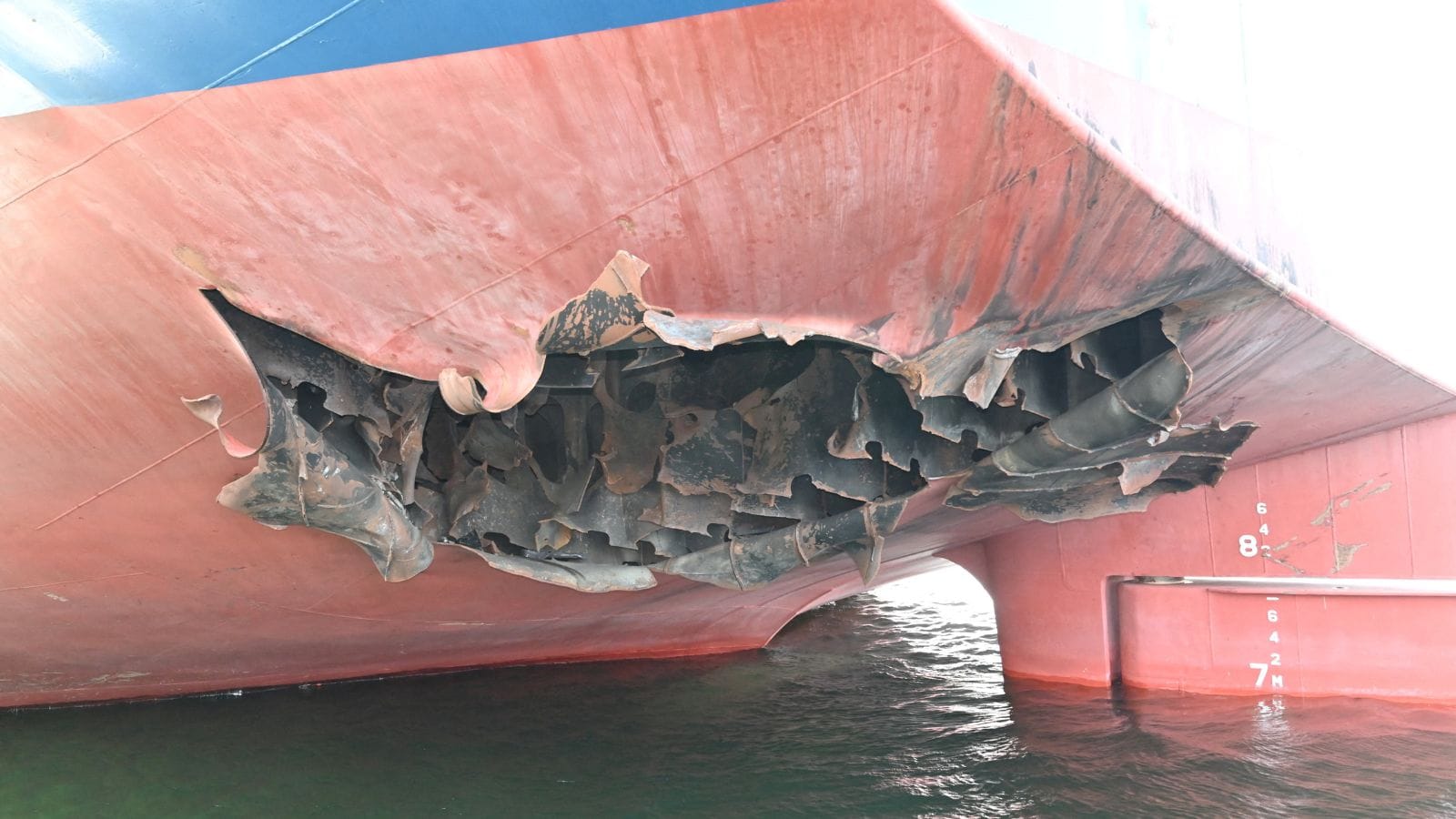
The crew heard the impact before they felt it. A sudden, sharp crack that resonated through the hull like a sledgehammer hitting an empty oil drum. It wasn't the kind of explosion you see in Hollywood movies. There was no giant fireball, no dramatic slow-motion sequence. There was only the smell of scorching paint, the immediate cascade of warning alarms on the bridge, and the terrifying realization that the wall between the crew and the ocean had been compromised.
The Invisible Crew
When we read the brief news briefs about maritime security, the focus is almost always on the state actors, the drone types, the geopolitical chess pieces. We talk about Seoul, Washington, and Tehran. We rarely talk about the third mate from Busan who was writing an email to his mother when the hull plates buckled.
Imagine a young engineer, let's call him Min-jun, working the late shift in the belly of the ship. Down there, the noise of the main engine is a permanent part of your existence. You don't hear it with your ears; you feel it in your teeth. When the strike occurred, the engine sputtered. The sudden drop in RPMs creates a sickening sensation in a mariner's stomach, an instinctive knowledge that the vessel is losing its lifeblood.
Min-jun and his crewmates didn't have time to wonder about the political motivations behind the strike. They didn't care who claimed responsibility or what message was being sent to international lawmakers. Their world shrank to a twenty-foot radius of emergency flashlights, manual valves, and the desperate struggle to contain the damage before the engine room flooded.
They succeeded. They stabilized the ship, patched the immediate breaches, and limped into a safe anchorage.
For the past several weeks, the Namu became a floating workshop. Teams of specialized marine surveyors and technicians climbed aboard, carrying heavy toolboxes and blueprints. The quiet sound of the sea was replaced by the relentless scream of angle grinders and the bright, blinding sparks of arc welding. Day after day, the jagged tears in the ship's superstructure were smoothed out, reinforced, and sealed against the sea.
The Cost of the Corridor
The shipping industry operates on margins that are razor-thin. When a vessel like the Namu is sidelined, the financial bleeding is immediate. Insurance premiums for transiting the region skyrocket overnight. Shipping companies are forced to make hard choices: do they continue risking the shorter route through the strait, or do they take the long, expensive detour around the Cape of Good Hope, adding weeks to a journey and burning millions of dollars in extra fuel?
This is the hidden tax on everything we buy. A disruption in the Strait of Hormuz echoes through the price of grain in Africa, the cost of manufacturing components in Europe, and the utility bills of households across Asia.
Yet, the human cost is the one that isn't factored into the quarterly spreadsheets. The crew of the Namu remained on board during the entire repair process. They could not leave. They lived inside the repair zone, eating their meals to the sound of hammers against steel, looking out the portholes at the same stretch of coastline where their safety had been shattered.
Mariners are a stoic breed. They sign up for months of isolation, missed birthdays, and storm-tossed seas. But they do not sign up to be targets. The psychological weight of sitting in a vulnerable position, waiting for the green light to move, is a slow drain on the spirit.
Clearing the Strait
The final inspections are complete. The maritime authorities have signed off on the structural integrity of the hull. The Namu is officially seaworthy once again.
Watch the ship as she prepares to move. The anchor windlass groans as it hauls up hundreds of feet of heavy iron chain from the seabed. The mud of the gulf clings to the links before being sprayed clean by the deck hoses. On the bridge, the captain looks at the radar screen, charting the course that will finally take them out into the open waters of the Arabian Sea and beyond.
There will be no celebrations on board when they clear the strait. No one will pop champagne. Instead, there will be a collective, quiet exhale. The tension in the shoulders of the watchstanders will ease just a fraction.
The Namu will slide past the final patrol boats, out into the wide expanse of the ocean where the water is deep and the horizons are wide. She will carry her new scars beneath a fresh coat of gray paint, a quiet testament to a crisis survived.
But behind her, the strait remains. Other ships are already lining up to take her place in the narrow lanes, their crews stepping onto the bridge, looking out at the shimmering water, and hoping that their journey will be a boring one.