The captain’s voice usually carries a practiced, bored authority. It is the sound of someone who has seen every sunrise from thirty thousand feet and found them all roughly the same. But over the Caspian Sea, heading south toward a destination that used to be a straight shot, the tone shifts. It becomes tighter. There is a slight delay before the coordinates are announced.
Below the wings, the map of the Middle East is no longer a collection of borders and duty-free hubs. It has become a series of "no-go" zones, a patchwork of invisible walls that have turned one of the world’s most vital transit corridors into a high-stakes obstacle course.
For the passenger in seat 14A, this isn't just a geopolitical shift. It is the three extra hours added to a flight that used to take six. It is the frantic checking of news cycles during a layover in Doha or Dubai, wondering if the airspace will still be open by the time the next leg of the journey begins. The Middle East, for decades the world's most convenient bridge between East and West, is becoming a labyrinth.
The Invisible Curtains of the Sky
A map of Middle Eastern flight paths from five years ago looks like a neatly combed head of hair—straight lines, efficient curves, predictable trajectories. Today, it looks like a nervous system in shock.
Airspace over Iraq, Iran, Lebanon, and Israel can change status in a matter of minutes. When a regional conflict escalates, the sky doesn't just get dangerous; it becomes a series of hard "nopes" for airline dispatchers. Imagine a hypothetical traveler named Sarah. She is flying from London to Mumbai. Traditionally, her plane would have cruised comfortably over the fertile crescent. Now, Sarah’s flight path resembles a frantic jagged line, banking hard over the Mediterranean to avoid Lebanese airspace, then looping down through Saudi Arabia to steer clear of anything that might fly out of a mountain in Iran.
The detour adds 1,200 miles. That isn't just a number on a screen. It is 12,000 extra kilograms of fuel burned. It is more carbon, more cost, and more fatigue. It is the sudden realization that the "global village" we were promised has a serious security problem at its main gate.
But why does this matter to someone who isn't currently sitting on a plane? Because the Middle East is the world’s logistical spine. If the spine is injured, the whole body feels it. When a plane has to fly the long way around, the ripple effects hit everything from the price of the mangoes in your local grocery store to the stability of the global airline industry. One single missile launch or a credible threat of a drone swarm can force a thousand-mile reroute for fifty different wide-body jets in a single hour.
The Cost of a Clean Slate
We tend to think of the sky as infinite. It’s an empty blue void where you can go anywhere you want. Pilots know better. The sky is actually a highly structured series of corridors, like a massive multi-layered highway system with very strict traffic lights.
When a section of that highway is closed, the traffic doesn't just disappear. It jams. Currently, the "safe" corridors over countries like Egypt and Saudi Arabia are becoming overcrowded. Air traffic controllers are managing more planes than ever in narrower slices of sky. This creates a hidden tension. Every pilot knows that the more crowded the corridor, the less room there is for error.
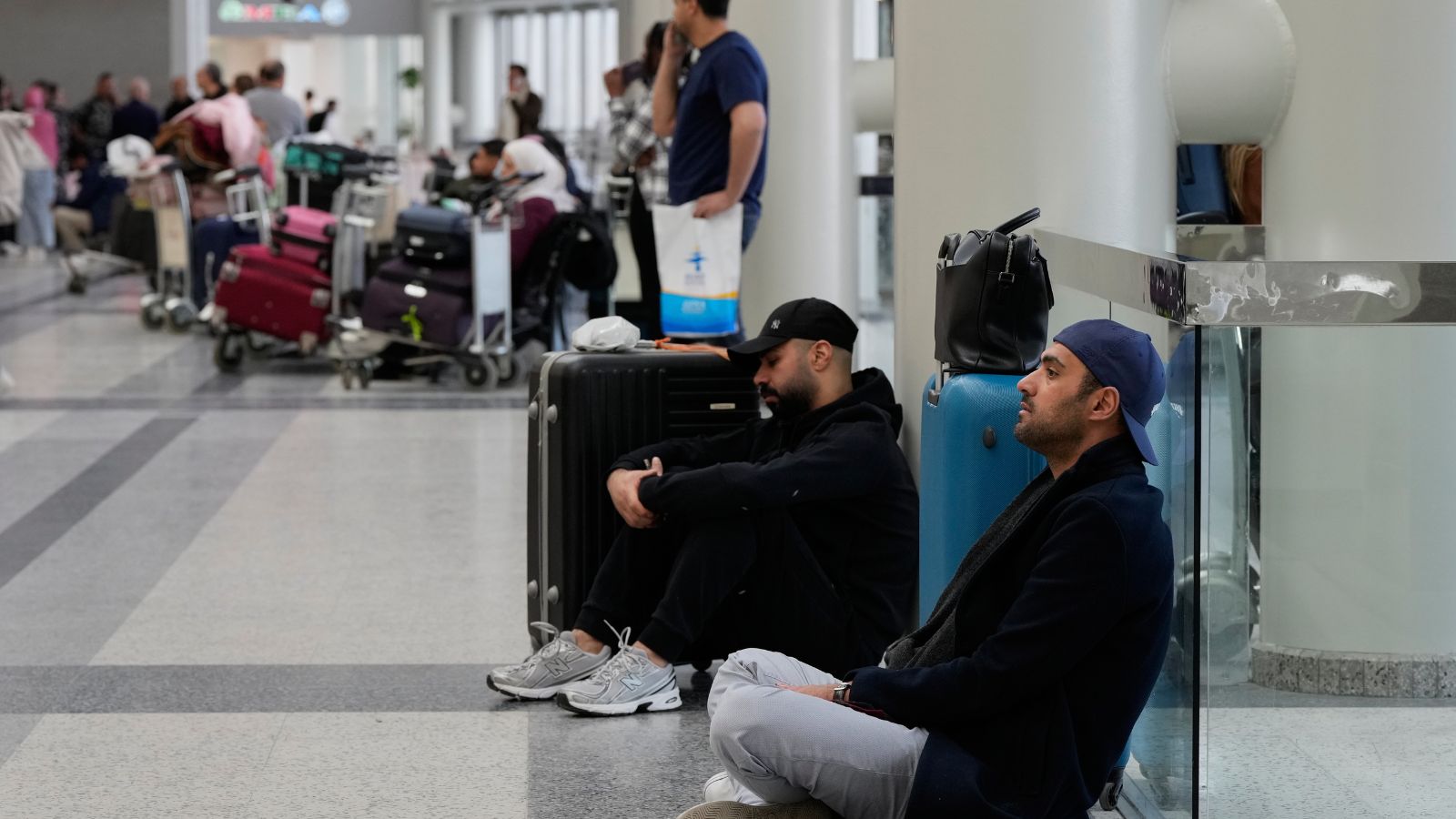
The financial cost is staggering, but it’s the human cost that lingers. Ask any flight attendant on the long-haul routes between Europe and Asia. They will tell you about the "atmosphere" in the cabin lately. It is thinner. Not the oxygen, but the patience. Passengers are arriving at their destinations more exhausted, more anxious, and more aware of the fragility of their travel plans.
A flight isn't just a physical transit. It’s a contract of trust. You board a plane believing that the systems of the world—the treaties, the communication channels, the de-confliction lines—are all functioning. Every time a flight has to pull a 180-degree turn because a sudden NOTAM (Notice to Airmen) has closed an entire country’s airspace, that trust takes a hit.
The Silence of the Transponder
There is a particular kind of silence that happens in an operations center when a major piece of airspace goes dark. It’s the silence of recalculation.
Airlines like Emirates, Qatar Airways, and Etihad built their empires on the geographic luck of being in the middle of everything. They turned the desert into a transit lounge for the world. But that geographic advantage is now a liability. When the middle of everything becomes the center of a storm, being in the middle is the last place you want to be.
They are fighting a battle of logistics that most passengers never see. For every flight that successfully lands, a team of analysts has spent hours playing a high-stakes game of "What If." What if the Strait of Hormuz is closed? What if GPS spoofing—a growing and terrifying reality in the region—tricks our navigation systems into thinking we’re twenty miles from where we actually are?
GPS spoofing is perhaps the most insidious part of this new reality. It isn't just about avoiding missiles; it’s about avoiding being lied to by the very equipment you rely on to survive. In recent months, dozens of commercial flights have experienced "spoofing" where their onboard systems suddenly show them over an active war zone or in restricted territory they aren't actually in. The pilots have to rely on old-school radio communication and dead reckoning to figure out their true position.
It is a return to a more primitive, more dangerous form of flying. It is the digital equivalent of someone painting a false road on a cliffside.
The Fragmented Horizon
We are witnessing the end of the "borderless sky." For the last thirty years, the trend in aviation was toward more openness, more direct routes, and more cooperation. That era is currently in a tailspin.
The sky over the Middle East is being carved up into silos. Some countries allow certain airlines but not others. Some routes are open by day but closed by night. The complexity is becoming so dense that it is pricing smaller airlines out of the market. Only the giants with massive fuel reserves and sophisticated intelligence-gathering capabilities can afford to keep playing this game.
This creates a two-tier world. There are those who can afford the "safe" but incredibly expensive long-haul routes, and those who have to take risks on less-reputable carriers that might be willing to shave a few miles off the path by skirting a dangerous border.
It’s a gamble. And the stakes are the people in the seats.
The Weight of the Detour
Consider the freighter pilots carrying medicine, electronics, and humanitarian aid. When their routes are disrupted, the world’s supply chain doesn't just slow down; it breaks. A four-hour delay for a passenger is an annoyance. A four-hour delay for a shipment of temperature-sensitive vaccines is a catastrophe.
The Middle East used to be the shortcut that kept the world moving. Now, it is the bottleneck. The emotional core of this isn't found in a spreadsheet of fuel costs or a map of geopolitical alliances. It’s found in the eyes of a traveler looking out the window at 3 AM, seeing the distant, flickering lights of a city they aren't allowed to fly over, wondering how the world got so small and so divided again.
We used to look up and see a bridge. Now, we look up and see a wall.
The true cost of this precariousness isn't measured in dollars. It’s measured in the growing distance between us. When it becomes too hard to cross the world, we stop trying. We stay home. We look inward. We let the silence of the closed corridors become the silence of a world that has forgotten how to talk to itself.
The captain dings the bell. The "Fasten Seatbelt" sign illuminates. Not because of turbulence, but because we are entering a zone where the rules have changed, and nobody is quite sure what comes next. The plane banks hard to the left, chasing a narrow sliver of safe air, leaving the straight path behind for a long, winding journey into the unknown.
The lights of the cabin dim, and for a moment, the only sound is the steady, rhythmic drone of engines working twice as hard to get us half as far.