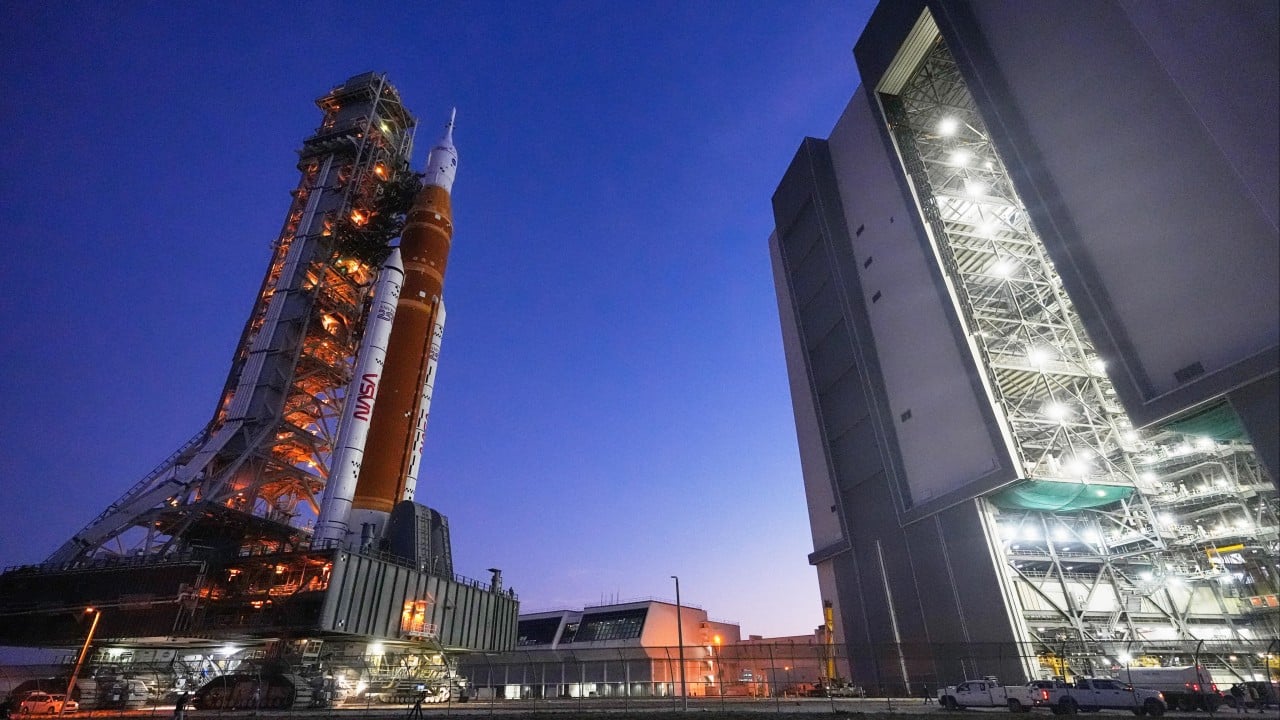
In a sterile room in Florida, an engineer stares at a heat shield. It is scarred. It is pitted. It is a piece of hardware that has returned from the vacuum, and it is telling a story that no one at NASA particularly wants to hear. This charred carbon shell is the physical manifestation of a schedule in crisis.
We were supposed to be there by now. Or, at least, we were supposed to be much closer. But the moon is not a destination that yields to political pressure or optimistic slide decks. It is an indifferent rock 238,000 miles away, and getting back to it has become a grueling exercise in humility.
NASA’s recent decision to delay the Artemis II and III missions isn't just a calendar tweak. It is a fundamental admission. The agency has pushed the first crewed lunar flyby to September 2025, and the actual landing—the moment a human boot again tastes moon dust—has slid to September 2026.
These dates are optimistic. Some say they are fantasies.
The Ghost in the Heat Shield
To understand the delay, you have to understand the terror of re-entry. When the Orion capsule returns from the moon, it hits the Earth’s atmosphere at roughly 25,000 miles per hour. Friction turns the air around the craft into a superheated plasma. $5,000^\circ\text{F}$.
During the uncrewed Artemis I mission, the heat shield did its job, but not in the way the simulations predicted. It charred unevenly. Small pieces of the protective material flaked away—an effect called "char loss" that wasn't supposed to happen.
If you are an astronaut strapped into that seat, "unexpected char loss" is a polite way of saying the floor might melt.
NASA engineers are now stuck in a loop of forensic testing. They cannot fly humans until they know why the shield behaved that way. You don’t gamble with a $20.4 billion program on a "probably." You wait. You test. You wait some more. But while America waits, the rest of the world is moving.
The Red Shadow on the Crater
For decades, the moon was a lonely monument to American exceptionalism. We left some flags, some golf balls, and some footprints, and then we stopped going. We treated it like a finished book.
China disagrees.
The China National Space Administration (CNSA) is operating on a timeline that is as methodical as it is aggressive. They are not just aiming for a flag-and-footprint mission; they are looking at the lunar south pole with the eyes of a developer looking at prime real estate. They want the water ice.
The stakes are invisible but absolute. Whoever controls the lunar south pole controls the refueling station for the rest of the solar system. If you can harvest ice, you can create oxygen. You can create hydrogen fuel. You can turn the moon into a gas station for Mars.
China has stated they intend to put taikonauts on the lunar surface by 2030. In Washington, that date is viewed with a mix of skepticism and genuine anxiety. NASA’s delays have narrowed the gap. What was once a comfortable decade-long lead has evaporated into a four-year sprint.
Consider the optics of 2029: An American mission is delayed by another battery failure or a docking software glitch, while a Chinese lander touches down in the Shackleton Crater. The psychological shift would be seismic. It would signal the end of a century of technological hegemony.
The Private Sector's Heavy Lift
NASA isn't building the lander this time. They’ve outsourced the most difficult part of the journey to Elon Musk’s SpaceX.
The plan is audacious. It involves launching a massive Starship into orbit, refueling it with multiple "tanker" launches—estimates suggest it could take anywhere from 10 to 20 separate flights just to fill the tank—and then sending that skyscraper-sized vessel to the moon.
It is a logistical nightmare.
Right now, Starship is still in its "rapid unscheduled disassembly" phase. It is a beautiful, explosive process of trial and error. But "trial and error" is hard to square with a 2026 deadline. Every time a Starship prototype loses communication or breaks apart over the Gulf of Mexico, the 2026 landing date drifts further into the rearview mirror.
Axiom Space, the company tasked with building the new spacesuits, is also facing the reality of lunar physics. A spacesuit is a person-shaped spaceship. It has to be flexible enough to allow an astronaut to bend over and pick up a rock, but tough enough to withstand razor-sharp lunar dust that smells like spent gunpowder and eats through Kevlar.
The suits aren't ready. The lander isn't ready. The heat shield is a mystery.
The Human Cost of the Wait
Imagine being Reid Wiseman, Victor Glover, Christina Koch, or Jeremy Hansen. They are the four astronauts assigned to Artemis II. They are the faces of the mission. They have spent months training, practicing the procedures, and visualizing the moment they see the far side of the moon with their own eyes.
Now, they have to wait.
For an astronaut, a one-year delay isn't just a change in the schedule; it’s a year of aging in a profession where your physical peak is your currency. It’s a year of their lives spent in simulators rather than the stars.
There is a specific kind of quiet that hangs over a delayed space program. It’s the sound of momentum leaking out of a room. NASA is trying to maintain the narrative that this is a "bold progression," but it feels more like a defensive crouch. They are trying to ensure they don't have another Challenger or Columbia, a catastrophe that would end the Artemis program forever.
The budget is another silent killer. Every month of delay costs millions in "standing army" costs—the salaries of the thousands of contractors and engineers who have to keep working on a project that isn't flying yet. The Inspector General has already warned that the first four Artemis missions will cost about $4.1 billion each.
That is a lot of taxpayer patience to burn.
The Physics of Politics
We often talk about space as a frontier of pure science, but it is actually a frontier of pure physics governed by messy politics.
NASA operates at the whim of four-year election cycles. Every time a new administration takes over, there is the risk that the moon will be traded for Mars, or that the budget will be clawed back for terrestrial concerns. The delay into 2026 pushes the landing into a different political era.
If the public loses interest, the funding dies. If the funding dies, the moon remains a graveyard for 20th-century dreams.
The irony is that the setbacks are exactly what make the mission worth doing. If it were easy, we would have been back decades ago. The "overhaul" NASA is currently undergoing is a shedding of the ego. It is the realization that you cannot manufacture a "Moon Race" victory through press releases.
You have to solve the heat shield. You have to make the suit. You have to launch the tankers.
The Silence of the South Pole
On the moon, there is no wind to disturb the footprints left by Neil Armstrong and Buzz Aldrin. They sit there, crisp and clear, as if they were made yesterday.
At the lunar south pole, in the permanent shadows of the craters, the temperature drops to $-414^\circ\text{F}$. It is one of the coldest places in the known universe. There, the ice waits. It has been there for billions of years, a frozen record of the solar system’s history.
We are currently in a period of profound uncertainty. We are caught between the glory of the past and the technical hurdles of the future. The "race" with China is real, but the race with our own engineering limitations is even more pressing.
NASA's overhaul is a gamble that the American public values safety and success over speed. They are betting that we would rather arrive late than not at all.
But as the engineers in Florida scrutinize their charred heat shield, and the planners in Beijing sign off on their 2030 roadmaps, the moon continues its indifferent orbit. It doesn't care about our schedules. It doesn't care about our budgets. It is simply there, a cold, white reminder of what we once were capable of, and what we have yet to prove we can do again.
The long walk back has never felt longer.