The morning air in Kuala Lumpur carries a heavy, familiar moisture, thick with the scent of roasted coffee beans from a corner kopitiam and the sharp exhaust of motorbikes weaving through dawn traffic. For decades, the rhythm of this city has been set by a quiet, persistent anxiety. It is the anxiety of watching wealth slip through invisible cracks, of knowing that the gleaming skyscrapers downtown cast long shadows over neighborhoods where families quietly calculate whether next month's grocery bill will fit into the margins.
Corruption is rarely a loud event. It does not announce itself with sirens. Instead, it sounds like the quiet rustle of a brown envelope exchanged behind a tinted car window, or the subtle inflation of a public works contract that quietly siphons money meant for a rural clinic into an offshore account. It is a slow bleed. And for a very long time, ordinary Malaysians applied tourniquets to wounds they never asked for.
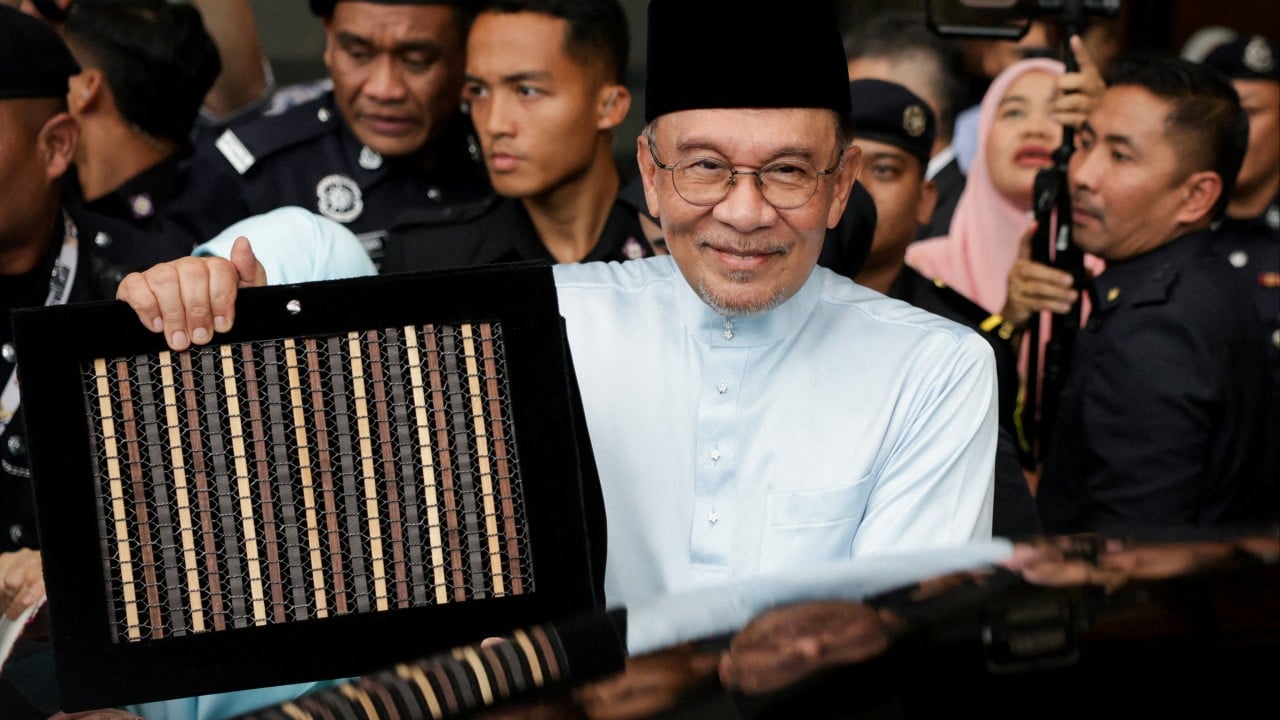
Enter Anwar Ibrahim.
To understand the man now holding the reins of power, you have to look past the crisp white shirts and the international press conferences. You have to look at the decades of prison cells, the political exiles, the broken alliances, and the agonizingly patient wait. When a man spends half his life fighting a system, what happens when he finally inherits the keys to it?
The fiscal blueprint tabled in Parliament—the budget that has set coffee shops and corporate boardrooms ablaze—is his answer. On paper, it is a document filled with numbers, deficit targets, subsidy rationalizations, and targeted tax reforms aimed at curbing graft. But numbers are cold things. They do not capture the trembling hands of a pensioner trying to buy medicine, nor do they capture the cynical smirk of a seasoned political operator who has seen reformers come and go like monsoon rains.
Critics look at the numbers and ask the inevitable question: Is it too late?
Consider the weight of that question. It is not merely a critique of economic timing. It is an emotional exhaustion. To ask if it is too late is to ask whether a ship can be turned around after it has already scraped against the reef. It is the voice of a populace that has grown weary of noble intentions colliding with entrenched power structures.
To see how we arrived at this precipice, we have to step back into the machinery of statecraft. For generations, Malaysia’s economic architecture relied heavily on a sprawling system of broad subsidies. Fuel, cooking oil, electricity—these were kept artificially cheap, a social contract designed to keep the peace. But a broad subsidy is a blunt instrument. It feeds the opulent sports car as cheaply as it feeds the modest commuter motorcycle. Over decades, this system fostered a culture of patronage. Billions bled out of public coffers, not always through dramatic heists, but through systemic leakage, institutionalized rent-seeking, and administrative blind spots.
Graft became structural. It became the grease that turned the wheels of political survival.
When Anwar took office amid the chaotic aftermath of a hung parliament and pandemic recovery strains, he inherited a ledger stained by historic scandals like 1MDB—a financial wound so deep it shook the nation's international standing. The world watched to see if Malaysia would become just another cautionary tale of a democracy captured by its own elites.
His response, crystallized in recent legislative maneuvers and fiscal policy, is an attempt to perform surgery with a scalpel while the patient is running a fever.
The strategy relies on a painful paradox: to save the economy from corruption, you must first inflict short-term pain.
Take the restructuring of diesel and RON95 fuel subsidies. For years, politicians avoided touching fuel prices out of sheer electoral terror. Raise the price at the pump, and the streets fill with smoke and fury. Yet, keeping broad subsidies meant subsidizing the wealthy and neighboring smugglers while national debt climbed toward unsustainable peaks. By shifting toward targeted assistance—direct cash transfers to those who actually need them while letting market rates bite the upper brackets—the administration is attempting something politically radioactive.
It is telling the public: we are cutting off the life support of systemic waste so we can fund the future.
Critics, however, point to the lag. They argue that while the policy intentions are noble, the implementation is sluggish. Bureaucracy moves like molasses in January. Civil service machinery, conditioned by decades of political patronage and institutional inertia, does not transform overnight simply because a new face occupies the prime minister's office. Small and medium enterprises, still nursing the scars of global economic shocks, find themselves squeezed by compliance costs and tax adjustments.
And then there is the elephant in the room: political compromise. A coalition government is a fragile mosaic. To hold power, one must make alliances with former rivals, navigate royal sensitivities, and balance delicate ethnic pacts that form the bedrock of Malaysian society. Every anti-corruption crusade must be weighed against the risk of fracturing the government.
This is where the human element collides with the cold mechanics of realpolitik.
Imagine a middle-class accountant living in Petaling Jaya. Let's call him Kumar. Kumar is neither extraordinarily rich nor desperately poor. He pays his taxes on time, watches his savings erode due to cost-of-living pressures, and feels a profound sense of civic fatigue. When he reads about new luxury taxes on high-end goods or capital gains levies on unlisted shares, he feels a fleeting sense of justice. Finally, the wealthy are being asked to pay their share. But when he fills up his car and feels the sting of adjusted fuel prices, that satisfaction curdles into anxiety.
Kumar represents the tightrope walk of modern governance. If you squeeze the middle class too hard in the name of fiscal reform, you breed populism. If you don't tax them, you cannot fund the social safety nets required to lift the bottom tier out of poverty.
The budget tries to thread this needle through targeted allocations for healthcare infrastructure, digital transformation in rural schools, and stricter enforcement mechanisms for the Malaysian Anti-Corruption Commission. Whistleblower protections are being beefed up. Government procurement processes are undergoing digital sterilization to minimize human interference—the classic breeding ground for kickbacks.
Yet, policy on paper is merely an aspiration. The true test is culture.
Can a nation break a decades-long addiction to patronage? Can a political culture that viewed government contracts as personal retirement funds genuinely pivot toward meritocracy and transparency?
Skeptics argue that systemic corruption is like a hydra; cut off one head, and two more grow in the dark corners of state-linked corporations and municipal licensing boards. They point out that high-profile investigations must translate into systematic institutional overhauls if they are to mean anything enduring. Without independent judiciaries, empowered watchdogs, and a free press capable of unearthing uncomfortable truths without fear of reprisal, anti-corruption campaigns risk becoming political theater—weapons used against opponents rather than
The Last Honest Gamble in Kuala Lumpur
news, business
Note: This article bridges global economics and local governance.
The morning air in the capital smells of wet asphalt, old diesel, and the faint, sweet trace of roasted cardamom drifting from a corner stall. To walk these streets is to feel a low-frequency hum of survival. People hustle. They sell fried noodles, negotiate phone repairs, and track the price of cooking oil the way stockbrokers watch tickers on Wall Street.
For decades, the invisible tax on all of that hustle wasn't collected by the government. It was skimmed by shadows.
For years, the ordinary citizen in Malaysia learned to live with a quiet, grinding cynicism. You paid your dues, you waited in line, and you knew somewhere in the high-rises of Putrajaya, a signature cost more than it should have. Graft wasn't just a crime; it was weather. It was the humidity you wiped from your brow every afternoon. You grumbled, you adjusted, and you moved on.
Then came Anwar Ibrahim.
To understand what is happening right now in the halls of Malaysian power, you have to look at the man's calendar, but more importantly, you have to look at his scars. Anwar spent years behind bars, a political prisoner weathering the shifting storms of a fractured state. When he finally clawed his way to the premiership, the expectation wasn't just that he would fix the economy. The expectation was that he would perform alchemy. He had to turn a system built on patronage into a machine that actually worked for the vendor on the street.
Enter the national budget. On paper, fiscal blueprints are dry cemeteries of numbers. Billions ringgit allocated here, targeted subsidies restructured there, digital tracking for procurement. But numbers are just armor for human intentions.
Consider a hypothetical procurement officer we will call Rahim. For twenty years, Rahim has sat in a fluorescent-lit office evaluating bids for highway maintenance. In the old days, Rahim knew which envelope had the right phone number attached to it. He knew whose uncle sat on which board. It wasn't always malice; it was gravity. The system pulled toward corruption because resisting it meant losing your job, your security, or worse.
Now, Rahim stares at a new digital auditing framework. The rules are sharp. Every ringgit of public spending is subjected to a forensic light that doesn't care whose cousin you are.
Is it working?
Walk into a neighborhood coffee shop in Brickfields and ask the patrons. You will get a chorus of exhaustion. The budget tackles the rot, yes. It closes loopholes, targets the bloated subsidies that used to feed luxury car dealerships rather than motorcycle-riding delivery drivers, and cracks down on elite tax evasion. But the counter-melody is louder: Is it too late?
Prices are still high. Global economic headwinds don't care about good intentions. The cost of imported rice bites into monthly wages. The ringgit has taken its lumps against a bruising global dollar. When you are standing at the wet market trying to decide if you can afford fish today, high-minded talk about institutional reform feels thin. You cannot eat an anti-corruption decree. You cannot pay rent with a balanced deficit.
This is the great paradox of political redemption.
When a reformer takes power after decades of decay, the public wants instantaneous miracles. They want the structural damage of a generation healed in a single fiscal year. But corruption is not a paint job. It is dry rot in the foundation beams. To fix it, you have to rip away the drywall, expose the termite tunnels, and let the house draft for a while.
Critics point to the delays in tangible relief. They ask why the heavy hand of the state hasn't lowered the price of chicken overnight. They wonder if the political coalitions holding the government together are too fragile, too full of old ghosts, to let the cleansing fire burn all the way to the roots.
They might be right. Politics in Southeast Asia is an art of infinite compromise. To slay a dragon, you often have to make peace with a few lesser lizards just to get into the cave. Anwar has had to walk a razor-thin tightrope, balancing radical transparency with the brutal pragmatic reality of keeping a diverse parliamentary alliance from tearing itself apart.
Yet, to dismiss the current budget as too little, too late, is to misunderstand the nature of the gamble.
This is not merely an accounting exercise. It is a moral reclamation project.
When a government stops pretending that theft is just part of doing business, the psychological contract between the citizen and the state shifts. For the first time in memory, corporate cartels and political elites are sweating. Raids on corrupt networks are no longer front-page anomalies; they are signals of a new baseline. The message is simple, brutal, and terrifying to the old guard: the era of impunity is closing its ledger.
Back on the street, the vendor pours another cup of teh tarik, swirling the condensed milk with practiced rhythm. He watches the morning news broadcast on a flickering television mounted high on the wall. He hears the analysts dissecting the debt-to-GDP ratio, the fiscal deficit targets, the subsidy rationalization metrics. He doesn't understand half the jargon.
He doesn't need to.
He just wants to know if his children will have to pay bribes just to get a permit, secure a job, or build a life in the country of their birth. He wants to know if honesty is still a losing strategy.
The budget is written in ink and data, but its true text is written in trust. And trust, once squandered over decades, cannot be reclaimed with a single signature. It has to be earned back, coin by hard-won coin, while the whole nation watches to see if the reformer will stumble before the dawn.
The sun breaks through the low-hanging haze over the Petronas Towers, cutting sharp geometric lines of light and shadow across the concrete. Down below, the traffic thickens. The engines roar. The work begins again.