The northern border of Vermont is quiet. It is a place of heavy pines, gravel roads, and vast stretches where the map seems to run out of names. If you are trying to disappear, the cold air and the thick treeline feel like a fortress.
But distance is an illusion.
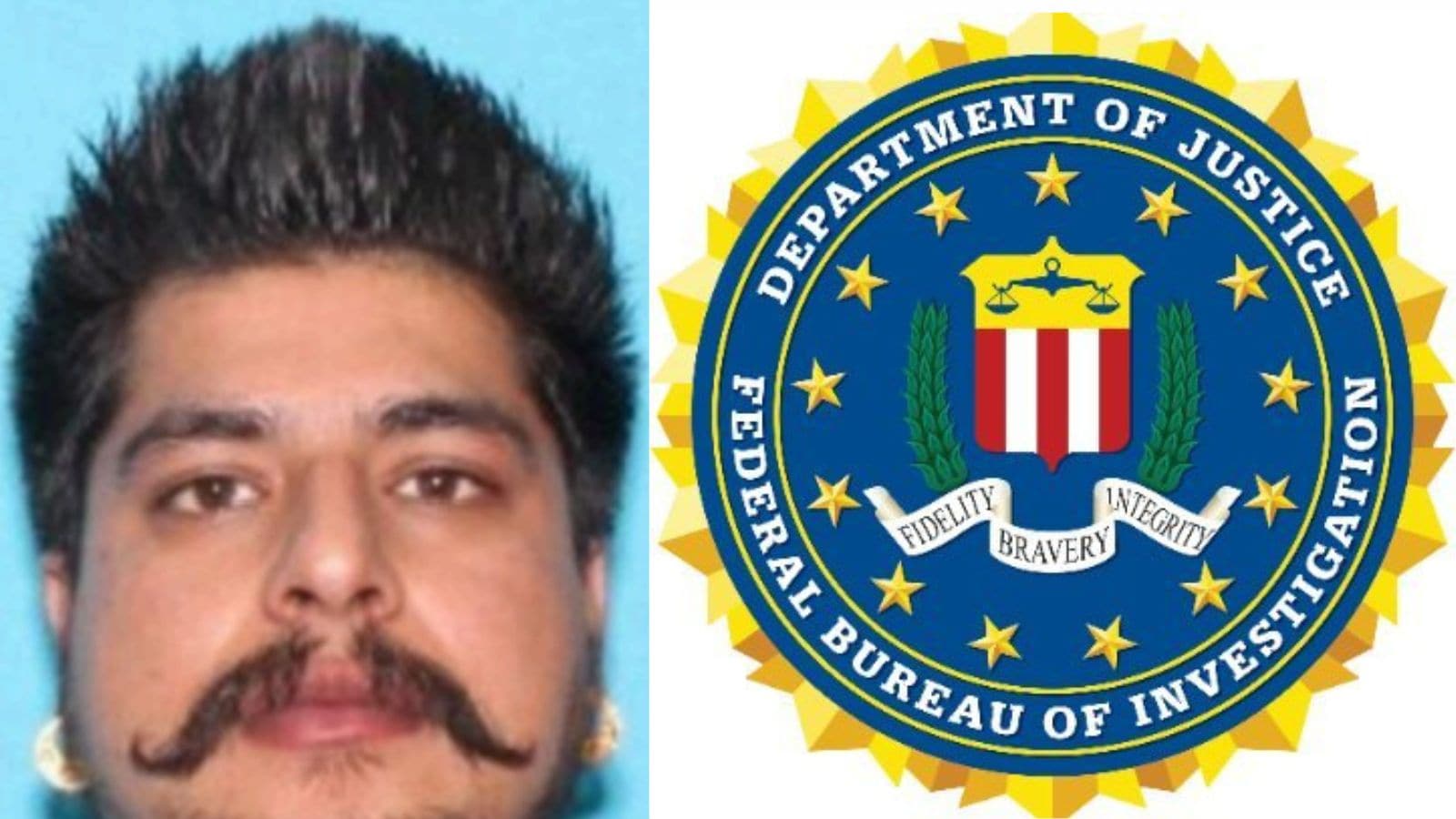
A man stands near the boundary line where the United States ends and Canada begins. He goes by the name Nitish Kaushal. His friends call him "Lala." To the United States government, he is a ghost who suddenly materialized on a federal poster. Just forty-eight hours prior, the FBI stamped his face onto its Most Wanted list, branding him armed, dangerous, and a critical escape risk.
Then, the trap sprung.
Law enforcement moved fast. In the early morning mist, US Border Patrol agents and federal operatives closed the gap, ending a brief, desperate run. The cuffs snapped tight.
To the casual observer, it looks like a standard domestic collar. A fugitive caught at the border. But the story of the man arrested in Vermont did not start in New England. It began thousands of miles away, in the fertile, fractured soil of Punjab, India. His arrest is the latest tremor in a quiet, global war against a new breed of criminal enterprise.
The Globalized Street Gang
We used to think of organized crime in cinematic terms. The Italian mafia in New York. The cartels in Medellín. We imagined local territories, neighborhoods guarded by muscle, and borders that served as concrete barriers.
That world is dead.
Today, a syndicate can be headquartered in a South Asian prison cell and execute a violent extortion scheme in Los Angeles without its leadership ever boarding a flight.
Consider the Jaggu Bhagwanpuria Organized Crime Group. Born in the political and cultural currents of Punjab, this network has expanded its reach across oceans. It operates in the sun-bleached suburbs of California’s Central District, the grey industrial towns of the United Kingdom, and the borderlands of Canada. They deal in the entire spectrum of human misery: drug trafficking, weapons smuggling, money laundering, and human trafficking.
But their most effective currency is fear.
Imagine a family running a modest grocery store in California. They left Punjab decades ago to build something quiet and safe. One afternoon, the phone rings. The voice on the other end knows their cousins' names back home. The voice knows which school their children attend in Fresno. The threat is global, but the terror is intensely local.
Federal prosecutors allege that this is where Kaushal fit into the machine. He was not a distant mastermind. He was the muscle on the ground, the one accused of translating abstract long-distance threats into physical violence through kidnappings and brutal assaults.
The Anatomy of an Iron Ring
The federal weapon of choice for this kind of borderless shadow-boxing is the Racketeer Influenced and Corrupt Organizations Act, or RICO.
When the US District Court in Los Angeles issued an arrest warrant for Kaushal on June 25, they didn't just charge him with an isolated assault. They charged him with conspiracy. RICO allows the state to treat the entire network as a single corporate entity of crime. If you carry out an assault to advance the syndicate, you are legally tied to the murder, the extortion, and the smuggling operations happening thousands of miles away.
It is a massive legal net. And the US government just threw it across three continents.
The capture of Kaushal was not a stroke of luck. It was the tail end of Operation Hard Ball, a massive, coordinated international strike targeting the Bhagwanpuria syndicate and its bitter rivals, the Lawrence Bishnoi network. Law enforcement agencies across the US, Canada, and Europe executed simultaneous raids. Thirty-four individuals were charged; fifteen were swept up quickly.
Kaushal was one of the remaining eleven fugitives who thought they could outrun the dragnet. He had two days on the Most Wanted list before the world got too small for him.
The True Cost
It is easy to look at these cases and see a simple story of cops and robbers. But look closer at the mechanics of how these syndicates grow. They target the vulnerable. In many cases, recruiters prey on young visa applicants or those living in the country illegally, drawing them into a web of obligation they can never escape.
They exploit the deep, cultural bonds of diaspora communities, turning a shared heritage into a vulnerability. They walk through the cracks of a globalized economy, utilizing international banking, encrypted apps, and local enforcers to build an empire that defies geography.
Now, the legal reality sets in. Kaushal faces a future measured in decades behind concrete walls. The statutory maximum is life in a federal penitentiary. There are no quiet borders left to cross.
The pines of Vermont are silent again. The gravel roads are empty. But the message sent from that northern border resonates all the way back to the streets of Punjab: the world is no longer large enough to hide in.