September air in the Nevada desert carries a specific kind of heat. It does not just warm the skin; it bakes the patience out of people. On the night of September 7, 1996, that heat hung heavy over the Las Vegas Strip. Neon flickered against the darkening sky. Tires hummed against the asphalt. Inside a black BMW, a twenty-five-year-old man leaned back against the leather seat, his mind likely racing with the heavy adrenaline of a Mike Tyson fight he had just witnessed at the MGM Grand.
He was at the absolute zenith of cultural gravity. Tupac Shakur.
Minutes later, a white Cadillac pulled alongside them at a red light on Flamingo Road. Gunfire tore through the humid night. Four bullets found their mark. Six days later, the voice that had articulated the raw, unfiltered fury and poetry of an entire generation went silent forever.
For nearly three decades, the official narrative of that night resembled a ghost story told in shadows. Everybody knew. Nobody spoke. The streets whispered names, but the courts demanded proof. Detectives chased leads that evaporated into the neon haze. Witnesses went quiet. Fear built walls thicker than any prison. Decades bled into one another. Cassettes turned to compact discs, CDs turned to digital streams, and the boy from East Harlem remained frozen in eternal youth while the world kept spinning without him.
Silence is a heavy garment to wear for thirty years.
Consider what happens when a community learns to live with an unsolved wound. It calcifies. It becomes part of the weather. Every September, the anniversaries rolled around like clockwork. Documentaries combed through the autopsy reports. Podcasters dissected the trajectory of the bullets. Fans stood on street corners in Compton and Las Vegas holding candlelight vigils, asking the same exhausting question into the void. Who pulled the trigger?
The law moves slowly. Sometimes, it moves with the glacial patience of tectonic plates shifting beneath the earth.
Duane Davis knew he was safe, or at least he thought he was. For years, he operated in a strange twilight zone of public notoriety. He wrote a memoir. He gave interviews to documentary crews. He spoke about that night on camera with a chilling, almost casual detachment, treating his presence in the white Cadillac like a historical footnote rather than a crime scene. He forgot a fundamental truth about time. Time does not erase evidence; it merely allows the guilty to grow comfortable.
Comfort breeds carelessness.
When the Las Vegas Metropolitan Police Department raided a home in Henderson, Nevada, in the summer of 2023, the ghosts of 1996 finally collided with the present. Investigators did not find a smoking gun hidden in a vault. They found something far more damaging: Duane Davis's own words, captured in print and broadcast, bragging about his role as the orchestrator of the drive-by shooting. He had armed the men in the back seat. He had set the wheel in motion.
The courtroom trial that followed was not merely a legal proceeding. It was a cultural exorcism.
Step inside that courtroom for a moment through a hypothetical observer's eyes. The air conditioning hums quietly against the low murmur of journalists tapping furiously on laptops. In the front row, family members sit in tight clusters, their faces etched with the fatigue of a generational marathon. They did not come for vengeance. They came for punctuation. They came to see a sentence placed at the end of a long, chaotic sentence that began on a warm September night in Nevada.
When the verdict finally dropped, the air in the room shifted. Guilty. Murder with the use of a deadly weapon, with a gang enhancement.
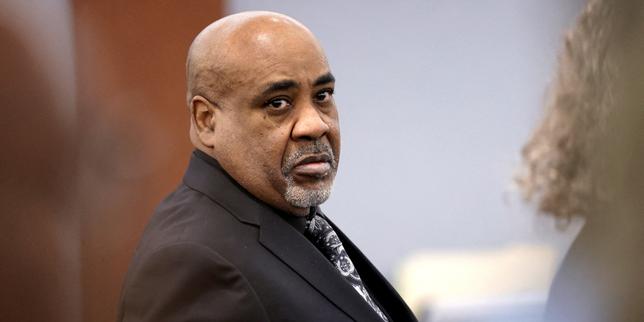
Duane Davis, now an elderly man grappling with health issues, sat relatively motionless. The bravado of the documentary interviews had evaporated. The cold reality of accountability had arrived thirty years too late for the victim, but right on time for history.
Justice, when it finally comes, rarely arrives like a thunderclap. It arrives quietly. It sounds like the rustle of paper as a judge turns a page. It looks like an aging man being led out of a courtroom in handcuffs, realizing that words spoken into microphones decades ago do not simply vanish into the ether.
Tupac Shakur left behind a catalog that defies expiration. Songs like Changes and Dear Mama still pulse through car speakers from Atlanta to Paris, carrying the same urgent heartbeat they did in the nineties. He did not get to grow old. He did not get to see his hair turn gray or watch the evolution of the world he critiqued with such terrifying clarity.
Yet, the silence that protected his killers for a generation has finally cracked. The white Cadillac can no longer outrun the past. As the cell door closes behind the last living participant of that fateful night, the tape finally stops rolling on a tragedy that defined an era. The echoes fade. The streetlights of Las Vegas hum on. And the poetry remains.