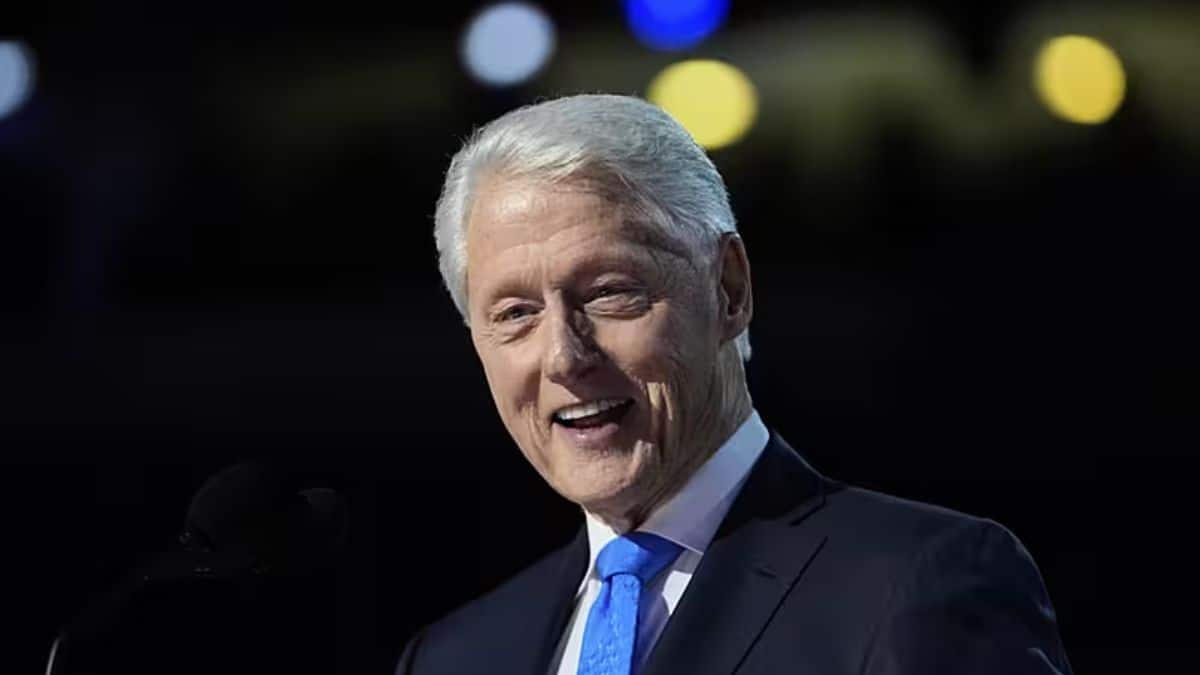
The marble of the Rayburn House Office Building has a way of swallowing sound. It is a cold, unforgiving stone that has witnessed a century of secrets, but today, the silence feels different. It feels heavy. In a few hours, a man who once held the most powerful office on earth will sit before a panel of lawmakers to answer for a ghost.
Bill Clinton is no stranger to the spotlight of a deposition. He has spent decades navigating the treacherous currents of public scrutiny, his charisma acting as both a shield and a bridge. But the questions waiting for him this time aren't about policy or legacy. They are about a man named Jeffrey Epstein, a private island, and a web of associations that refuses to stay buried in the past.
The Weight of an Unfinished Story
For years, the names were whispered in the same breath like a dark incantation. High-altitude flights on a private jet. Dinners in Manhattan townhouses. Discussions about philanthropy that always seemed to hover just out of reach of transparency. To the casual observer, it might seem like a simple matter of political accountability. To those who have followed the trail of breadcrumbs left by Epstein’s wake, it is something much more visceral.
It is about the fundamental breaking of a social contract.
We expect our leaders to be flawed. We accept that power often walks hand-in-hand with ego. But we struggle to reconcile the image of a global statesman with the murky reality of a man like Epstein. The upcoming testimony isn't just a legal formality. It is a confrontation between the world we want to believe in and the world that actually exists behind closed doors.
The House panel isn't looking for a history lesson. They are looking for the specifics of a relationship that spanned years. They want to know about the 2002 trip to Africa. They want to know about the visits to the New York residence. Most importantly, they want to know why a President of the United States would find common ground with a man whose primary currency was influence bought through the exploitation of the vulnerable.
The Mechanics of Influence
To understand why this hearing matters, you have to understand how power functions in the vacuum of the ultra-wealthy. It doesn't always look like a bribe in a manila envelope. Often, it looks like access. It looks like a shared flight where the conversation turns from climate change to "mutually beneficial" connections.
Epstein was a master of the "social lubricant" model. He didn't just provide a service; he provided a world. By bringing together scientists, politicians, and royalty, he created a self-sustaining ecosystem of importance. When Bill Clinton entered that orbit, he wasn't just a guest. He was the ultimate prize. His presence validated the entire enterprise.
Think about it this way: if you are a young person caught in the machinery of a predator, and you see a former President laughing at the dinner table, what hope do you have that the system will protect you? The stakes of this testimony aren't found in the legal penalties, which are unlikely to manifest. The stakes are found in the restoration of a truth that has been obscured by decades of "no comments" and carefully worded denials.
The Human Cost of the Record
Behind every line of the House transcript, there is a person who wasn't invited to the party.
There are survivors who have spent the last decade watching the powerful move through the world with impunity. For them, seeing Clinton sit in that chair is a moment of profound, if delayed, recognition. It is an acknowledgment that their stories—once dismissed as the ramblings of the "unreliable"—have finally reached the halls of government.
The panel will likely lean on logs and flight records. They will cite the "Lolita Express" and the frequency of meetings. Clinton’s team will likely counter with the same defense they have used for years: that the President knew nothing of Epstein's crimes, that the flights were for the Clinton Foundation, and that the relationship ended long before the full extent of the horror was known.
But the math doesn't quite add up for a skeptical public.
Logic dictates that a man with the resources of the Secret Service and a lifetime of political instincts would have seen the red flags. Or perhaps, in the rarified air of the global elite, red flags just look like decorations. That is the question the committee must navigate. They aren't just investigating a man; they are investigating a culture of looking the other way.
The Architecture of the Hearing
Imagine the room. The cameras are positioned to catch every micro-expression. The lawmakers have their binders ready, tabbed with inconsistencies from previous statements. The tension is thick enough to choke on.
- The Lead-Up: Months of behind-the-scenes negotiations over the scope of the questions.
- The Opening Salvo: A focus on the timeline. Who introduced whom, and when?
- The Pivot: Moving from the professional to the personal. The dinners, the private conversations, the "favors."
- The Defense: A practiced, calm demeanor designed to make the questioners look like they are chasing ghosts.
It is a high-stakes chess match played with the reputation of a presidency on the line. Yet, for all the political theater, the core of the issue remains stubbornly human. It is about the distance between the public face of a leader and the private choices of a man.
Why the Silence Had to End
We live in an era where the curtain has been pulled back so many times it’s practically shredded. From the MeToo movement to the unsealing of the Epstein files, the public’s tolerance for "selective memory" has hit an all-time low. People are tired of the polished narrative. They want the raw, uncomfortable reality.
When Clinton takes the stand, he is stepping into a different world than the one he governed. In the 90s, a scandal could be managed. In 2026, information is a flood that washes away the most carefully constructed dams. The House panel knows this. They know that every word he speaks will be dissected by millions of amateur sleuths and professional journalists alike.
There is a specific kind of dread that comes with being forced to revisit a past you thought you had outrun. You can see it in the way the legal teams move, the way the statements are parsed to the point of being hollow. It’s the dread of knowing that the story is no longer yours to tell.
The hearing won't just be about Bill Clinton. It will be a mirror held up to the entire political establishment. If a former President can be lured into the orbit of a man like Epstein, who else is vulnerable? What does that say about the vetting process of our leaders? What does it say about the people we choose to trust?
The Echo in the Halls
As the afternoon sun begins to dip behind the Washington Monument, casting long, spindly shadows across the Mall, the weight of the day’s proceedings will begin to settle. There will be no "smoking gun" in the traditional sense. There rarely is in these rooms. Instead, there will be a series of small, cracks in the armor. A hesitation before an answer. A look of frustration that breaks the mask of the elder statesman.
We often think of history as something that happens in the past, but history is being written in real-time in that hearing room. It is being written by the questions asked and, more importantly, the questions avoided.
The invisible stakes are the hardest to measure but the most important to understand. They are the stakes of public trust. Every time a figure of this magnitude is forced to answer for their associations, a small piece of the mystery is stripped away. We are forced to look at the reality of how the world is run—not by the rules we are taught in school, but by the connections made in the shadows of the elite.
The man at the witness table is a symbol. He is the personification of an era that believed it could keep its secrets forever. As he adjusts the microphone and prepares to speak, he isn't just answering to a House panel. He is answering to a world that has finally decided it is done waiting for the truth.
The silence in the Rayburn building is finally breaking, and the sound it makes is the uncomfortable, necessary noise of a story that is finally, painfully, coming to an end.
The marble remains cold, but the air in the room is burning.