The metal breathes. It does not merely hum or vibrate like the sterile commuter trains slicing through Zurich or Geneva. It groans. It exhales thick, sulfurous white plumes that smell of soot and old money, casting a heavy shadow against the stark, intimidating white of the Swiss Alps.
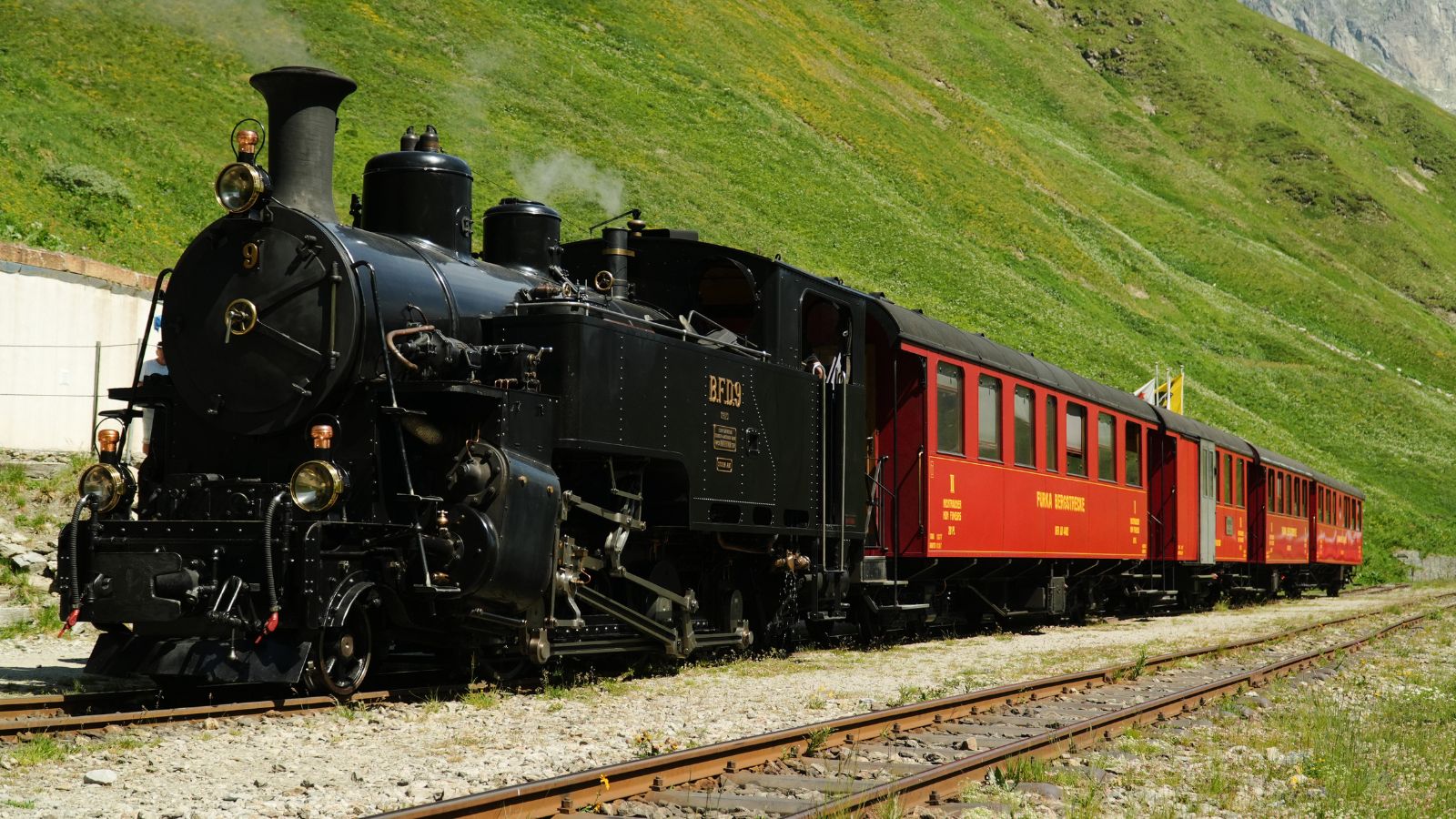
If you stand on the platform at Realp, 1,546 meters above the safety of the flat world, you can feel the heat radiating from the belly of a century-old locomotive. This is the HG 3/4 No. 4. It is not a museum piece locked behind velvet ropes. It is a living, snorting beast of iron and steel, throwing its weight against one of the most unforgiving mountain passes on Earth.
A hundred years ago, on July 3, 1926, the first steam train conquered this continuous route through the Furka Pass, bridging the isolated regions of Uri and Valais. It was hailed as a triumph of human willpower over geography. But geography is a patient enemy. By 1982, modern efficiency won. The opening of the Furka Base Tunnel—a straight, dark, efficient hole bored through the rock far below—rendered the high mountain tracks obsolete overnight. The old line was abandoned to the elements. The snow came. The avalanches followed. The tracks were buried, and the world forgot.
Most things that die in the mountains stay dead. But some people refuse to let them go.
The Anatomy of an Obsession
To understand why hundreds of people spend their summers covered in grease at 2,000 meters above sea level, you have to look past the postcard views. You have to look at the hands of the people throwing the coal.
Bernhard Lang is one of them. He does not look like a man chasing a romantic fantasy. He looks like someone who understands the exact physics of tension and weight. Driving a vintage steam train up an eleven percent incline is not a matter of pushing a lever and watching the scenery change. It is an exhausting, multi-sensory negotiation.
"It’s something like a living machine," Lang says, wiping oil from his forearm. "You have to get a feeling for it. To feel how it behaves, how it moves, how it smells, how it sounds."
The machine tells you when it is hurting. A subtle change in the rhythm of the exhaust, a slight slip of the wheels on the wet rack rail, a smell of hot brass—these are the warning signs that dictate survival on the pass. If you misjudge the fire, the pressure drops, and eighteen kilometers of steep mountain track become a trap. If you misjudge the brakes, the weight of the vintage wooden carriages will push twenty-six tons of iron down the mountain with catastrophic momentum.
It takes years to master. There are no computer screens in the cab. There are no automated safety overrides. There is only a pressure gauge, a shovel, and the intuition of a human being listening to the heartbeat of a mechanical giant.
The Infection
They call it the Furka Virus.
Sergio Rovelli, a long-time volunteer, uses the term with a wry smile. It is the local slang for the obsession that grips anyone who comes here to work on the tracks. "Once you come here, you like it, and you stay," he explains.
This virus defies generational boundaries. Consider Jacob Kallert. He is twenty-one years old, a German transport engineering student who should, by all logic of his generation, be fascinated by autonomous vehicles, hyperloops, or high-speed maglev lines. Instead, he is the youngest train manager on the Furka Bergstrecke.
While his peers look to the future, Kallert is tuned to a different frequency. "You hear every sound," Kallert says, standing between the iron carriages. "You hear if everything is right. You can pretty much feel how it was then and how it is now."
This connection across time is the true engine of the railway. When the line was abandoned in the eighties, the Swiss federal railway system had no use for it. The track was slated for dismantling. The historic locomotives were sold off, some traveling as far as Vietnam to rot in tropical humidity.
The revival did not begin with a government grant or a corporate sponsorship. It began with a few hundred "pioneers"—amateurs, retired engineers, students, and eccentrics—who looked at the rusting tracks disappearing into the Alpine weeds and decided that giving up was unacceptable. They formed an association. They raised millions of francs. They hunted down the original locomotives in Vietnam, bought them back, shipped them across oceans, and rebuilt them piece by piece in the Realp depot.
They took forty-two years to fully reclaim the line, completing the entire eighteen-kilometer route in 2010. It is now the longest unelectrified railway line in Switzerland, and the second-highest rail crossing in Europe.
The Annual War Against the Winter
To the casual tourist paying forty-six Swiss francs for a summer journey from Realp to Oberwald, the trip is an exercise in slow travel. The train chugs past alpine meadows, cuts through pastures where patches of winter snow still linger in July, and offers a fleeting glimpse of the iconic hotel at Gletsch. It feels permanent. It feels like it has always been here.
It hasn't. Every year, the mountain tries to take it back.
The Furka Pass is a brutal environment. For eight months of the year, it is completely impassable, buried under meters of dense ice and snow. The heritage railway cannot operate in these conditions. This means the volunteers must perform a bizarre, expensive ritual every autumn and spring.
The most dramatic symbol of this struggle is the Steffenbach Bridge. Built across a steep ravine prone to massive winter avalanches, a standard stone or steel bridge would be swept away within a few seasons. The solution is an engineering marvel: a folding, transportable bridge. Every autumn, before the first heavy snows hit, the volunteers dismantle the bridge, folding its steel limbs back against the canyon walls like a giant piece of origami to let the avalanches roar through empty space. Every spring, they return with cranes and shovels to unfold it, clearing the snow by hand and with a historic steam-powered rotary snowplough before a single passenger can board.
The line also crosses a busy main mountain road. Because the train requires a rack-and-pinion system to climb the incline, the tooth-filled center rail cannot simply sit in the middle of asphalt where cars would destroy it. The volunteers engineered a retractable rack rail. When the train approaches, a radio signal from the locomotive triggers the level crossing barriers and mechanically raises the iron teeth out of the roadbed. Once the train passes, the rack sinks back into the earth, invisible to the sports cars and motorcycles racing up the hairpin curves.
Further down, where the tracks cut through a protected forest reserve, the threat is different: sparks from the coal fire could ignite the dry pine needles. The solution? A custom sprinkler system built along the tracks, activated automatically by the approaching locomotive’s radio.
The True Cost of Efficiency
We live in an era that worships the frictionless interface. We want to travel from point A to point B without feeling the distance between them. The modern Swiss rail network is arguably the finest example of this philosophy on the planet. It is quiet, perfectly timed, and entirely predictable. You sit in a climate-controlled box, look at your phone, and arrive.
But something is lost in the smoothing out of the world.
When you sit in the wooden third-class carriages of the Furka train, your face gets dusted with a fine layer of soot if you lean too far out the window. The carriage sways. The sound of the gears biting into the rack rail is loud, rhythmic, and metallic. You feel every millimeter of the climb. You realize that crossing a mountain pass is not a right; it is a negotiation.
The tourists who ride this line are not just consuming a view. They are witnessing an act of defiance. Every whistle that echoes through the Urseren Valley is a reminder that efficiency is not the only human value worth protecting. Sometimes, the long way around—the difficult way, the dirty way—is the only way to keep our history from sliding into oblivion.
The fire in the belly of the HG 3/4 requires constant feeding. A volunteer shovels more coal into the white-hot mouth of the firebox. The pressure rises. The locomotive gives a sharp, piercing cry that bounces off the granite walls of the pass, a sound that has survived a century of ice, silence, and indifference.
A historic steam locomotive climbing the Swiss Alps This documentary footage captures the raw power and sensory reality of the legendary Swiss cogwheel steam locomotives as they battle the extreme inclines and unforgiving terrain of the high Alpine passes.